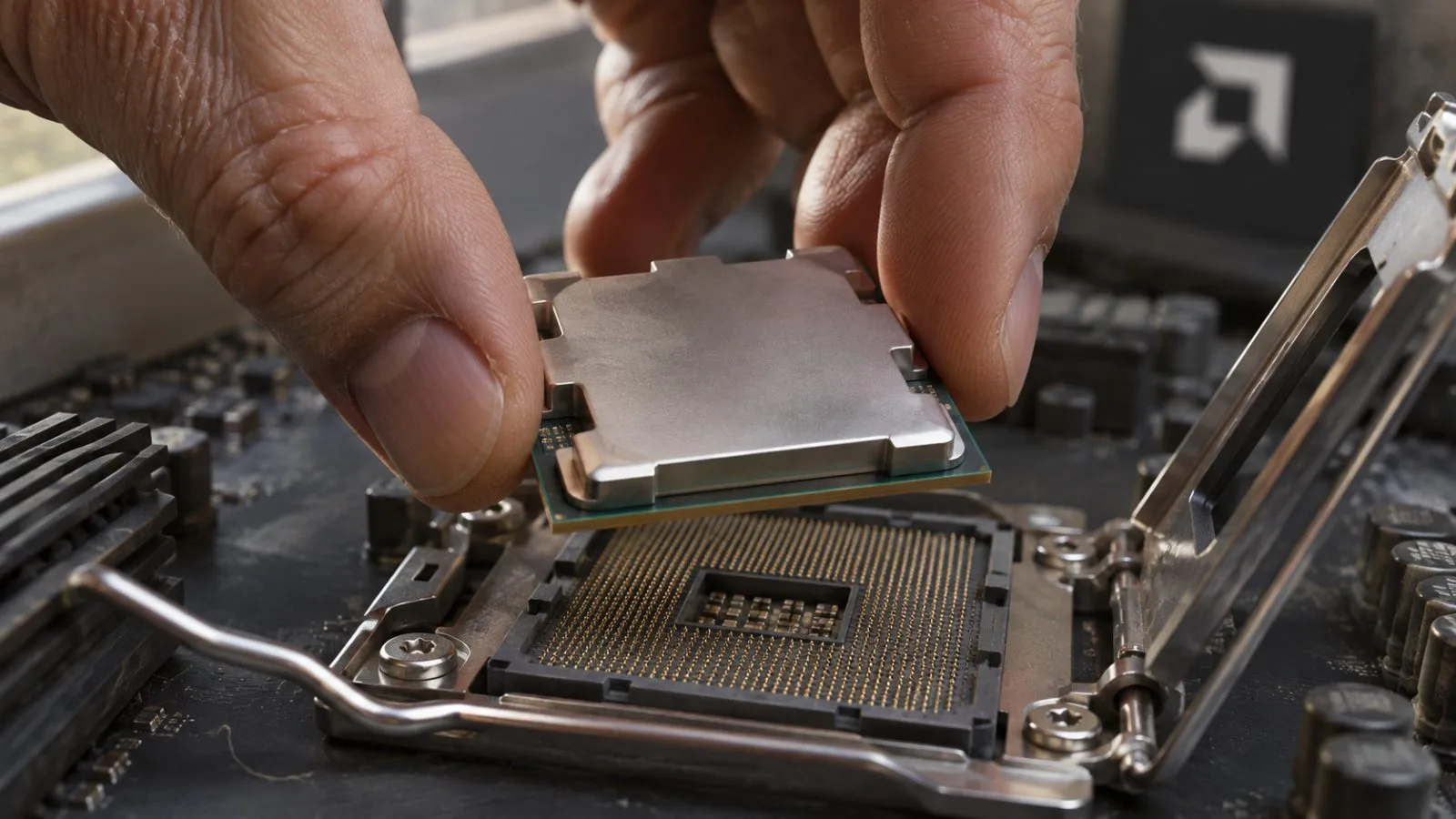
Advanced Micro Devices (AMD) has introduced the AMD EPYC Embedded 9006 Series SP7, a Zen 6 processor family with up to 256 cores for equipment facing heavier data demands in chip testing, storage and network security.
AMD announced the line Tuesday, Nov. 10. The company links its design to the growth of AI infrastructure and rising data volumes, which it says increase demands on systems that test semiconductors, manage enterprise storage and protect networks. The announcement follows AMD's launch of its 6th Gen EPYC server processors.
The embedded range starts at 64 cores and supports 16 DDR5 memory channels. System builders can use up to 96 PCIe Gen 6 lanes and CXL 3.1. The system supports RDIMMs at up to 8,000 MT/s and MRDIMMs at up to 12,800 MT/s. AMD's claimed gains over the prior generation are up to 2.7 times the memory bandwidth and 1.5 times the I/O bandwidth.
AMD also reports a gain of up to 1.8 times on the SPECrate2017_int_base benchmark. Its comparison gives an estimated score of 4,900 to a two-socket EPYC Embedded 9976 setup with 512 cores; a measured two-socket EPYC Embedded 9965 setup with 384 cores scored 2,740. AMD's estimate uses MRDIMM-12800; the measured system used DDR5-6400. With both core counts and memory configurations differing, the results do not isolate the effect of the processor generation.
Potential uses AMD cites range from storage systems processing compression, caching or RAID to network firewalls carrying 400G or 800G traffic and production equipment testing memory and I/O devices. AMD also reports an ISA-L storage result up to 1.5 times the result for the previous generation.
AMD has pledged product support for seven years and continued security updates, and says firmware signatures can use post-quantum cryptography. The 128-core EPYC Embedded 9756 is scheduled to be available Sunday, Nov. 15; AMD expects the remaining models to begin shipping by year-end.