


 Wall Street Falls as Oil Prices Rise and Tech Stocks Slide
  Oil Prices Slip as Trump Rules Out Iran Strike Before Midterms
  Asian Stocks Mixed as OpenAI Revenue Concerns Hit Chipmakers
  US Treasury Yields Ease After Strong 10-Year Auction as Global Bonds Struggle
  US Dollar Hits 18-Month High as Fed Signals More Rate Hikes
  RBI Raises Repo Rate to 5.50% in Hawkish Shift on Inflation Risks
  France to Release 10 Million Barrels of Diesel to Ease Fuel Prices
  Dollar Near 18-Month High as Euro, Yen and Pound Weaken


 Add as a preferred source on Google
The tepid expansion among EMs is unlikely to stymie growth within advanced nations, where domestic spending has accelerated noticeably. U.S. domestic demand growth has been hovering at 3% for more than a year, reinforcing the notion that the economic drivers are mainly focused inward for America at this point in the cycle. The sizeable appreciation in the greenback is expected to continue to dampen exports, but the broader economic foundation is strong enough to support a modest degree of rate hikes.
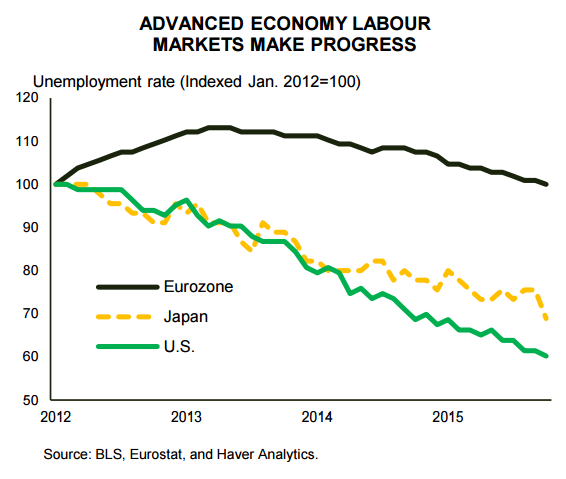
The beleaguered euro zone did manage to outperform the growth expectations. Surprisingly perhaps, in a year that featured fears of a "Grexit." However, unlike the U.S., the European Central Bank (ECB) is still stepping on the stimulus-accelerator to lift domestic demand through a combination of quantitative easing and negative interest rates. Private sector lending has been responding and unemployment rates are falling through most of Europe. Both of these positive trends should help to underpin continued gains in domestic demand going forward. The euro area should benefit from a slight tick-up in growth to 1.7% in 2016, a testament that the region has come a long way from the dismal 2014 performance that was roughly half this pace. However, the outlook remains heavily dependent on a central bank that is unlikely to lift its foot off the monetary accelerator.
Past stimulus initiatives in Japan are also starting to bear fruit. After a 0.7% increase this year, Japan is forecast to grow at a faster 1.2% pace in 2016. That may sound slow, but it is fairly good for an economy whose working age population is falling by 1.5% each year. That reality makes Japan's recent solid employment growth more impressive, as it comes from rising labor force participation.
As a large energy importer, Japan has also enjoyed a big boost to its purchasing power due to lower oil prices. All of these forces should help sustain the domestic economy in the face of softer EM demand, although a planned sales tax hike in 2017 is expected to crimp overall GDP growth in that year.

- News

- Economy

- Central Banks
- Investing
- Research
- Roundups
- Digital Currency
- Insights
- Technical Analysis
- Technology
- Business
- Law
- Health
- Nature
- Fintech
- Science
- Topic
- Opinions
- ©Econometrics LLC . All Rights Reserved.
Advanced economies continue to make progress
Thursday, December 17, 2015 11:50 PM UTC
Editor's Picks



- Market Data
Most Popular




