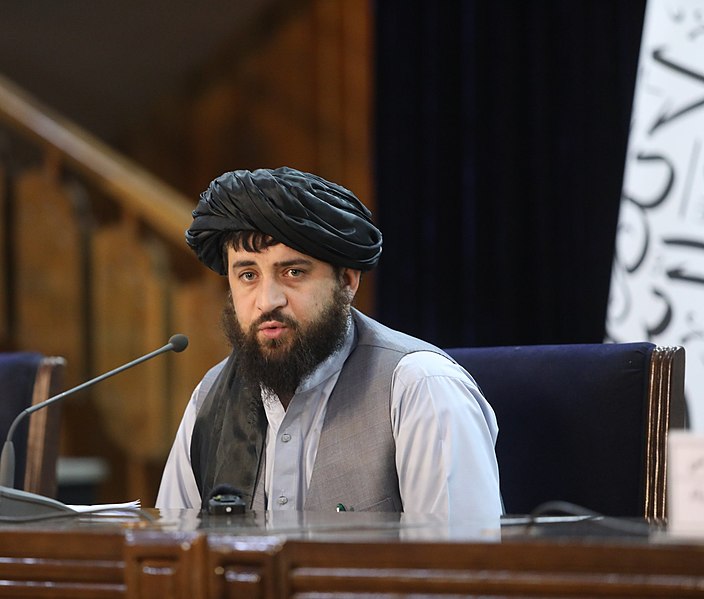
Since retaking control of Afghanistan in 2021, the Taliban administration has since touted securing the country despite domestic attacks by its rivals on Afghan soil. A Taliban commander said that the administration intends to bolster Afghan security forces and develop anti-aircraft missile capacity in the country.
In an interview with Reuters on Tuesday, Taliban commander Qari Fasihuddin Fitrat from the northern Afghan region of Badakshan, who is also the chief of the army staff, said that a large portion of Afghanistan’s budget has been reserved for defense. Fitrat also condemned the incursions of foreign drones into Afghan airspace. The Taliban commander also said that the country’s forces are currently at 150,000 and are expected to increase by 50,000.
“The ministry of defense is the top-ranked in the budget,” said Fitrat, adding that defense has received a significantly higher budget than other ministries in the country as it was a priority. Afghanistan’s budget largely comes from boosted tax and customs revenue. Fitrat did not reveal the exact amount of funding the country’s defenses received.
Fitrat said a major defense priority was securing Afghan airspace against drones and other incursions.
“Anti-aircraft missiles are the need of countries,” said Fitrat from his office in Kabul. Fitrat added that all nations are seeking developed weapons to reinforce the integrity of their territory and airspace, which is an issue Afghanistan has faced. “There is no doubt that Afghanistan is trying, and doing its best, to have it.”
Fitrat did not say where the Taliban plans to acquire anti-aircraft missiles from. Fitrat also stopped short of naming Pakistan when it comes to addressing the issue. The Taliban has repeatedly accused Pakistan of allowing drones to enter Afghan airspace as relations between the two neighboring countries have come under strain.
The Taliban has sought to be recognized internationally since retaking control of Afghanistan in 2021. However, the international community has stressed that the insurgent group must uphold women’s rights to be recognized. Despite this concern, the Taliban has since introduced increasingly restrictive policies against Afghan women and girls, such as barring women from taking part in foreign or local humanitarian work.
The Taliban recently expanded the ban on Afghan women working for the United Nations, which the organization has criticized. The UN said that the Taliban would shoulder the negative consequences of banning its Afghan women employees from working.