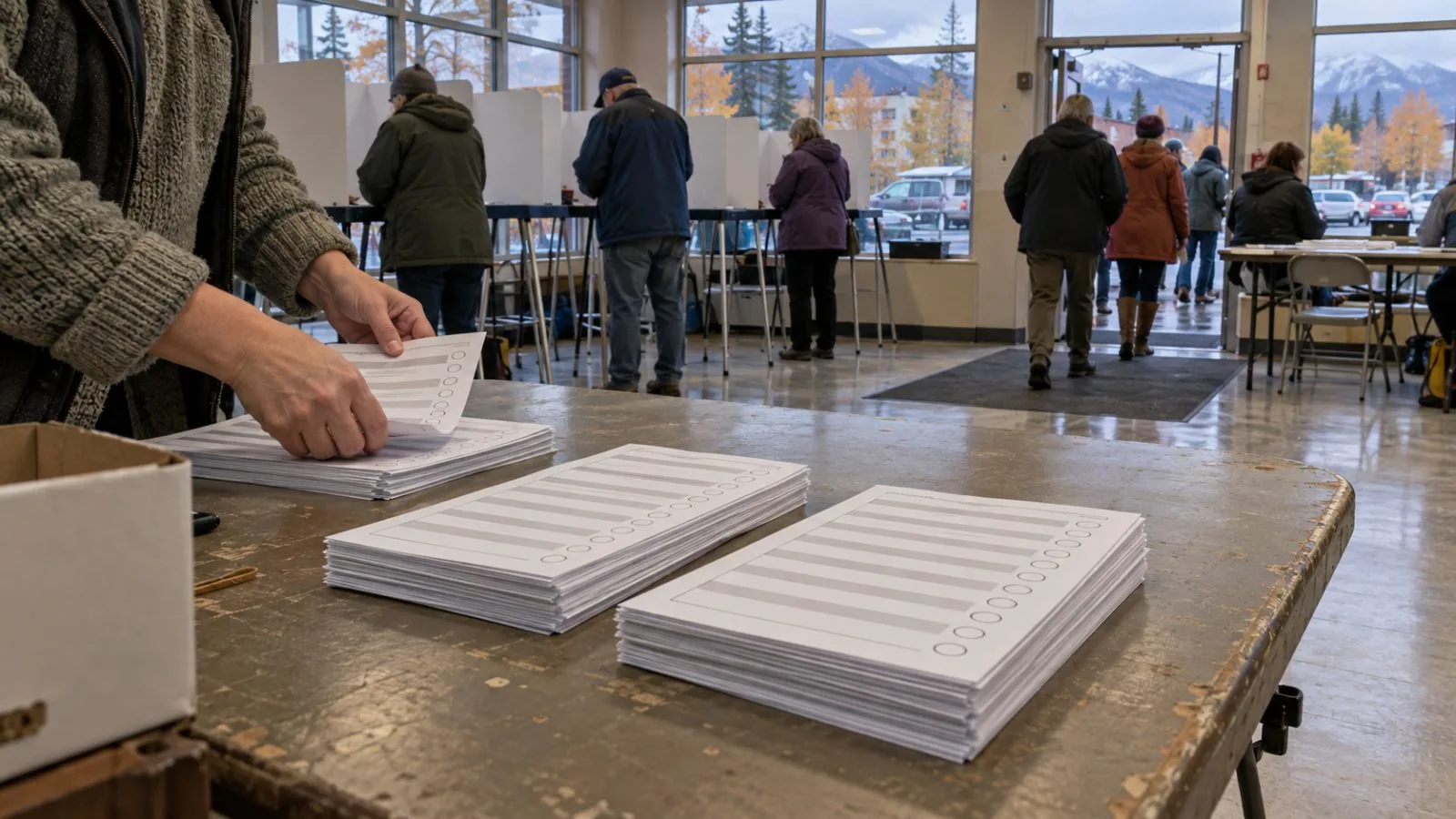
Alaska election boards say ballots are anonymous and argue that investigating voter intent could require linking voters to secret ballots, sharpening a legal dispute before Tuesday’s midterms.
The U.S. Department of Justice (DOJ) alleges that similar candidate names could lead voters to select the wrong person. Its Oct. 22 complaint asks a judge to block certification if incumbent U.S. Sen. Dan S. Sullivan loses but would have prevailed under a counterfactual assigning all votes for Daniel J. Sullivan to the incumbent, then applying Alaska’s ranked-choice process. In an Oct. 30 motion, DOJ also sought expedited discovery and an order to preserve and segregate ballots it said might have been affected by confusion.
Alaska’s election boards asked the court on Oct. 31 to dismiss the amended complaint. They say ballots have no voter names and are combined after voting, so they cannot show why someone selected a candidate. The boards argue that asking voters about their choices would require connecting them to secret ballots. They also say the ballot distinguishes the candidates in five ways and that voters can rank both if uncertain. The filings set out competing claims; they do not establish that voters selected the wrong candidate or that confusion could change the eventual result.
Daniel J. Sullivan Jr.’s candidacy was initially rejected by Alaska’s Division of Elections in June, according to DOJ’s amended complaint. The complaint says a trial court later ruled the division had erred, the Alaska Supreme Court summarily affirmed that decision, and Sullivan was then included on the ballot.
The Alaska dispute comes amid wider concerns about election confidence. President Donald Trump said on Oct. 27 that he would respect the midterm results “if they’re honest elections.” Global News reported that election auditor Mary Hall of Thurston County, Washington, and Samantha Alfaro of Virginia’s Loudoun County Elections Office discussed political pressure and public confidence with the outlet. Hall said, “We count every valid vote,” while Alfaro said, “Rhetoric has that type of effect.”
The U.S. Election Assistance Commission describes a system spread across more than 10,000 election jurisdictions; county offices handle election work in many places, while responsibilities differ by state. Alaska’s general election is scheduled for Tuesday, Nov. 3. The Division of Elections lists Nov. 18 as the expected date for ranked-choice results, after eligible ballots are reviewed and counted.