The Justice Department asked a federal judge to preserve and separate ballots ranking candidate Daniel J. Sullivan before Alaska’s Nov. 3 U.S. Senate election, citing possible voter confusion.
In an Oct. 30 filing, the department said the ballots could help examine whether voters mistook Daniel J. Sullivan for incumbent Sen. Dan S. Sullivan. The motion also seeks expedited discovery into communications involving Mary Peltola’s campaign and the Democratic Senatorial Campaign Committee (DSCC) about candidate recruitment. The department asked the court to rule by Nov. 2.
The ballot request is part of a civil case over the election’s certification. The DOJ seeks to block certification if Sen. Sullivan loses and votes ranking Daniel J. Sullivan could have changed the outcome after ranked-choice transfers. Under Alaska’s system, ballots for an eliminated candidate move to voters’ next choices still in the race.
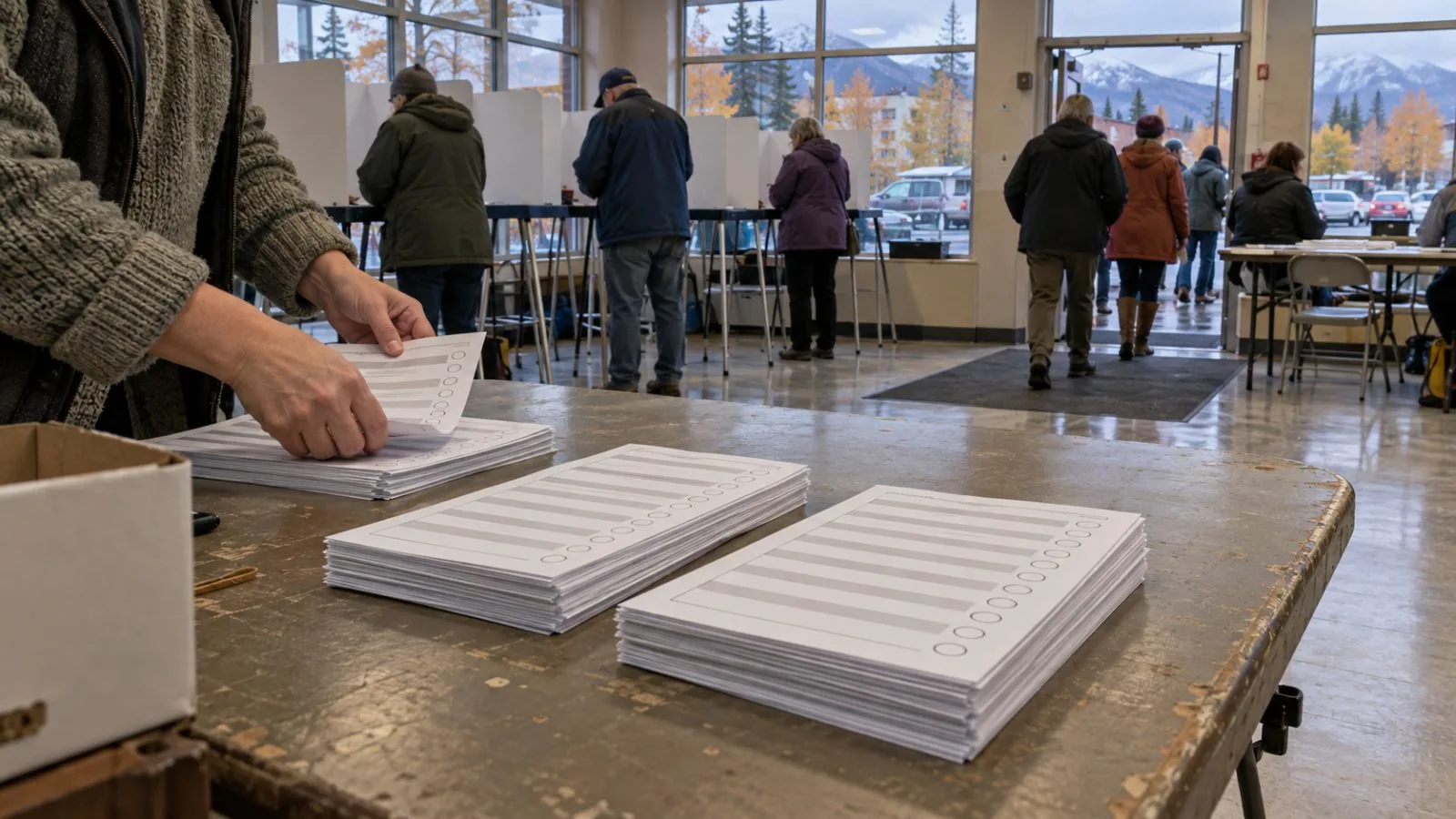
Alaska’s election boards opposed expedited consideration of the preliminary-injunction motion. They said ballots are mixed together during voting, are already retained for 22 months after an election, and could be difficult to sort by candidate without risking ballot secrecy. Court filings describe the ballot as distinguishing the candidates by middle initials, party and an “Incumbent” label. The state also says ranked-choice voting allows voters to rank both Sullivans.
Separately, Alaska U.S. Attorney Michael J. Heyman said at an Oct. 30 news conference that a criminal investigation had been underway for months. He did not identify potential offenses or targets. “I’m not making any assumptions on whether a crime has been committed or not,” Heyman said.
The New York Times reported that operatives aligned with Peltola’s campaign and DSCC staff helped recruit Daniel J. Sullivan and other candidates in an effort intended to divide support for the incumbent and benefit Peltola. The campaign and committee denied recruiting candidates, and the allegation has not been adjudicated.
The docket showed no ruling on ballot separation as of Oct. 30. The DOJ requested a decision by Nov. 2, one day before the election.