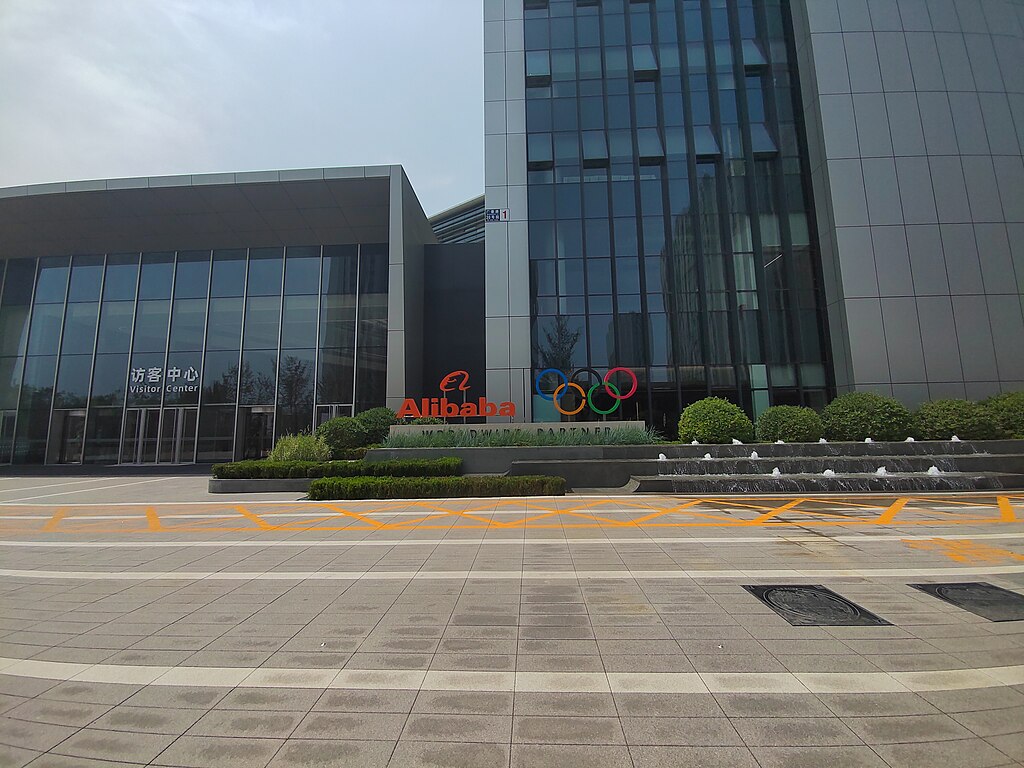
Alibaba has unveiled its most powerful artificial intelligence language model to date, Qwen3-Max, marking a major milestone in its AI strategy. Announced at Alibaba Cloud’s annual conference, the model boasts over 1 trillion parameters, making it the company’s largest AI system so far. Designed to excel in code generation and autonomous agent capabilities, Qwen3-Max represents Alibaba’s push to establish itself as a global leader in advanced AI.
Unlike traditional chatbots that depend heavily on user prompts, Qwen3-Max’s autonomous agent functionality enables it to make independent decisions and pursue tasks with minimal human intervention. According to Alibaba Cloud CTO Zhou Jingren, this advancement positions the model as a next-generation AI tool capable of handling complex goals and workflows.
Alibaba also highlighted strong benchmark performance, citing results from Tau2-Bench that show Qwen3-Max outperforming major competitors such as Anthropic’s Claude and DeepSeek-V3.1 in several metrics. This achievement reinforces Alibaba’s ambition to compete directly with leading Western AI firms while accelerating innovation in China’s growing AI ecosystem.
The launch underscores Alibaba’s commitment to AI infrastructure investment. Earlier this year, the company pledged 380 billion yuan ($53.4 billion) over three years to enhance AI-related technology. At the conference, CEO Eddie Wu emphasized that the company will further increase spending, noting that demand for AI infrastructure is outpacing expectations.
In addition to Qwen3-Max, Alibaba introduced Qwen3-Omni, a multimodal AI system optimized for immersive applications such as smart glasses and intelligent vehicle cockpits. This expansion reflects Alibaba’s strategy of integrating AI across industries, from e-commerce to advanced digital experiences.
By advancing large-scale AI models and immersive technologies, Alibaba is positioning itself as a central player in the global AI race, rivaling established tech giants while reshaping the future of intelligent systems.