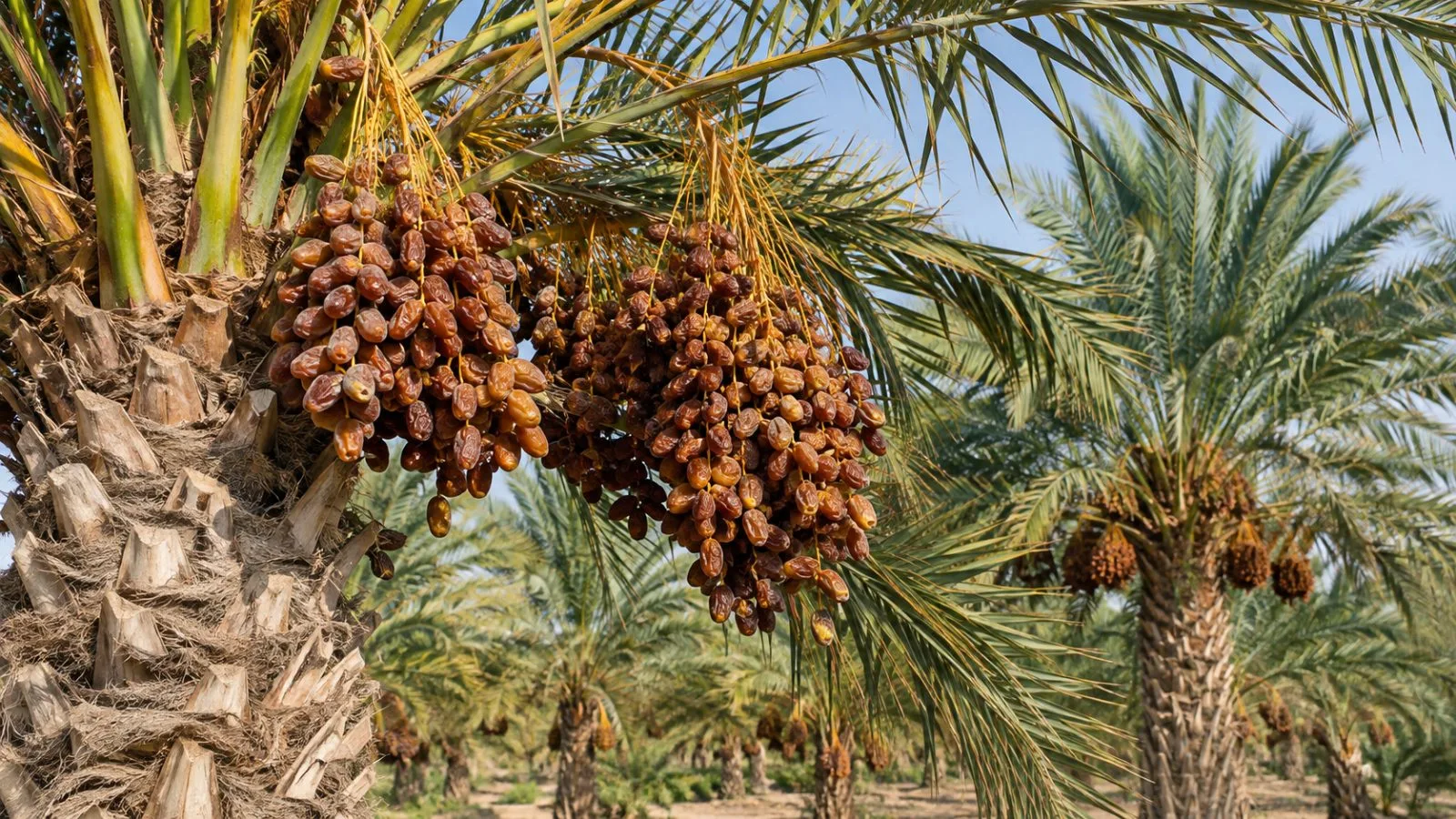
The Guardian reported that a Global Echo analysis identified West Bank settlement products in 85 of 132 agricultural shipments from Israel to Australia, drawing attention to Australian rules for labeling imported produce.
The review covered shipments sent from August 2018 through August 2026. It included at least US$5 million (A$7.2 million) in organic dates, the outlet reported. For dates shipped from January 2025 through August 2026, 20 of 24 shipments in the analysis came from settlements.
The Guardian said Global Echo used commercial records and official trade data from Israel and the Australian Bureau of Statistics. The report named Netiv Hagdud, Beit Haarava, Arvot Jericho, Hamra, Tomer, Mechora and Naaran as places where dates sent to Australia were grown. It did not identify retailers or establish that every shipment was sold to consumers, and it did not say whether “produce of Israel” appeared on retail packaging, shipping cartons or trade documents.
The Australian Competition and Consumer Commission (ACCC) says imported priority foods, including fruit and vegetables, must carry a statement identifying their country of origin. The Guardian reported that Australian rules do not require goods to identify the occupied territory separately.
In a 2024 advisory opinion, the International Court of Justice (ICJ) found Israel’s settlements in the West Bank and East Jerusalem, along with the framework governing them, contrary to international law.
As of Sept. 8, Australia was not pursuing a blanket import ban, Foreign Minister Penny Wong told the Senate. She cited concerns about unintended effects on Australian businesses, Palestinians and Israelis. A Department of Foreign Affairs and Trade spokesperson told The Guardian that Australia was pursuing targeted measures with international partners to deter illegal settlements and settler violence.
Global Echo executive director Emily Schaeffer Omer-Man told The Guardian that Australians buying Israeli dates and other agricultural products were “quite likely” helping sustain the occupation and settlement of Palestinian land. Human Rights Watch researcher Sarah Sanbar told the outlet that trade supported settlements and that Palestinian farmers could lose livelihoods when they could not access their land.