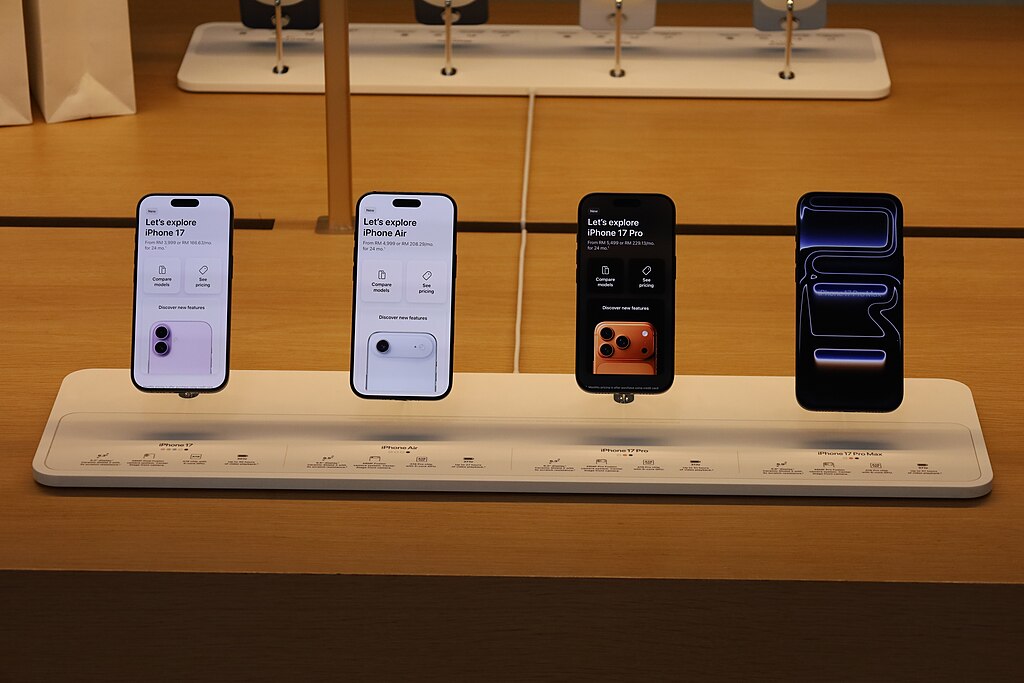
Apple delivered stronger-than-expected fiscal third-quarter results, driven by record June-quarter iPhone sales that reinforced the strength of its core smartphone business. Despite the earnings beat, Apple shares fell nearly 4% in after-hours trading as investors focused on weaker-than-expected Services revenue and softer sales in Greater China.
The iPhone maker reported revenue of $109.42 billion and earnings of $2.02 per share, surpassing Wall Street estimates of $108.86 billion in revenue and $1.89 per share in earnings. Apple said the quarter marked its best June quarter on record, with CEO Tim Cook highlighting the company’s continued momentum.
iPhone revenue climbed 21.7% year-over-year to $54.25 billion, beating analyst expectations of $53.60 billion. The result marked Apple’s third consecutive quarter of more than 20% annual iPhone sales growth and its strongest June-quarter iPhone performance ever, despite the seasonal slowdown that typically precedes new product launches.
Research firm Counterpoint expects Apple to expand market share across smartphones, personal computers, tablets, and smartwatches in 2026, with the first three categories projected to reach record market share levels.
The strong iPhone performance has eased concerns over Apple’s slower artificial intelligence strategy compared with other Magnificent Seven technology companies. Unlike rivals investing hundreds of billions of dollars in AI infrastructure, Apple has maintained relatively modest capital spending, a strategy that has helped its stock outperform during the recent AI-sector pullback. Apple shares had gained more than 22% year-to-date before the earnings release.
However, some segments underperformed expectations. Services revenue, which includes the App Store, iCloud, and Apple Music, increased 12.1% to $30.74 billion, missing the consensus estimate of $31.22 billion and slowing from the previous quarter’s growth rate.
Greater China revenue rose 22.4% year over year to $18.86 billion, but also fell short of analysts’ expectations of $19.58 billion.
Apple also reported Mac revenue of $10.35 billion, up 28.7%, while iPad revenue declined 5.9% to $6.19 billion. The company noted that favorable tariff refunds also contributed to its stronger quarterly earnings. Despite solid financial results, investors appeared to expect a bigger upside surprise, contributing to the post-earnings decline in the stock.