


 Eli Lilly’s Inluriyo Gains FDA Approval for Advanced Breast Cancer Treatment
  Trump Signs Executive Order to Boost AI Research in Childhood Cancer
  Neuralink Plans High-Volume Brain Implant Production and Fully Automated Surgery by 2026
  Blue Origin’s New Glenn Achieves Breakthrough Success With First NASA Mission
  SpaceX’s Starship Completes 11th Test Flight, Paving Way for Moon and Mars Missions
  Blue Origin New Glenn Rocket Explodes During Launch Pad Test, Delaying Space Ambitions
  SpaceX Pivots Toward Moon City as Musk Reframes Long-Term Space Vision
  SpaceX Delays Starship V3 Launch Ahead of Potential Record IPO
  Cogent Biosciences Soars 120% on Breakthrough Phase 3 Results for Bezuclastinib in GIST Treatment
  FDA Pilot Program Eases Rules for Nicotine Pouch Makers
  Is space worth the cost? Accounting experts say its value can’t be found in spreadsheets
  NASA Artemis II: First Crewed Moon Mission Since Apollo Takes Four Astronauts on 10-Day Lunar Journey
  NASA Partners with Katalyst to Save Swift Observatory with Innovative Docking Mission


 Add as a preferred source on Google
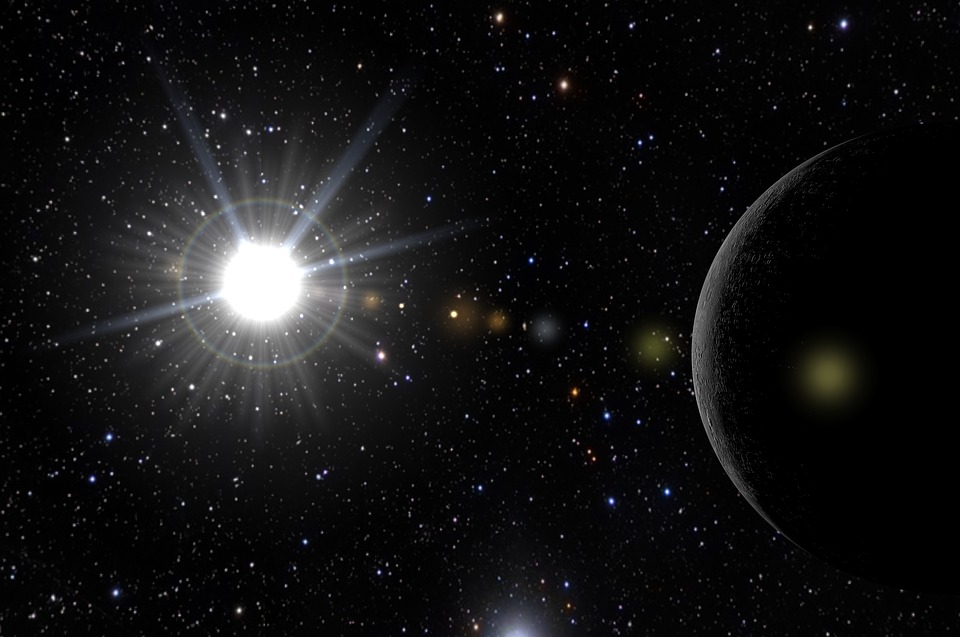
Although Mercury is the nearest planet to the Sun, it also has ice cold polar regions as well. Recently, a group of researchers revealed that the ice found in these regions can mostly be attributed to asteroids.
Express reports that scientists from Georgia Tech were able to determine why Mercury has icy polar regions, based on the data collected by NASA’s Messenger Probe, which first saw the icy formations back in 2011.
There have been theories regarding the possible reason of the ice formations. One such theory is that because of the chemicals that are present in the planet’s surface that get heated by the sun’s radiation, it results in a release of water and hydrogen that later settle in the craters that are protected from the sun, and thus freeze and turn into ice.
Photos taken by the Messenger Probe show large pockets of ice within the craters of Mercury’s polar regions. It was originally believed that asteroids were mostly responsible for bringing ice to the planet and when it collided, the asteroids ended up making craters that were deep enough to shield the ice from getting exposed to the Sun.
It should also be noted that Mercury does not have an atmosphere, and thus the planet’s temperature immediately drops whenever it is not exposed to the Sun. It can go as low as -280 degrees Fahrenheit. Still, scientists believe that most of the ice, around 90 percent, is formed by asteroids, while the remaining 10 percent is a result of natural processes found on Mercury.
As far as asteroid collisions are concerned, the chances of it happening on Earth are slim but never zero. However, in order to be better prepared, asteroids have to be tracked down, but some astronomers have voiced their concern regarding Elon Musk’s SpaceX Starlink satellites which may affect keeping tabs on these asteroids, most especially the potentially hazardous ones.
Among them being Harvard Smithsonian Center for Astrophysics astronomer Dr. Jonathan McDowell. They shared that even though Starlink does not pose an actual problem just yet with the current number of satellites in the skies, it is more of a nuisance. “But Starlink is going to be a problem within a couple of years while they put up all those satellites,” said the astronomer.







