


 SoftBank Shares Fall as Oracle Flags Stargate Data Center Delay Risk
  Oracle Shares Fall as New Mexico AI Data Center Faces Power Delays
  AstraZeneca, Bristol Myers Squibb Explore Mega Merger Worth Nearly $400 Billion
  3 clinical-grade skincare creams you really shouldn’t buy online
  Hanmi Pharm Soars 30% on $2.3 Billion Genentech Obesity Drug Deal
  Meta Found Liable in New Mexico Facebook Data Privacy Case
  Eli Lilly Eyes AtaiBeckley Acquisition to Expand Psychedelic Mental Health Pipeline
  Almonty Industries Shares Jump 8% After Stifel Sets $25 Target
  Oura IPO Draws Strong Demand Ahead of $2.2 Billion Offering
  OpenAI to Preview GPT-6 Cyber AI Model for Cybersecurity
  Erste Group Plans Tender Offer to Boost Poland Bank Stake
  Alcohol is one of the most dangerous drugs, yet its presence is ubiquitous in social settings and celebrations
  Novo Nordisk Strikes €1.17 Billion Nanexa Drug Delivery Deal
  U.S. Issues Cuba Health Alert as Illnesses Rise
  OpenAI Agents Access U.S. Government Websites During Testing
  Jeff Bezos Invests $32 Billion in Blue Origin as Space Firm Targets Major Growth
  Costco Revenue Beats Estimates as Inflation Drives Bulk Shopping


 Add as a preferred source on Google
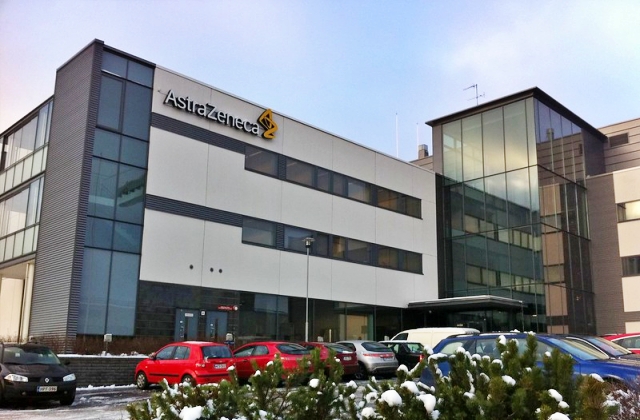
AstraZeneca has discontinued a late-stage clinical trial evaluating volrustomig combined with chemotherapy for patients with metastatic non-small cell lung cancer (NSCLC), dealing another setback to the pharmaceutical giant’s drug development pipeline.
The company said Monday that it stopped the Phase III eVOLVE-Lung02 trial following a recommendation from an independent data monitoring committee. The committee concluded that the volrustomig combination was unlikely to achieve the study’s primary endpoints of improving progression-free survival (PFS) or overall survival (OS).
The trial focused on patients whose tumors lacked PD-L1 expression and compared the experimental treatment with the study’s control arm.
Despite the disappointing efficacy findings, AstraZeneca reported no unexpected safety issues. The safety profile observed with volrustomig and chemotherapy remained consistent with the known profiles of the individual treatments, with no new safety concerns identified.
Susan Galbraith, AstraZeneca’s executive vice president of oncology hematology research and development, acknowledged the disappointing outcome while emphasizing that the company intends to apply lessons from the study to its ongoing efforts to develop new lung cancer treatments.
eVOLVE-Lung02 was a large global study involving 895 patients across 25 countries, highlighting the scale of AstraZeneca’s investment in testing volrustomig as a potential treatment for metastatic NSCLC.
The trial discontinuation adds to investor scrutiny of the AstraZeneca drug pipeline following several clinical setbacks this year. The company is pursuing an ambitious target of reaching $80 billion in annual revenue, making the performance of its late-stage pipeline increasingly important to its long-term growth strategy.
Another notable setback involved Wainua, developed with Ionis Pharmaceuticals. Earlier this year, results from the Phase III CARDIO-TTRansform study showed that the treatment failed to outperform placebo in reducing cardiovascular deaths among patients with a progressive and potentially fatal heart condition.
The latest failure underscores the uncertainty surrounding late-stage pharmaceutical development, even as AstraZeneca continues investing heavily in oncology, cardiovascular disease and rare-disease therapies.







