
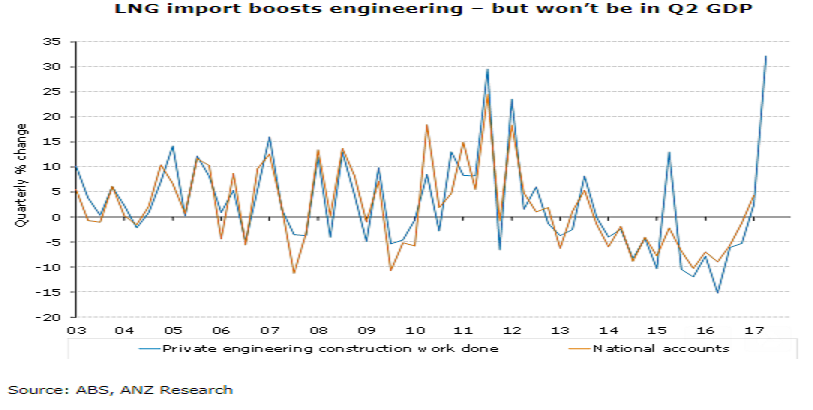
Australia’s Construction work done posted a strong headline number, but weak underlying results in Q2. Aside from the strength in engineering construction due to an LNG platform import that will not flow through to Q2 GDP, housing construction declined further, and private non-residential building was also disappointing. The public sector fared much better as expected, but the upshot of these results is that privately funded construction will not provide much, if any, support to Q2 GDP.
The headline construction number for Q2 showed a sharp 9.3 percent rise in activity. However, the underlying details were much weaker. Almost the entirety of the strong number was due to an AUD4bn jump in engineering construction in Western Australia, which is believed to be due to the import of an LNG platform for the Ichthys project.
Outside the strength in engineering activity, other details were soft. Housing construction posted a disappointing -0.4 percent q/q fall. While activity did rebound as expected in Queensland following the weather-affected Q1, weakness across most other regions saw the overall result slip.
"Any decline in housing construction is likely to be slow and steady, however. Combined with strength in housing finance, it is possible that building approvals have already troughed, at a higher level than previously anticipated. There is still a significant pipeline of work which will support activity for an extended period," ANZ Research commented in its latest report.
Meanwhile, FxWirePro launches Absolute Return Managed Program. For more details, visit http://www.fxwirepro.com/invest

