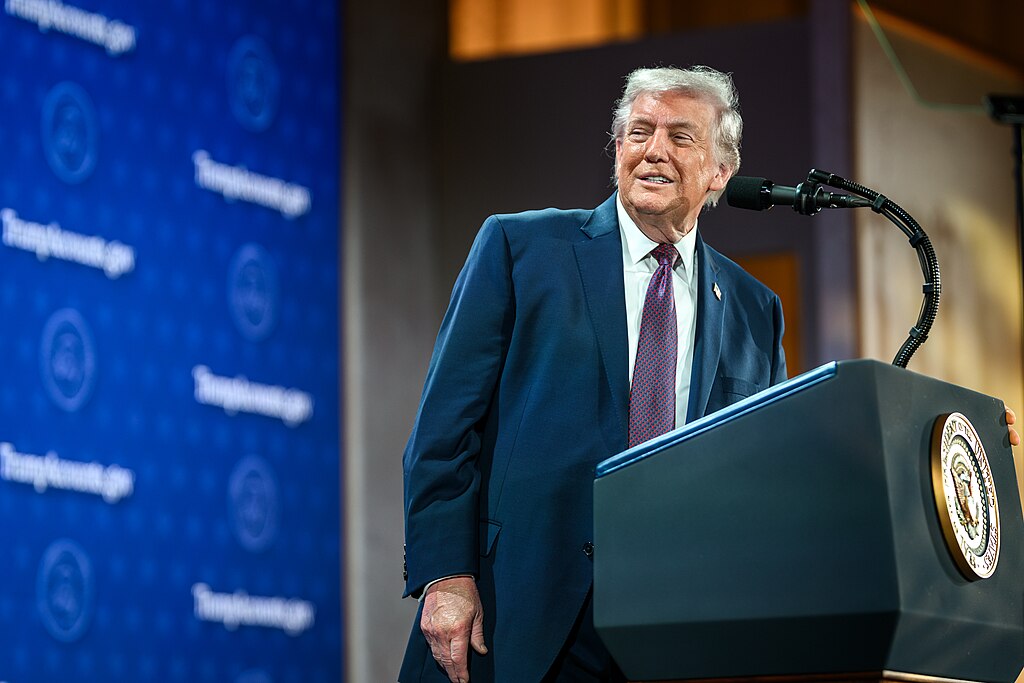
Shares of major Japanese pharmaceutical companies fell sharply in early Tokyo trading on Friday after the launch of TrumpRx.gov, a new U.S. government-backed website offering discounted prescription medicines to American consumers. The market reaction highlighted investor concerns about potential pricing pressure, profit margins, and the broader impact on global drugmakers following the policy shift announced by U.S. President Donald Trump.
Sumitomo Pharma led the declines, plunging 4.5% in morning trading, while Chugai Pharmaceutical, a key affiliate of Switzerland’s Roche, dropped 3.1%. Takeda Pharmaceutical, Japan’s largest drugmaker by market value and one of the country’s most globally exposed pharmaceutical firms, slipped 1.5%. The broader pharmaceutical sector index on the Tokyo Stock Exchange fell 1.6%, making it the second-worst performing industry sub-index among the exchange’s 33 sectors.
The sell-off followed the official launch of TrumpRx.gov on Thursday, a platform designed to provide Americans with access to lower-priced prescription drugs. The initiative is part of a broader effort by the Trump administration to reduce healthcare costs by introducing a “most-favoured nation” pricing model. Under this framework, U.S. consumers would pay drug prices comparable to those offered in other developed markets.
According to the announcement, the discounted pricing model is supported by agreements with 16 of the world’s largest pharmaceutical companies. In return for offering lower drug prices in the United States, participating drugmakers are expected to receive exemptions from certain U.S. tariffs. While the move is intended to ease the financial burden on American patients, investors appear concerned that it could erode revenue streams for multinational pharmaceutical companies, including those based in Japan.
Japanese drugmakers are particularly sensitive to U.S. policy changes due to their significant exposure to the American market, which accounts for a substantial share of global pharmaceutical sales. Analysts note that sustained pressure on drug pricing in the U.S. could force companies to reassess their pricing strategies, research budgets, and long-term growth projections.
The sharp decline in Japanese pharmaceutical stocks underscores broader market uncertainty as investors weigh the long-term implications of Trump’s healthcare and trade policies. As global markets digest the impact of TrumpRx.gov and potential pricing reforms, pharmaceutical companies worldwide may continue to face heightened volatility and scrutiny from both regulators and investors.