


 Trump Secures Russian Diesel Deal as US Fuel Prices Surge
  Gold Prices Rise as Hormuz Tensions Fuel Inflation Risks
  Gold Prices Fall Amid Rate Jitters; Copper Steady as China Stimulus Eyed
  Best Gold Stocks to Buy Now: AABB, GOLD, GDX
  FxWirePro: Daily Commodity Tracker - 21st March, 2022
  Oil Prices Trim Gains After Trump Rules Out Iran Strikes Before Midterms
  Iran Refuses to Halt Uranium Enrichment Amid US Nuclear Demands
  Trump Calls for Zelenskyy Replacement Amid Russian Diesel Deal
  Gold Prices Rise Above $4,200 as Russia-Ukraine Energy Truce Eases Oil Concerns
  Wall Street Falls as Oil Prices Rise and Tech Stocks Slide
  US Dollar Near 18-Month High Ahead of Inflation Data
  UK Finance Minister Healey Calls for Fiscal Discipline Amid Global Risks


 Add as a preferred source on Google
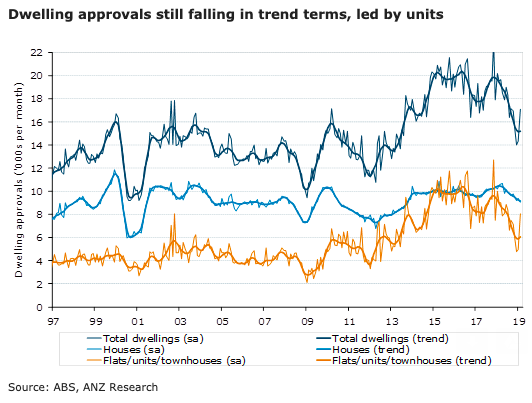
Australia’s building approvals increased sharply in February, building on the small lift in January. This suggests we may be past the peak period of falling building approvals after the sharp declines in November and December.
The country’s residential building approvals rose 19.1 percent m/m in February, following a 2.3 percent increase in January. The improvement was driven by a 62.4 percent m/m increase in unit approvals (from a 3.3 percent increase in January), while house approvals fell 3.7 percent m/m (from a 1.8 percent increase). The trend in approvals remains soft, though, down 21.7 percent y/y.
New South Wales saw another rise in approvals, rising 25 percent m/m in seasonally adjusted terms, led by a 70 percent increase in unit approvals, while detached house approvals fell 15 percent. Victoria experienced a sharp increase in seasonally adjusted approvals, up 37 percent m/m, driven by a massive increase in units (134 percent), while detached house were flat (0.6 percent).
Western Australia posted a decline, down 11 percent m/m (following a 28 percent increase in December). Total approvals in Queensland rose for the first time in several months, up 3 percent m/m seasonally adjusted. South Australia fell 2 percent m/m.
The value of non-residential approvals increased 2.1 percent m/m, following the 5.5 percent increase in January. In annual terms, however, non-residential approvals were 15.7 percent lower.
"Given data volatility, it is a little early to conclude that approvals have bottomed but these data are another sign that there is still life in the Australian economy," ANZ Research commented in its latest report.







