


 Bank of America Hit With $1.2 Billion Fine Over Money Laundering Failures
  NZDJPY Technical Outlook: Bullish Momentum Builds as Price Tests Key Support Levels
  Kalshi Seeks Sixth Circuit Review of Sports Betting Ruling
  CVS Pharmacy Agrees to $315 Million Opioid Settlement
  Major Pair Currency Score - EURUSD Bearish, USDCHF Bullish, and Key Levels to Watch
  FxWirePro: GBP/USD retreats as traders await US and UK inflation data
  FxWirePro: USD/ZAR eases as weaker dollar and lower oil prices support rand
  Nvidia’s China AI Chip Market Share Falls to 34% as Huawei Gains Ground
  AUDJPY Surges Past 111: Bulls Take Control Amid Broad-Based Australian Dollar Strength
  Arm Breaches Qualcomm License Deal, Jury Awards $2
  Alibaba Unveils Qwen AI Smart Glasses, Shares Rise 2%
  ECB-BoE Policy Divergence Drags
EURGBP trades weak for the third consecutive week
ECB-BoE Policy Divergence Drags
EURGBP trades weak for the third consecutive week  FxWirePro: USD/ZAR rises as hot US inflation boosts Fed rate hike bets
  Visa Wins China Approval to Prepare Domestic Payments Expansion
  FxWirePro: EUR/AUD gains slightly, but downward resumption looks likely
  Major Pair Currency Score: EURUSD & GBPUSD Bearish and Major Levels to Watch
  Samsung, SK Hynix Shares Plunge as China Chip Competition Grows


 Add as a preferred source on Google
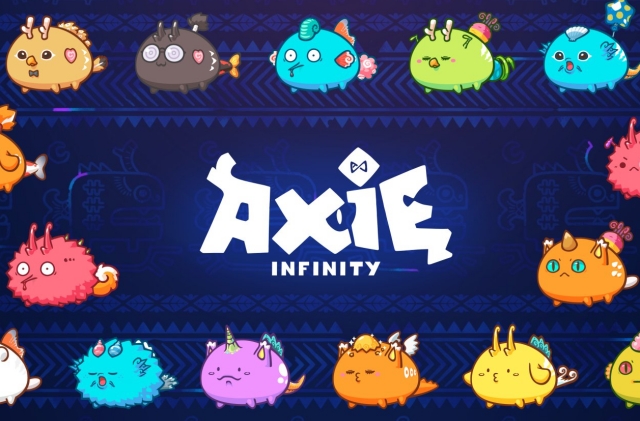
“Axie Infinity” is a type of non-fungible token (NFT) online video game, and it recently became so popular in the Philippines due to its play-to-earn mode of gaming. It allows players to earn after successfully competing in battles, and now the country’s Bureau of Internal Revenue says that the earnings in the game are taxable.
According to ABS CBN News, the tax collection agency of the Philippines said on Tuesday, Aug. 23, that players of “Axie Infinity” should register with the BIR and pay taxes for the income they get from playing the NFT game.
“Many are saying, ‘Why is the BIR taxing us when we are just playing?” Marissa Cabreros, the BIR deputy commissioner, said regarding the imposition of tax on online gaming. “Unfortunately, while you play, you get paid income, you earn. At the end of the day, there is a flow of income to our players, so that is still income that can be taxable.”
In any case, people can earn cryptocurrencies while playing “Axie Infinity,” and these can be exchanged for real cash money in pesos for Filipino gamers. In recent months, the popularity of this online NFT game title has exploded, and the value of crypto has also soared. This is the main reason why it attracted millions of players, particularly in Manila.
Likewise, the Business World reported that the nation’s Department of Finance (DoF) confirmed that “Axie Infinity” and other NFT games with play-to-earn options are subject to tax because they provide income derived from trading and investing in cryptocurrencies.
Antonette C. Tionko, DoF Undersecretary and Revenue Operations Group chief, stated that any gains from cryptocurrency are taxable, and this includes the earnings from playing NFT games. But then again, the official clarified that buying tokens that are needed in the game is not taxable.
She said that players of “Axie Infinity” must report the earnings they get from playing to the BIR so that they can pay the applicable tax. Tionko also pointed out that the game is not registered in the country, so the agency is looking to form a system for registrations in the Philippines.
“Apparently, it’s a non-resident foreign corporation,” she said. “It is not registered in the Philippines and that is one of the things that we hopefully capture once we have that system of registration for non-residents, those types of companies.”







