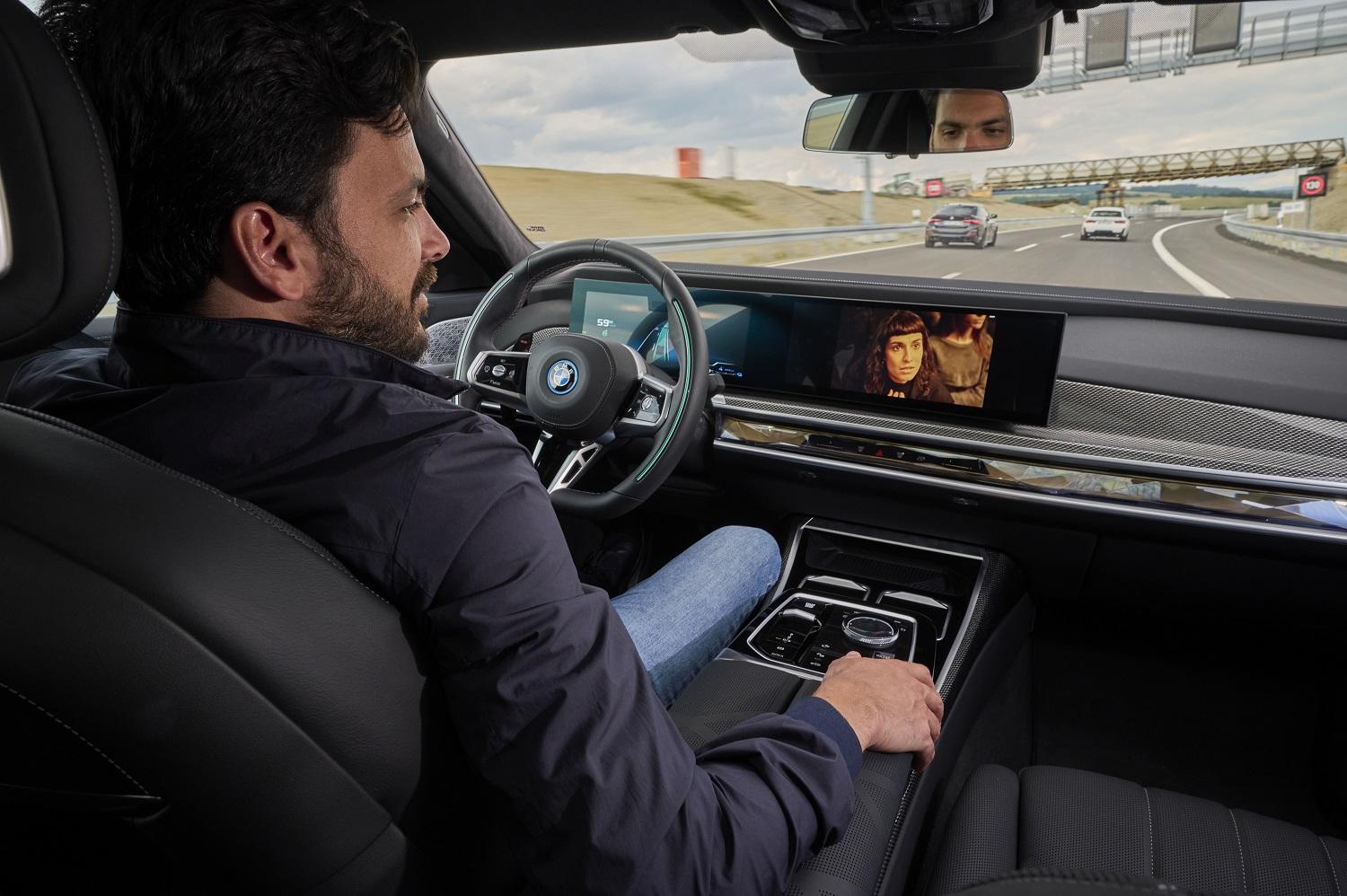
The BMW Group has recently obtained a test license for level 3 autonomous driving on high-speed roads in Shanghai, marking a significant development towards introducing driverless cars in the world's largest auto market. This move comes as part of China's efforts to accelerate the mass adoption of autonomous driving technologies.
BMW's Commitment to Advanced Autonomous Driving
In a press release, BMW revealed that it plans to incorporate level 3 self-driving functionality into its products once it aligns with Chinese laws and regulations. In a statement, BMW intended to launch products equipped with L3 self-driving technology. The new license allows BMW to broaden its testing of advanced autonomous driving technologies in Shanghai, building upon the previous license granted in 2018.
China has been actively pushing policies and issuing safety guidelines to promote the safe utilization of autonomous vehicles in public transport, as per Reuters. These efforts aim to facilitate the widespread acceptance and deployment of autonomous driving technologies across the country.
Exploring the Capabilities of Level 3 Highly Automated Driving
Level 3 highly automated driving enables drivers to momentarily divert their attention from the road and take their hands off the steering wheel. BMW recently announced that the new BMW 7 Series will soon feature Level 3 functionality, called BMW Personal Pilot L3. This advanced function assists drivers by controlling the car's speed, maintaining distance from the vehicle ahead, and ensuring alignment within the lane.
The Level 3 highly automated driving option, available exclusively in Germany, will be offered at 6,000 euros (including VAT). It encompasses the entire task of driving under Level 3 as defined by the Society of Automotive Engineers (SAE). When traveling at speeds of up to 60 km/h (37 mph) on motorways with divided carriageways, drivers can engage in other in-vehicle activities while the system takes control.
Thanks to its sophisticated sensors, BMW's Level 3 system stands out as the first of its kind capable of operating in low-light conditions. Furthermore, this integration of Level 3 functionality in BMW 7 Series vehicles showcases the company's commitment to advanced autonomous driving. The BMW Group becomes the first automaker to offer both an advanced Level 2 driving function, which allows hands-off positioning, and a Level 3 system.
Starting in December, interested buyers will be able to order the new BMW 7 Series featuring the Level 3 function, excluding the i7 eDrive50 and i7 M70 xDrive. Delivery of vehicles equipped with this innovative technology is expected to commence in March.
Photo: BMW Newsroom