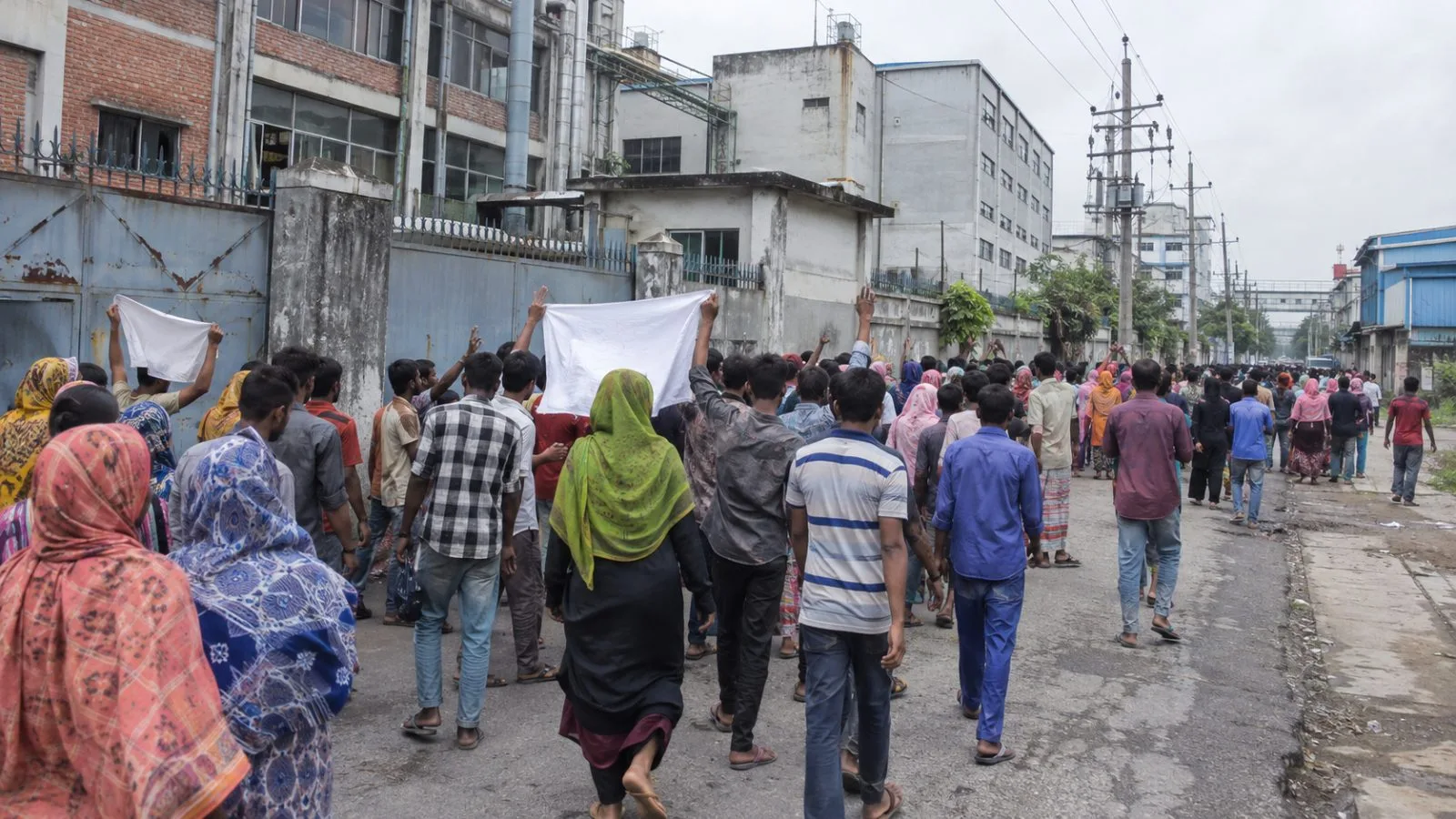
Bangladesh’s garment workers are demanding a Tk 30,000 monthly minimum wage as protests continue in an industry that accounted for 80.62% of national exports in fiscal 2025-26.
The demand would raise the legal monthly floor from Tk 12,500 to Tk 30,000, or 2.4 times its current level. Two Ministry of Labour and Employment notices dated Nov. 1 appear in the official gazette, appointing members to a six-person Minimum Wage Board. Labour and Employment Minister Ariful Haque Choudhury announced the board and said it would start work and convene promptly.
Protests continued Monday, Nov. 2, in industrial areas near Dhaka. AFP reported police used tear gas and stun grenades against demonstrators in Ashulia. The dispatch also described a blockade of the Dhaka-Tangail highway in Gazipur. The latest demonstrations followed factory disruptions during the wage protests reported by EconoTimes on Nov. 1.
Bangladesh Bureau of Statistics data put point-to-point inflation at 8.34% in September 2026, up from 8.26% in August. Food inflation was 7.22%, while nonfood inflation reached 9.30%.
Al Jazeera reported that garment worker Laili Begum earns about Tk 15,000 a month, sometimes rising to Tk 18,000 to Tk 20,000 with overtime. The outlet said she struggles to afford meals and that her children have left school. Begum told Al Jazeera, “This is how we survive now.”
Figures from the Bangladesh Garment Manufacturers and Exporters Association, compiled from Export Promotion Bureau data, put ready-made garment exports at $38.7 billion in fiscal 2025-26. That was 80.62% of Bangladesh’s total exports. Bangladesh Knitwear Manufacturers and Exporters Association President Mohammad Hatem told The Business Standard that factories needed time to negotiate new prices with international buyers before putting higher wages into effect.
Babul Akter, the workers’ representative on the board, told The Business Standard he would work toward an announcement by December. A labor ministry secretary told the newspaper the ministry could not set a deadline for the independent board. Labor leaders’ proposal for the new rate to take effect in January has not been confirmed.