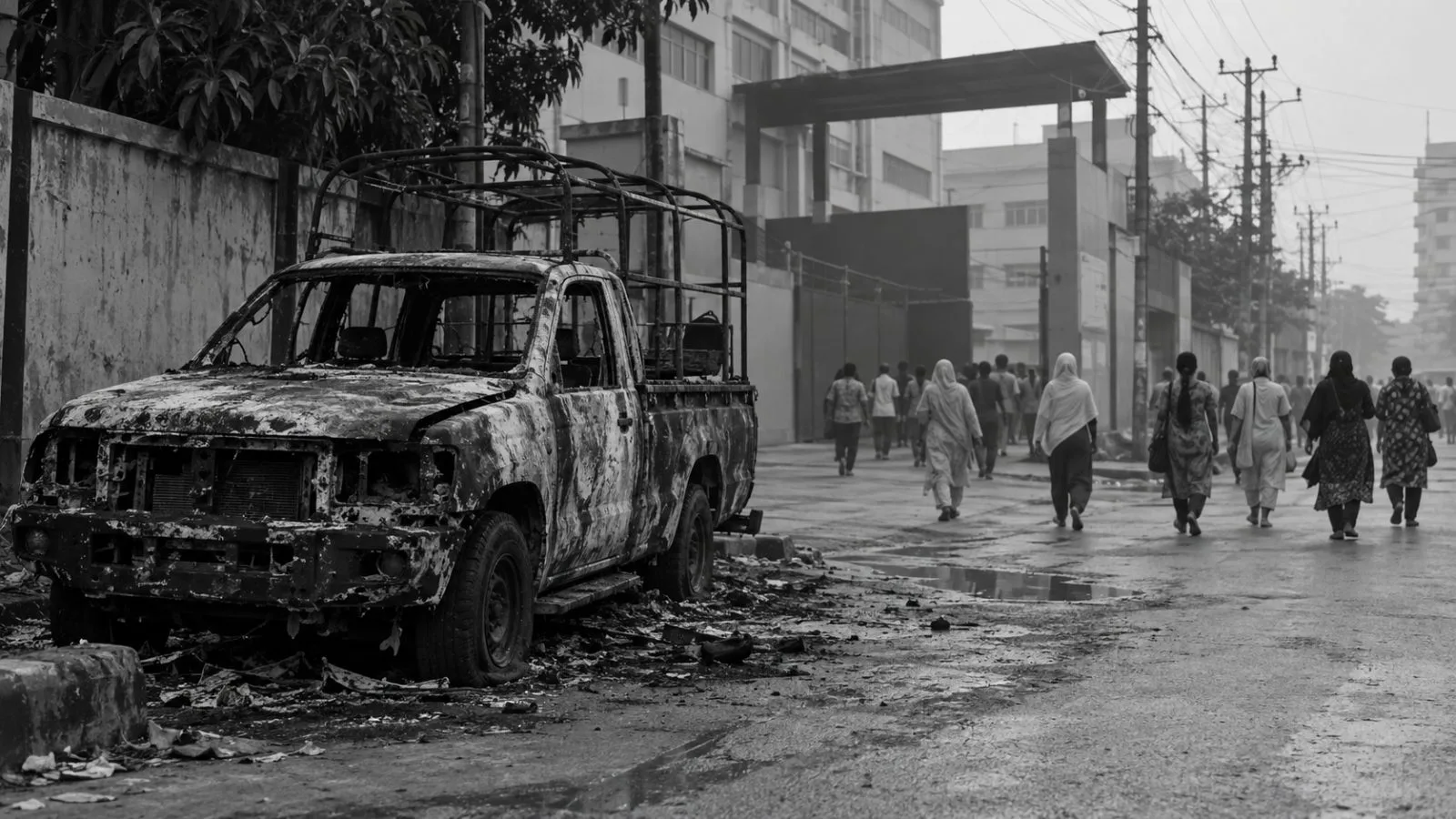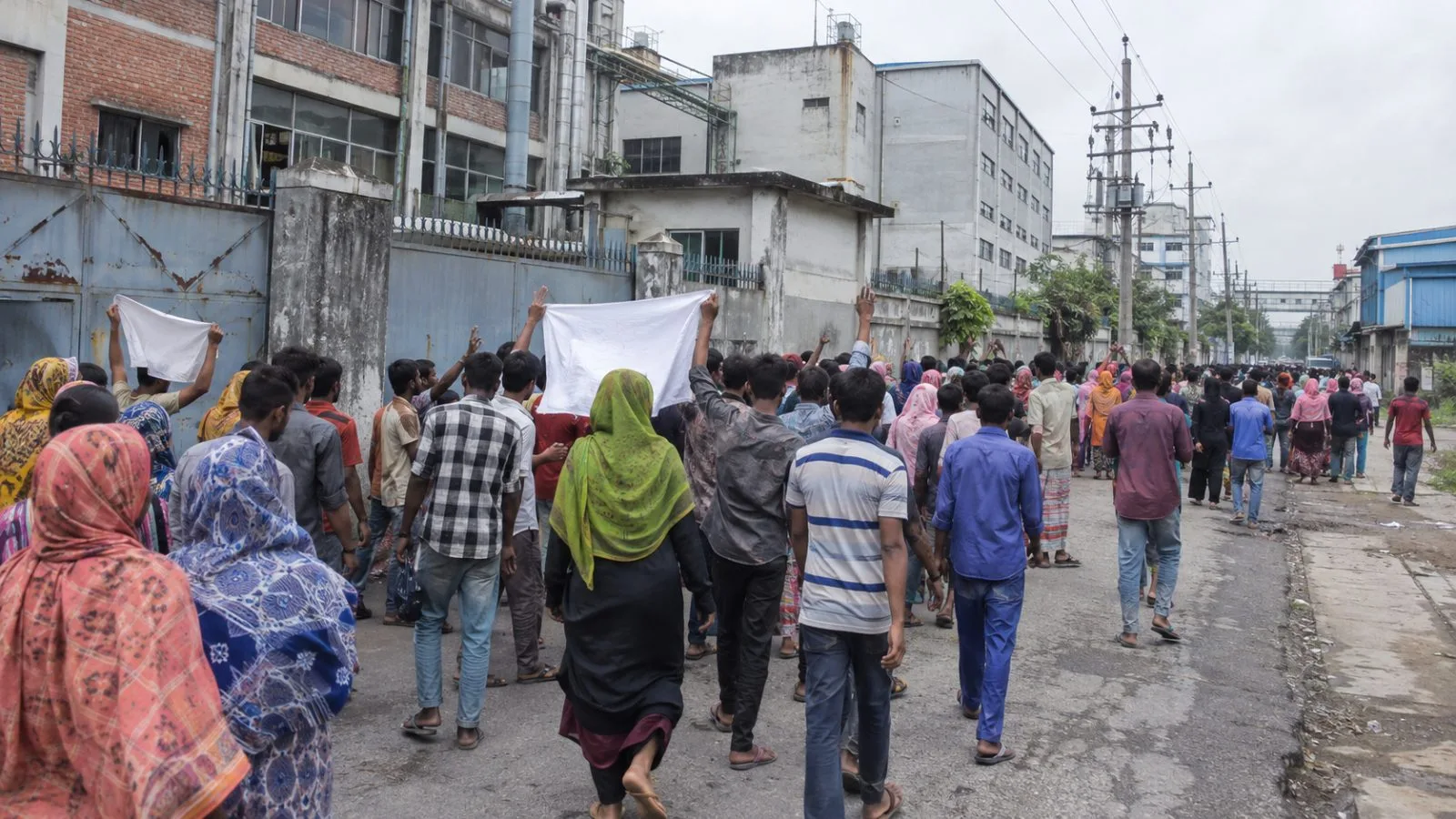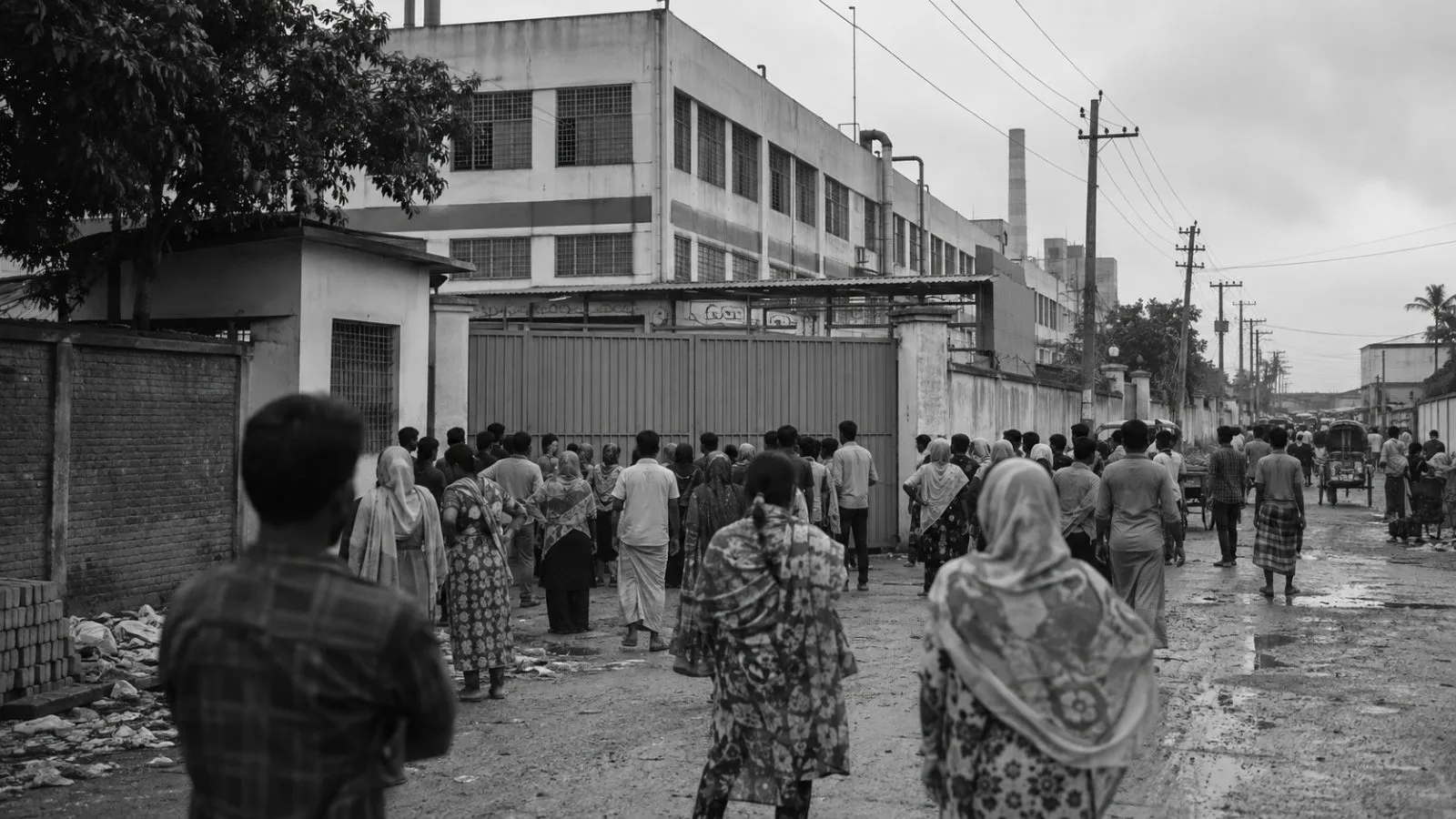
Bangladesh’s garment wage protests reached a fourth day Tuesday, Nov. 3, as several factories suspended work in Ashulia and Gazipur, disrupting an industry that employs about four million people and ranks second worldwide in apparel exports after China.
Workers demonstrated in Ashulia, Gazipur and Dhaka’s Mirpur district, with some attempting to block major highways. Ashulia Industrial Police Superintendent Mohammad Mominul Islam Bhuiyan said officers used tear gas and sound grenades after protesters threw stones and bricks. Reuters reported dozens were injured in clashes, including several police officers.
Reuters reported several factories in Gazipur and Ashulia suspended operations or declared holidays on Nov. 3. It estimated nearly 700 factories shut on Nov. 2. The Bangladesh Garment Manufacturers and Exporters Association (BGMEA) counted disrupted operations at 529 factories on Nov. 1, a separate tally covered in EconoTimes’ earlier report on the factory disruptions. The figures cover different dates and measures.
Workers are seeking a monthly minimum wage of Tk 30,000 ($245), compared with the current Tk 12,500. They say rising living costs and inflation have eroded their purchasing power. Bangladesh Bureau of Statistics data showed year-over-year inflation was 8.34% in September 2026.
BGMEA figures compiled from Export Promotion Bureau data put ready-made garment exports at $38.7 billion in fiscal 2025-26, or 80.62% of Bangladesh’s total exports. Factory owners cited higher operating costs and softer demand in export markets, Reuters reported. Industry officials warned prolonged closures could delay shipments.
The government appointed a six-member wage board on Nov. 1 to review garment-sector pay, but protests continued. Babul Akter, the workers’ representative on the board, told The Business Standard he would work toward an announcement by December. Labour Secretary Md Abdur Rahman Tarafder told the newspaper the ministry could not set a formal deadline for the independent board. The Business Standard reported that a ministry official had informally asked for a proposal by December.