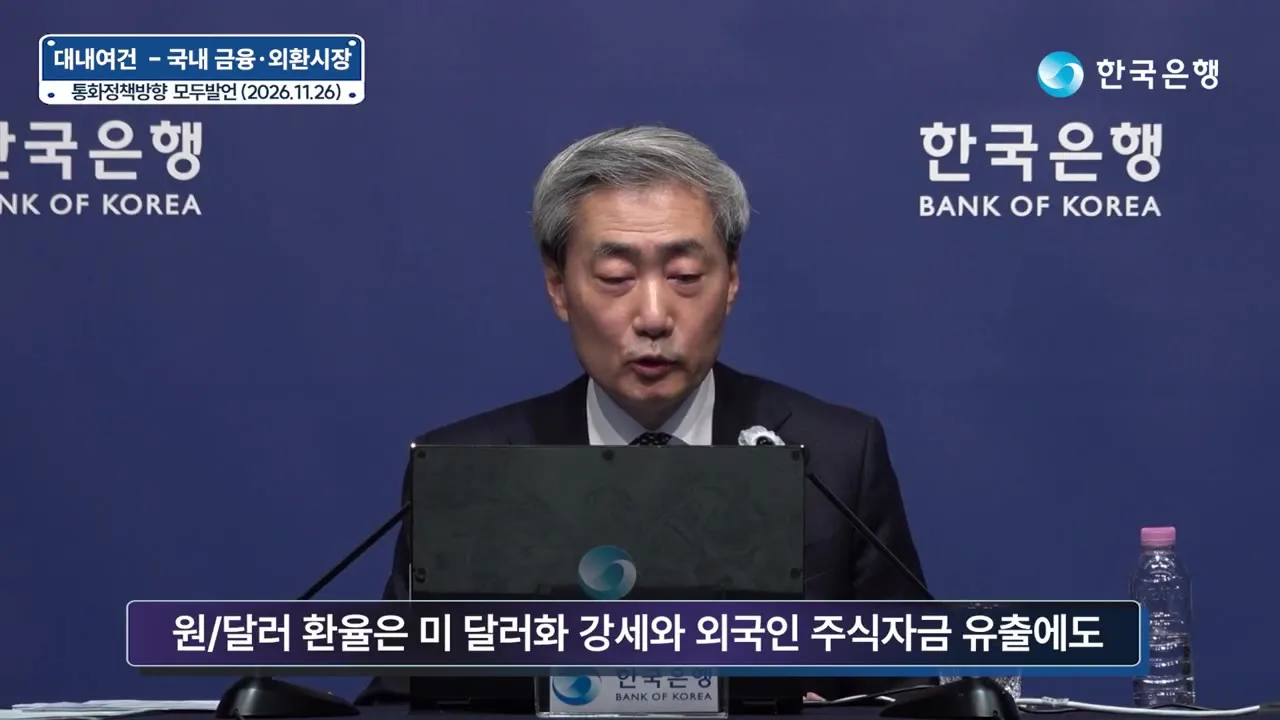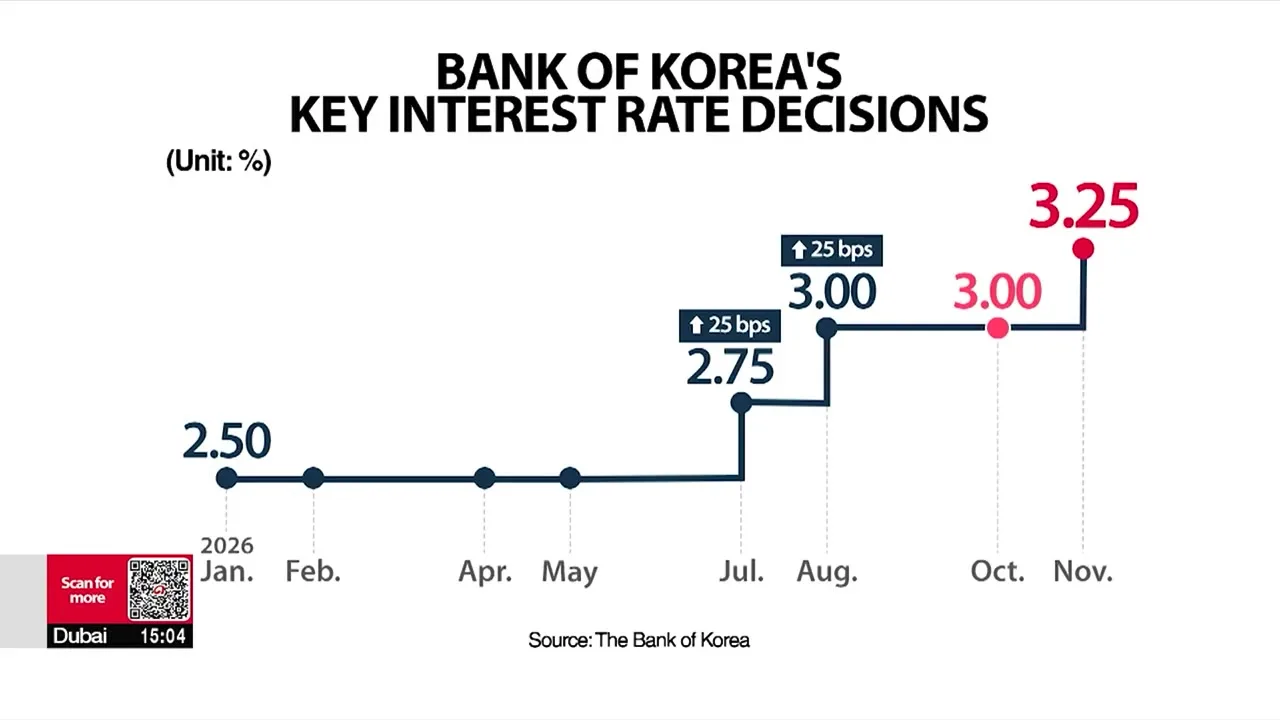
The Bank of Korea raised its policy rate by 25 basis points to 3.25% on Nov. 26, citing stronger growth, inflation above target and continuing financial risks, Governor Shin Hyun-song said.
The decision followed the bank’s November monetary policy press conference, published that day on its official YouTube channel. The governor’s remarks are translated from Korean. Two Monetary Policy Board members preferred leaving the rate at 3%.
The bank expects the economy to grow 3.9% this year, 4.1% next year and 3% in 2028, well above its August projections. Shin said sustained investment in artificial-intelligence infrastructure should support exports and investment before feeding into household incomes and consumption.
Consumer-price inflation is forecast at 2.7% this year and 2.4% next year. Core inflation is expected at 2.6% in both years. Inflation is likely to stay above the target through next year before moving closer to it in 2028 as tighter monetary policy takes effect.
“Today’s decision reflects both a pre-emptive response and a response to price increases that have already become visible,” Shin said. He said cost pressures were still being passed through to prices, while stronger demand was also adding to inflation. The bank therefore needed to restrain both demand and supply pressures through policy.
Shin said the economy was expected to grow about 4% this year and next, supported by semiconductors and other technology investment. He said the share of national income going to corporate operating profits could reach about 60%, compared with about 40% for households, with semiconductor companies’ profits approaching 700 trillion won. He said that money would return to the economy through taxes, bonuses, dividends and investment, though the effect on consumption would take time.
The governor said the bank’s 4.1% growth forecast was based on real gross domestic product and reflected orders, receipts and sales information from semiconductor companies. He said the chain-weighted method used in the forecast followed international statistical standards and gave greater weight to sectors that had expanded.
The bank also lifted the interest rate on its financial-intermediary support loans to 1.5% from 1.25%. Shin said vulnerable borrowers should be supported through fiscal and targeted financial measures, including debt restructuring where needed. He said short-term funding and credit markets remained broadly stable despite volatility in stocks and rising household lending.
Shin said the bank would wait for clearer confidence that inflation was converging steadily toward its target before deciding on further increases. The timing of any additional move would depend on the growth and inflation paths. He said the bank’s potential-growth estimate, due in a research report in December, was running above its previous 2024 estimate, but should not be treated as a direct guide to the current policy rate.