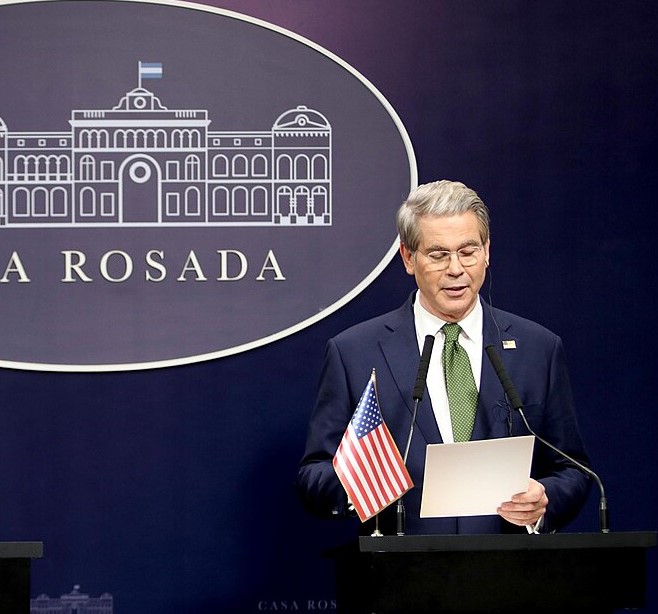
U.S. Treasury Secretary Scott Bessent reassured markets on Monday that the global oil supply remains stable, pointing to increased vessel traffic through the Strait of Hormuz as a key indicator of improving conditions. Speaking in a Fox News interview, Bessent expressed confidence in the current state of energy markets amid ongoing geopolitical concerns surrounding one of the world's most critical maritime chokepoints.
Bessent made clear that the United States intends to assert greater influence over freedom of navigation through the Strait of Hormuz, a waterway through which a significant portion of the world's oil supply passes daily. He stated that Washington plans to ensure open and secure passage for commercial vessels, either through direct U.S. naval escorts or through a coordinated multinational maritime effort.
"Over time, the U.S. is going to retake control of the Straits and there will be freedom of navigation, whether it is through U.S. escorts or a multinational escort," Bessent said.
The Strait of Hormuz has long been considered a critical pressure point in global energy security, with any disruption to traffic there capable of sending oil prices surging worldwide. Bessent's comments come as the Biden-era concerns over regional tensions continue to shape U.S. foreign and energy policy under the current administration.
By signaling a firm commitment to securing the strait, the Treasury Secretary's remarks are likely to offer some reassurance to energy markets and international trade partners who depend on uninterrupted oil flows from the Persian Gulf region. Analysts are watching closely to see how the U.S. plans to operationalize its maritime strategy, particularly given the diplomatic complexities of organizing a multinational naval coalition in such a volatile region.