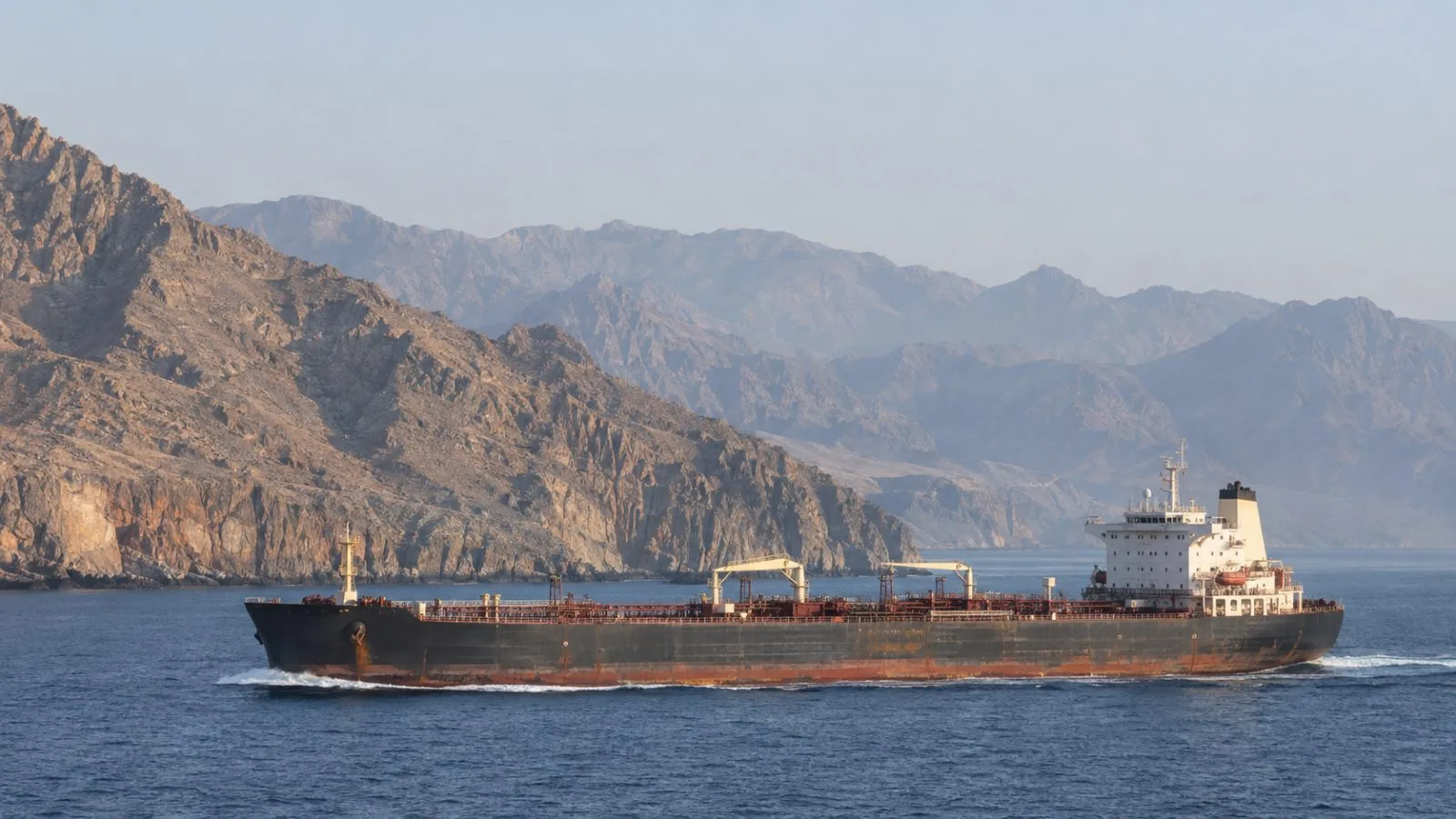
Former U.S. Secretary of State Antony Blinken said any settlement to the U.S.-Iran war may require a concession over the Strait of Hormuz, putting a major oil route at the center of diplomacy.
The U.S. Energy Information Administration (EIA) said total oil flows through Hormuz averaged 20.9 million barrels per day in the first half of 2025. The historical measure shows the scale of energy traffic at stake but does not establish current volumes.
Blinken spoke Saturday, Nov. 14, at the Hindustan Times Leadership Summit. He said a resolution would likely involve Washington offering Iran something and floated a toll-like arrangement as one possibility. He also urged the administration to find an exit, saying, “The best thing to do would be to get an off-ramp.” No U.S. negotiating position or toll agreement was announced.
Blinken characterized President Donald Trump’s approach as an effort to change Iran’s government that had not worked as hoped. In a March 12 release, the White House described the campaign’s goals as targeting Iran’s missile capabilities and production, its navy and support for proxy groups, while preventing Tehran from obtaining a nuclear weapon. Vice President JD Vance said the regime’s fate was incidental to the operation’s main objective.
Blinken said a future nuclear agreement might be no better than the 2015 Joint Comprehensive Plan of Action, concluded by Iran and the P5+1. Trump announced the U.S. withdrawal from the agreement on May 8, 2018. Hindustan Times also reported that Blinken linked the war to U.S. inflation and voter anger.
The Associated Press reported Saturday that Qatar was still seeking an interim arrangement to restore shipping through Hormuz. Two regional diplomats cited by AP described Trump’s position as uncertain. Michael Singh of the Washington Institute for Near East Policy told AP that the U.S. naval blockade was curbing Iranian crude flows. EconoTimes previously covered U.S. pressure for a deal as Hormuz talks continued.