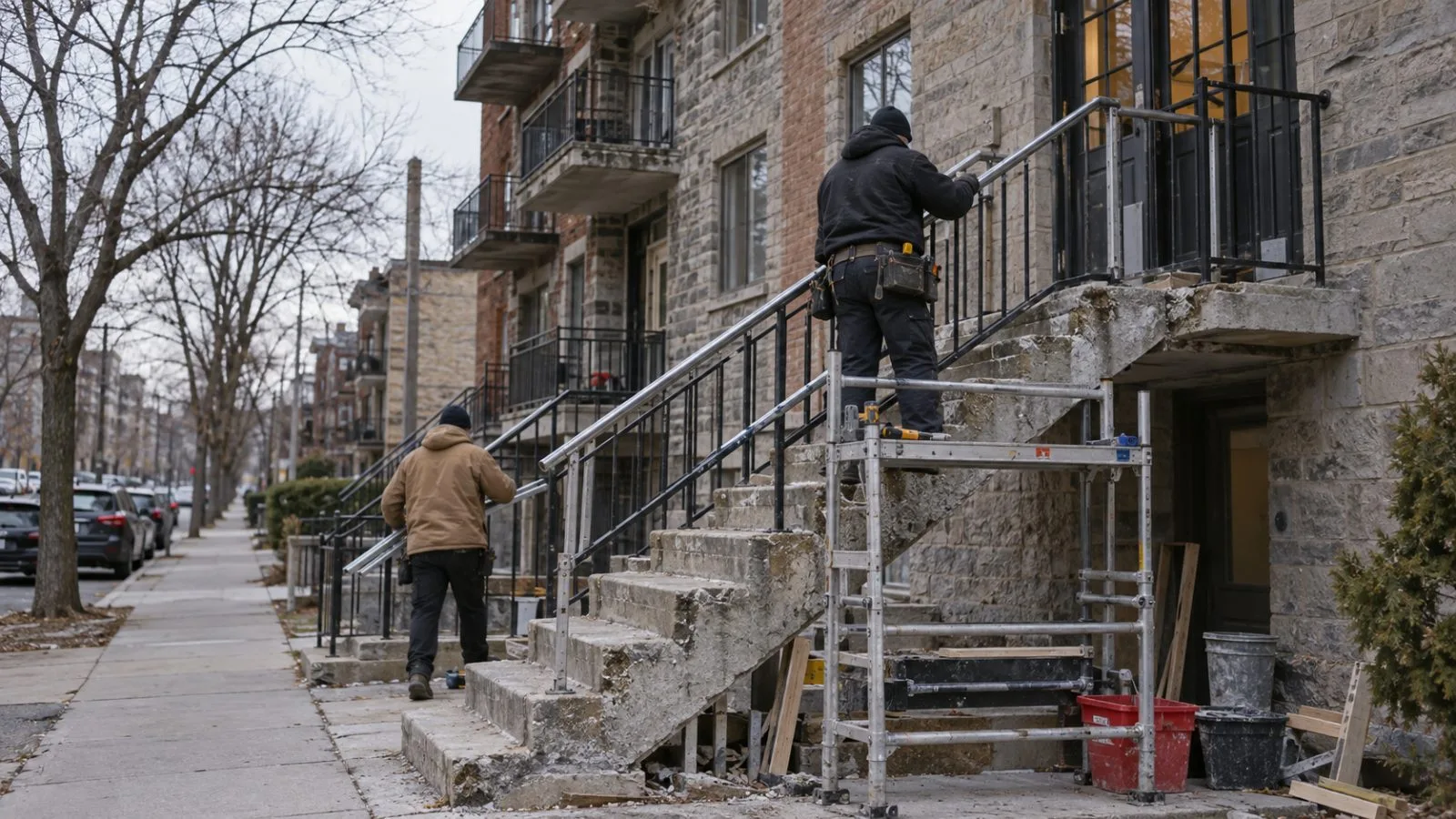
Nearly 920,000 Canadian dwellings needed major repairs in 2021, the Canada Mortgage and Housing Corporation (CMHC) found, highlighting the challenge of maintaining housing as Canada adds supply.
The tally was 919,550 of 14,978,940 dwellings, or 6.1% of the housing stock counted in the 2021 Census. CMHC published its analysis Thursday, Oct. 22, 2026; the figures describe conditions in 2021, not a current-year estimate.
CMHC says keeping existing homes in service can help preserve affordable housing as new units are built. The share needing major work has stayed close to its 2016 level, while the number of affected dwellings rose over the longer term as the housing stock expanded.
Repair rates varied by tenure. Major work was needed in 7.3% of renter dwellings and 5.3% of owner dwellings. The rate was 9.4% for subsidized housing and 36.8% for dwellings provided by a local government or First Nation, according to CMHC’s Census-based figures.
Statistics Canada found that 16.4% of Indigenous people lived in dwellings needing major repairs, compared with 5.7% of non-Indigenous people. Those are population-based figures, distinct from CMHC’s rates for types of dwellings. CMHC said geographic setting, climate and the resources available for housing upkeep are linked to repair needs in Indigenous communities.
Statistics Canada describes the Census category as covering dwellings with serious plumbing or electrical problems, or a need for structural work on walls, floors or ceilings. In the 2022 Canadian Housing Survey, 25.2% of dwellings needing major repairs had reported mold or mildew, compared with 1.9% of those needing only regular maintenance. The corresponding pest figures were 38.6% and 10.6%, CMHC reported.
Statistics Canada data put annual household spending on housing maintenance and repairs at about C$25 billion. CMHC says spending on rental housing is about 23% higher than on owner-occupied housing, partly because rental homes tend to be older.
“Every home lost to deterioration is a home that needs to be replaced,” CMHC Chief Economist Mathieu Laberge said in a release.