


 Trump Buys SpaceX Shares After Record IPO
  Judge Blocks Trump Mail Voting Order Ahead of 2026 Midterms
  Meta Agrees to $18 Billion Settlement, Tightens Teen Social Media Rules
  Trump Orders Reduction in U.S.-South Korea Military Drills, Citing Kim Jong Un Ties
  US Revokes Over 175,000 Visas Under Trump Immigration Crackdown
  U.S. Disrupts China-Linked Hacking Campaign Targeting Government Agencies
  Prince Harry and Meghan Return to Britain With Children After Six Years in U.S.
  Carney’s Trump Tariff Pushback Wins Canadian Support, but Economic Risks Mount
  New Zealand Moves to Ban Social Media for Children Under 16
  Iran Weighs Conditions to Reopen Strait of Hormuz
  Nepal Declines Foreign Rescue Aid After Deadly Flash Flood
  Pentagon Eyes 100-Year Lease on Venezuela Oil Fields
  Israel Weighs Expelling UK Officials From Gaza Coordination Center
  OpenAI Data Center Chief Chris Malone Exits Ahead of Planned 2027 Listing
  ICE to Complete Nationwide Body Camera Rollout by End of August
  Ecuador Court Convicts Ex-President Lenin Moreno in Bribery Case


 Add as a preferred source on Google
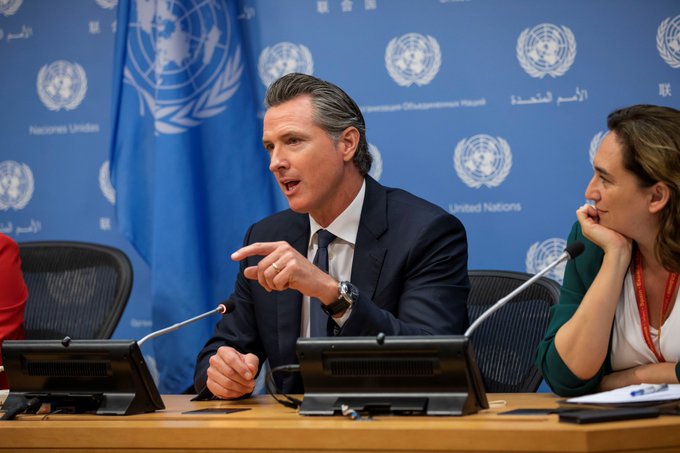
California Governor Gavin Newsom signed a landmark executive order Monday, setting new standards for artificial intelligence governance in state contracting. The directive requires companies seeking government contracts to implement safeguards that prevent AI misuse, including the generation of illegal content, discriminatory outputs, and civil rights violations — marking one of the most comprehensive state-level AI regulations in the country.
A key provision of the order mandates that state agencies watermark AI-generated images and videos, a move designed to combat misinformation and increase transparency around synthetic media. This follows growing national concerns about deepfakes and AI-generated disinformation influencing public perception.
The executive order also directly addresses federal supply chain risk designations. Rather than automatically deferring to Washington, California will independently assess companies flagged by the federal government and may continue contracting with them if the state's own review finds no credible risk. This is a pointed response to the Pentagon's recent decision to label AI company Anthropic a supply chain risk, effectively barring it from U.S. military contractor work.
State agencies have 120 days to act under the order. The California Department of General Services and Department of Technology are tasked with developing new AI-related vendor certification recommendations, allowing firms to formally attest to responsible AI governance and public safety commitments.
The order reinforces California's determination to chart its own regulatory course on artificial intelligence, even as some Republican lawmakers push for states to defer to federal oversight on tech regulation. California Attorney General Rob Bonta echoed this independent approach, telling Reuters in February that his office is actively building in-house AI expertise through a dedicated oversight, accountability, and regulation program.
As AI becomes more deeply embedded in public sector operations, California's proactive stance signals that states are ready to lead where federal policy has yet to follow.







