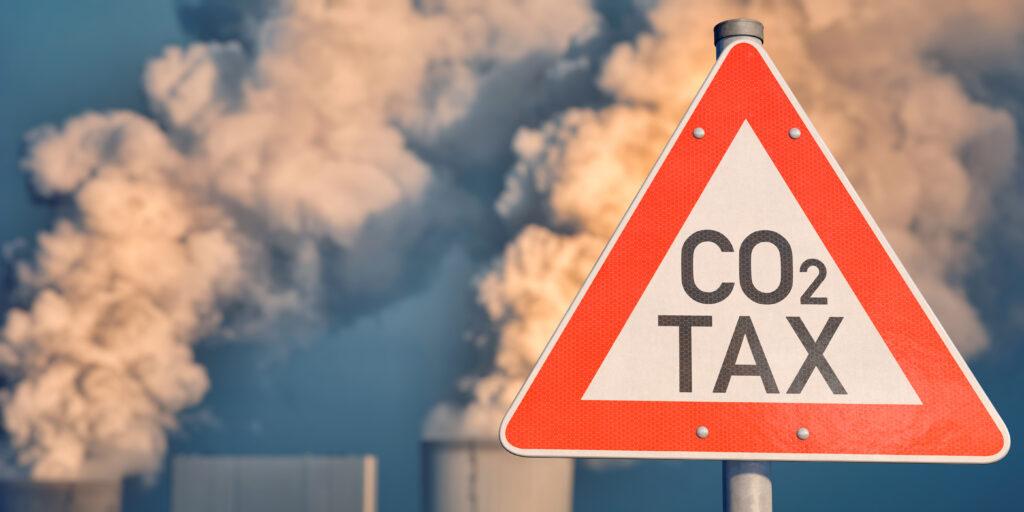
South Korean firms may face between 7.3 trillion won to 36.3 trillion won in additional taxes if the country comes up with a carbon tax law, according to Lee Soo-min, a researcher with Nice Rating.
Hardest to be hit are those from heavy industries that emit higher carbon dioxide levels, such as steel, petrochemical, and power utility companies.
A bill on carbon tax in line with EU’s Carbon Border Adjustment Mechanism (CBAM) is currently pending in the parliament.
CBAM, which will tax products responsible for higher carbon dioxide emissions during manufacturing, is set for full implementation in 2026.
Lee noted that based on the analysis of the CBAM, the amount of border tax paid to China could be up to 1.5 trillion won, while the EU and the US may aggressively tax Korean firms.
The current costs borne by Korean companies are below standards suggested by the International Monetary Fund and the World Bank, but the additional measure will further pressure local companies.



How America courted increasingly destructive wildfires − and what that means for protecting homes today
How to create a thriving forest, not box-checking ‘tree cover’
Lake beds are rich environmental records — studying them reveals much about a place’s history
How ongoing deforestation is rooted in colonialism and its management practices
Rise of the Zombie Bugs takes readers on a jaw-dropping tour of the parasite world
China’s Services Sector Posts Slowest Growth in Five Months as Demand Softens
Gold Prices Edge Higher as Markets Await Key U.S. PCE Inflation Data
Japan’s Nikkei Drops as Markets Await Key U.S. Inflation Data
Dollar Weakens Ahead of Expected Federal Reserve Rate Cut
BOJ Faces Pressure for Clarity, but Neutral Rate Estimates Likely to Stay Vague
The UK is surprisingly short of water – but more reservoirs aren’t the answer
Swimming in the sweet spot: how marine animals save energy on long journeys
RBI Cuts Repo Rate to 5.25% as Inflation Cools and Growth Outlook Strengthens 


