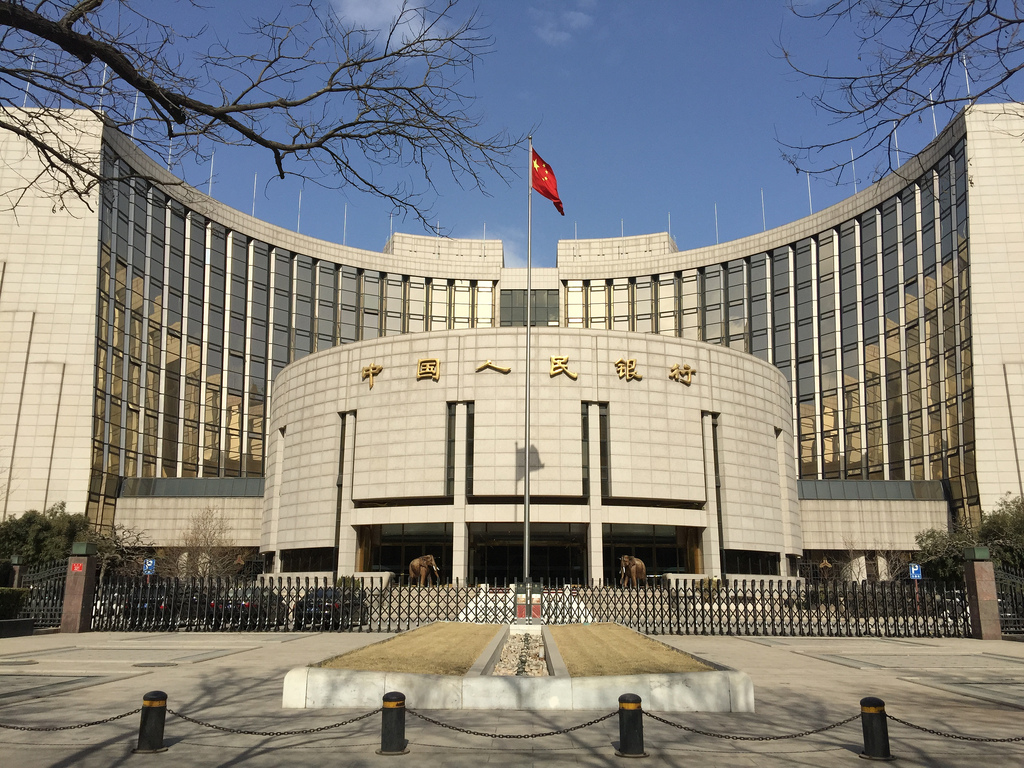
China kept its benchmark lending rates unchanged in October 2026, marking the 17th consecutive month without an adjustment as policymakers balance economic growth concerns with mounting pressure on banking sector profitability.
According to data released on Tuesday, October 20, China's one-year loan prime rate (LPR) remained at 3.00%, while the five-year LPR was maintained at 3.50%. The decision matched market expectations, reflecting Beijing's cautious approach to monetary policy amid mixed economic signals.
The one-year LPR serves as a key benchmark for corporate and household borrowing, influencing financing costs across the economy. Meanwhile, the five-year LPR plays a significant role in determining mortgage rates and other long-term lending costs, making it particularly important for China's struggling property market.
The People's Bank of China (PBOC) maintained its policy stance following stronger-than-expected economic growth figures for the third quarter. China's gross domestic product (GDP) expanded 4.5% year-on-year, improving from 4.3% in the previous quarter and surpassing economists' forecasts.
Robust export performance helped support economic activity despite continued weakness in domestic consumption. However, China's property sector remains under significant pressure, with sluggish housing demand and subdued investment weighing on the broader economic recovery.
The decision to leave interest rates unchanged suggests Chinese authorities currently see limited urgency for additional monetary easing. Policymakers must also consider the impact of lower lending rates on commercial banks, which face narrowing profit margins amid challenging credit conditions.
Although stronger exports have provided economic stability, analysts remain focused on whether household spending, private investment and property transactions can deliver a more sustainable recovery.
Beijing has established a 2026 economic growth target of 4.5% to 5.0%, placing additional attention on the effectiveness of existing economic stimulus measures and potential policy adjustments.
Investors will closely monitor upcoming PBOC announcements, consumer spending figures, property market indicators and credit growth data for signs of further monetary support.
For now, China's decision to maintain its benchmark lending rates highlights policymakers' preference for stability as the world's second-largest economy navigates uneven domestic demand, banking profitability concerns and uncertainty surrounding its longer-term growth outlook.