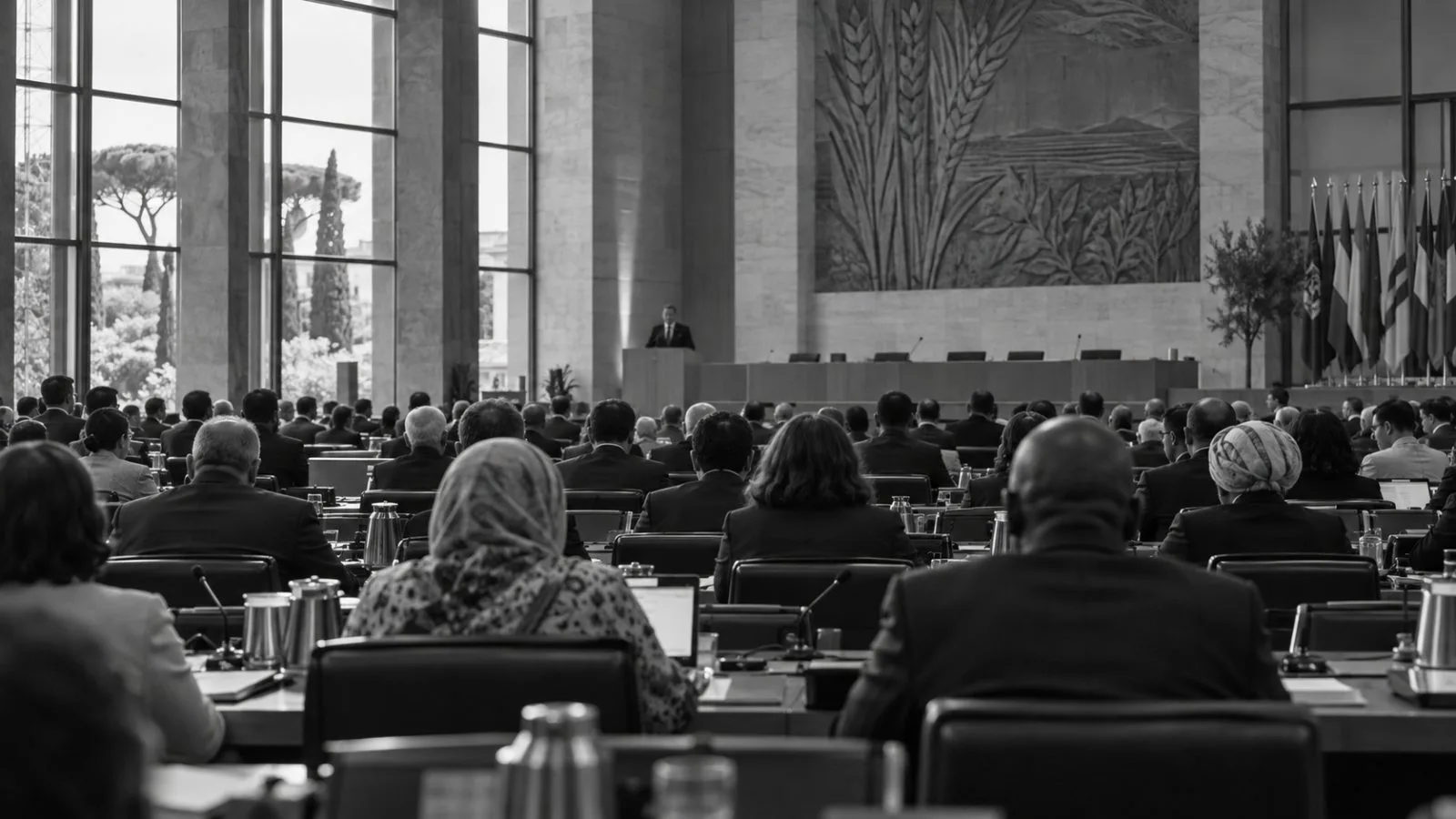
U.N. High Commissioner for Human Rights Volker Türk urged wider social protection and fairer farmland access in Rome on Monday, as an estimated 2.1 billion people faced food insecurity in 2025.
That estimate, from the Food and Agriculture Organization of the United Nations (FAO), covered 25.8% of the world’s population experiencing moderate or severe food insecurity. A narrower FAO measure counted 645 million people as hungry. Türk said the world’s food supply exceeded 3,000 calories per person each day, yet reductions in hunger had not kept pace.
Food waste and unequal farmland control were among the pressures Türk cited. The United Nations Environment Programme (UNEP) estimated that household food discarded in 2022 amounted to more than 1 billion meals per day. FAO research found farms in the largest 1% category operate more than 70% of farmland worldwide. Türk also pointed to the lack of government support and land access faced by many women farmers and Indigenous Peoples.
A June-to-November 2026 outlook from the FAO and World Food Programme (WFP) identified armed conflict and violence as primary drivers in 12 of 13 hunger hotspots. WFP said a funding shortfall would leave about 500,000 fewer people in Gaza receiving its food and cash assistance in October than in September. WFP said it planned to assist 1.1 million people in October, down from 1.6 million in September.
Among Türk’s proposals were farm policies to reduce poverty, fairer taxation and wider access to land, water and seeds. He also urged stronger social protections and climate action. He said governments should uphold the rules of war and prevent starvation from being used as a weapon.
U.N. Special Rapporteur on the Right to Food Sofía Monsalve Suárez said famine and the use of starvation in war were growing concerns. She said 1.4 million people in six countries faced catastrophic conditions, nine times the total in 2016, and that 266 million people faced acute hunger each day. Monsalve Suárez said chronic hunger declined in 2025 while acute hunger has risen since 2016, and called for stronger prevention and accountability measures.
The Committee on World Food Security’s Rome session is scheduled to end Oct. 23.