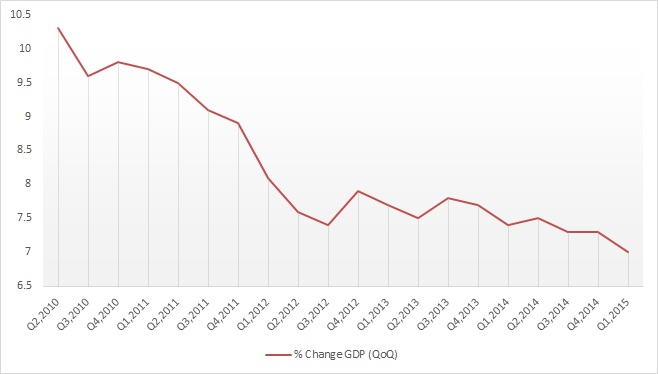
Today Chinese GDP growth once again surprised to the downside.
- Chinese GDP growth slowest since 2008/09 crisis. GDP grew 1.3% on a quarterly basis and 7% from a year ago in the first quarter.
Chinese officials have stipulated 7% growth target for the economy this year along with inflation of 3%. However other broad macro-economic trend suggests that GDP might fall further.
- China's export growth slowed by -15% in March and imports by -12.7%, both from a year ago.
- Trade balance is lowest since last year March at $ 3 billion. Historically speaking Chinese trade balance usually picks up post March. Investors will be cautiously watching any changes.
- Money supply growth has fallen to 11.6%, lowest since crisis.
- China's large forex reserve is coming under pressure has now fallen to $3.7 trillion from prior $3.84 trillion.
- Debt burden is enormous, now stands 251% of GDP, whereas according to analyst near term burden remains high which is expected to put pressure on China's Forex reserve.
- China's industrial production for March dropped to 5.6% y/y.
- Urban investments, which is vital component of Chinese growth dropped further to 13.5%.
- Retail sales dropped 10.2% from prior 10.7%.
With all Chinese growth indicators hitting new lows, prospect for a 7% growth this year looks gloomy.
However, Chinese stock index so far ignored weak fundamentals and have rallied more than 100% in last 12 months. However, today CSI 300 is down -1.24% to 4084.