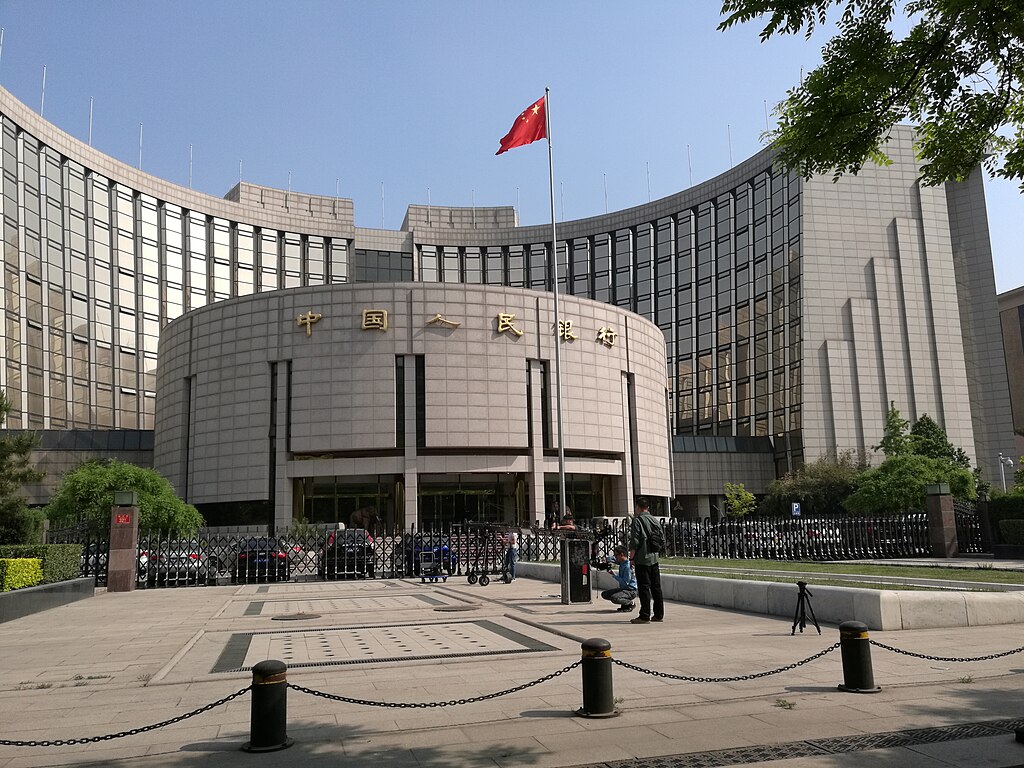
China’s slowing loan growth is likely to become a lasting feature of its economy as weakness in the property sector and local government financing reduces demand for credit, People’s Bank of China Governor Pan Gongsheng said.
Pan’s comments, published Wednesday in the Communist Party’s theoretical journal Qiushi, followed data showing that China’s new bank loans recovered in August from July’s record contraction but remained below analysts’ expectations. Weak borrowing demand from households and businesses continues to weigh on overall credit growth.
“Slower but higher-quality loan growth is likely to become one of the new normal features of macroeconomic operations,” Pan said.
The PBOC governor linked the shift to structural changes in China’s economy. Lending associated with property and local government financing vehicles (LGFVs) is declining, while emerging industries have not generated enough borrowing demand to offset the reduction.
Pan said maintaining previous rates of credit expansion would be both difficult and unnecessary. China currently has more than 280 trillion yuan ($41.73 trillion) in outstanding loans, with a significant portion connected to property and local government financing.
Meanwhile, high-tech manufacturing, green technology and other fast-growing sectors accounted for more than 40% of China’s economic growth during the first half of 2026. However, these industries depend more heavily on technology, data and intellectual property than traditional assets such as land and factories, making them less reliant on conventional bank loans.
Despite weaker credit demand, Pan said China’s financing conditions remain relatively accommodative and that effective borrowing needs are still being met.
The PBOC has also increasingly emphasized broader financing indicators instead of treating bank lending as the main measure of credit conditions. In 2025, loans represented 45% of the increase in total social financing, while bond and equity financing together accounted for 47%, surpassing loans for the first time.
Pan added that slower aggregate financing growth could help stabilize China’s leverage after years of rapid debt accumulation. He warned that excessive financial expansion could increase leverage, encourage speculative circulation of funds and delay the exit of inefficient companies and excess industrial capacity, ultimately weakening economic efficiency.