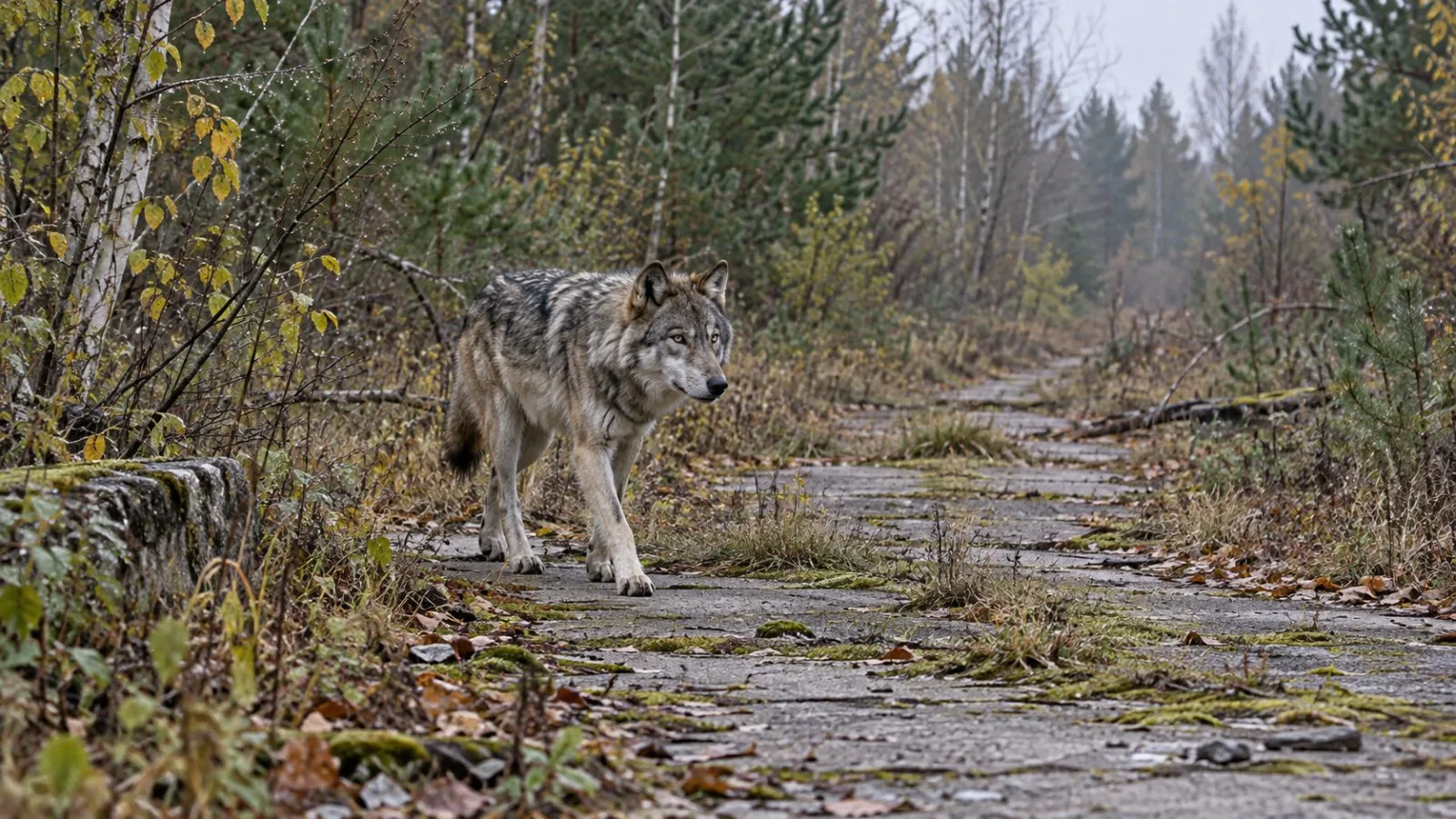
Researchers comparing wolves from Chornobyl and Belarus found radiation-associated blood changes, while a three-population genetic scan flagged candidate signals, but a study published April 28, 2026, did not establish radiation resistance.
Published in Molecular Ecology, the study compared blood-expression data from nine Chornobyl wolves with data from nine wolves in northern Belarus. Yellowstone wolves were also included in population analyses. The estimated mean total dose rate was 5.4 ± 3.1 μGy/h for the Chornobyl group and 0.02 ± 0.01 μGy/h for the Belarus group. Estimated mean lifetime doses were 124 ± 93 mGy and 0.5 ± 0.3 mGy, respectively.
Compared with the Belarus wolves, the Chornobyl animals had lower proportions of T cells and B cells and higher proportions of granulocytes and monocytes. In the Chornobyl group, expression levels for 359 genes correlated strongly with total dose rate; the associated genes were enriched for immune-regulation and stress-response pathways. The authors said the blood-cell pattern was consistent with immune stress, but it does not by itself establish what caused the changes or an individual wolf’s immune competence.
For the genetic scan, researchers compared sequence data from 11 Chornobyl wolves captured in 2014 and 2016 with data from northern Belarus and Yellowstone populations. They identified 17 single-nucleotide polymorphisms (SNPs) with significant Chornobyl-specific divergence. The authors highlighted variants in or near APBB1IP and EMC6 as candidate signals related to immune or anti-tumor processes. The study did not show that the variants improve survival or prevent cancer.
A separate study published in 2015 reported that wolf density at Belarus’s Polessye State Radioecological Reserve was seven times higher than at four uncontaminated regional reserves. Its authors analyzed density estimates based on winter-track surveys from 2005 to 2010, published by Belarus’s Ministry of Natural Resources. They said using the same survey method supported a relative comparison, though track counts could not establish precise absolute densities.
The 2026 researchers said abundant prey and low human disturbance may also support the wolf population, complicating efforts to isolate radiation’s effects from ecological conditions and population history.