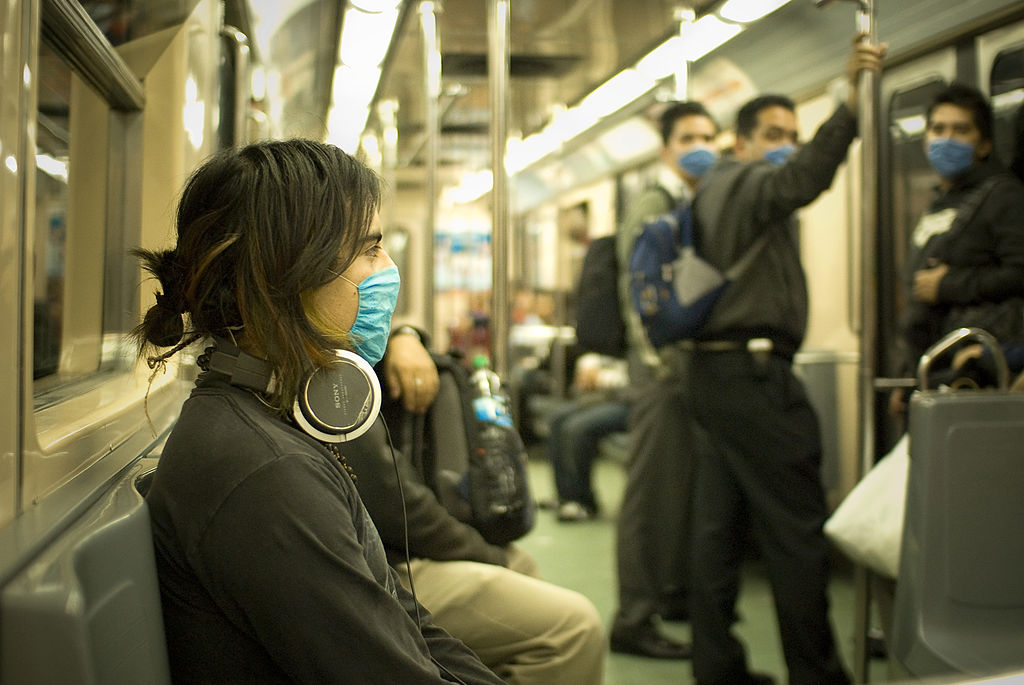
COVID-19 has triggered a crisis for public transport, as lockdowns caused its use to plummet by 70-90% worldwide. Even as lockdowns ease, buses and trains are can only carry 15% of the usual number of people due to social distancing requirements – taking the “mass” out of mass transit for the foreseeable future.
For most cities, fewer users mean less fare revenue, triggering a budget crisis just as cities begin to recover from the upheaval caused by coronavirus. The scale of the shortfall is big. Transport for London estimates a £6.4 billion shortfall in the next two years, and the Hong Kong Mass Transport Railway estimates a HK$400m (£39m) net loss for the first half of 2020.
In the midst of the crisis caused by lockdown, the large drop in users meant that cities around the world had to ask repeatedly for bailouts from central or state governments. Instead of these bailouts, permanent reform of public transport funding is needed to reduce reliance on fare revenue and guarantee central government contributions to support a decent level of service.
The social value of public transport also needs to be better understood, so it can meet the wide range of travel needs of the people that rely on it.
Sustainable options
Reliable and affordable public transport is essential to address climate change and improve social equity, but it needs sustainable sources of funding. Most of us don’t know exactly how our bus or train rides are paid for. It usually involves a mix of fare revenue, commercial taxes, tolls, and contributions from regional or national government. The mix differs a lot between cities, as shown in the charts below which lay out the operating revenue sources for New York, Paris and London.
Rescue packages and bailouts helped to bridge funding gaps during lockdown, but the pandemic is showing major flaws in the way that cities fund transit. Reliance on income from fares and a lack of funding almost immediately caused service cuts, at the exact time when public transport was an essential service for key workers to travel to and from work.
COVID-19 also interrupted a boom in sustainable mobility. Lisbon saw a 17% increase in public transport passengers after introducing a €40 (£36.20) monthly pass in 2019. Paris expanded its cycle network by 300km and saw a 54% increase in cycling in 2019 alone, with 5% fewer car trips than in 2010. Even in New Zealand, one of the most car-dependent countries in the world, infrastructure upgrades saw the number of rail trips taken in Auckland increase by 72% in five years.
However, this boom didn’t benefit everyone. In cities across North America and the UK with social housing shortages and market-driven housing systems, public transport improvements fuelled gentrification, which in turn can displace working class, Black and minority ethnicity residents.
There is an opportunity to go beyond short-term rescue packages to make permanent changes to transit funding, to address social inequalities and catalyse the shift to just and sustainable mobility.
Social impacts
In a post-COVID world, public transport isn’t dead, but it must adapt. Social distancing may have led to more driving, although this is not inevitable and depends on whether cities protect more road space for walking, cycling and public transport. People are travelling less as firms shift to flexible working, students are learning online and more people are opting to walk or cycle in cities worldwide.
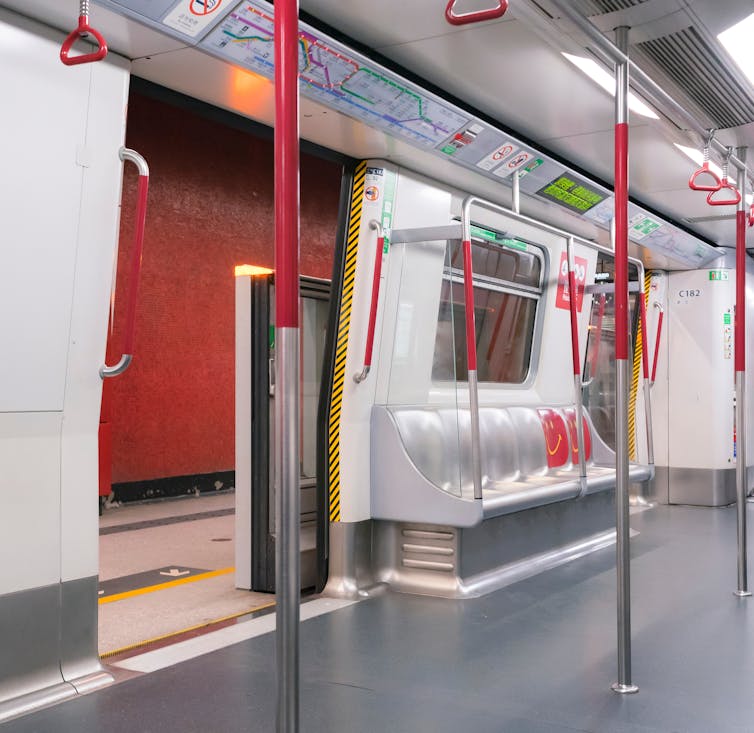
An empty carriage on the Hong Kong MTR, May 2020. Andy Yang98/Shutterstock
However, it is possible to return to previous levels of public transport use, by encouraging different travel modes for those who travelled by car before the pandemic. Public transport is still critical for cutting carbon emissions, as well as an essential public service.
If public transport isn’t financially sustainable with existing funding models, we must question the alternative. Is it sustainable to allow a large-scale shift back to private vehicles? The social cost of inadequate or unaffordable public transport is clear. Research on transport poverty shows how unaffordable public transport or dependence on car ownership is a barrier for low-income households to get to work or to access healthcare services.
Changing the model
To make sure public transport has sustainable funding in the coming years, the mix of funding from different sources and levels of government must change.
First, a decent baseline level of services must be guaranteed. Service cuts create huge social costs, but this is inevitable if funding relies heavily on fare revenue. Stable revenues like property taxes and commercial income can support this baseline. As local and regional governments must run balanced budgets, central government support is also an essential stopgap to prevent service cuts.
Second, affordable fares, or even free transit, helps to retain higher levels of use, and improve accessibility to jobs, education and public services for low-income residents. High fare increases put a burden on low-income households that often don’t have an alternative.
Lastly, we can make better use of funding for public transport by engaging with people who rely on transit to get around the city. Public transport cannot improve social equity without understanding the needs of everyone from office commuters to shift workers, Black, indigenous, and minority ethnicities – including parents, children, disabled and senior citizens. This is under threat if funding is not sustainable after COVID-19.