
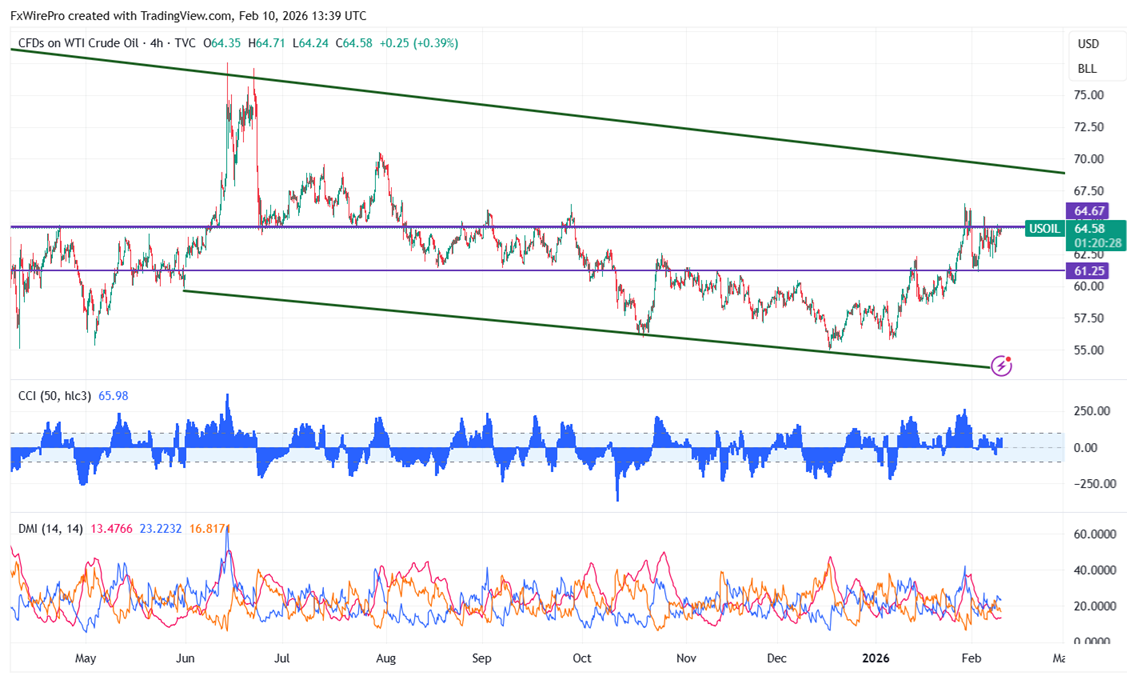
Crude gained more than $3 in the past two days due to the escalation of US-Iran tension. It is presently trading around $64.44 after reaching a high of $64.88 yesterday.
Driven mostly by increased geopolitical risk premium resulting from growing US-Iran tensions, crude oil prices climbed roughly 1.6% over February 8–10, 2026, pushing WTI from about $63.5 to $64.6 per barrel. Amid stymied nuclear negotiations, a US advisory on February 8 warned American-flagged vessels to avoid Iranian waters close the vital Strait of Hormuz, thereby increasing worries about possible interruptions to around 20% of global oil transit and dangers to Iran's 3.3 million barrels per day production; this danger is aggravated by the ongoing Russia-Ukraine war maintaining sanctions on Russian crude and concerns of probable military strikes. Supporting the upmove, a weakening US dollar index (reaching a one-month low) offered a tailwind for dollar-priced goods, thereby countering bearish elements such as rising Venezuelan crude exports (~800,000 bpd) and OPEC+'s decision to stop production increases in view of anticipated worldwide surpluses; WTI finished solid 1.27% increase on February 9 alone.
Price Resistance and Support Levels
The near-term resistance is around $64.50; any close above this level could push prices higher to $65/$66.40$68/$70.51.On the downside, immediate support is at $61 violation below targets $60/$58.50/$57.97/$55.
It is good to buy on dips around $61.80-85 with a stop-loss around $60 and a target price of $66.40/$70.


