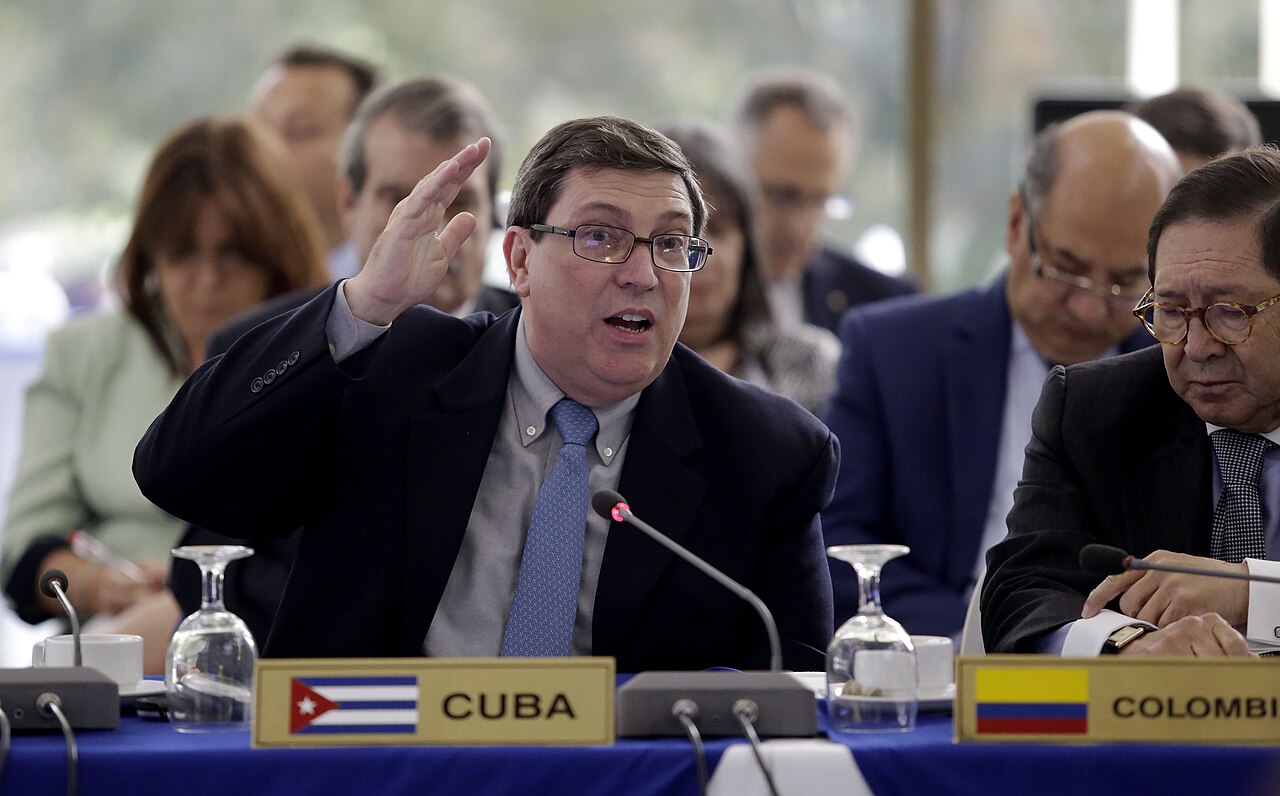
Cuba’s foreign minister said Monday that no negotiations with the United States are currently taking place and there are no plans for future talks, as Havana blamed Washington’s decades-old trade embargo for more than $8 billion in economic losses over the past year.
Foreign Minister Bruno Rodriguez told reporters in Havana that Cuba remains willing to maintain contact with U.S. officials despite the absence of progress between the two countries.
“There are no negotiations or agendas, although a willingness to stay in contact remains despite the lack of progress,” Rodriguez said.
According to the Cuban government, economic damage caused by the U.S. embargo increased 7% in 2025 compared with the previous year, reaching approximately $8.1 billion.
Rodriguez said the financial impact is expected to worsen during the first months of 2026 following additional restrictions imposed by the Trump administration on Cuba’s oil supplies. Havana says the measures have severely reduced economic activity and contributed to nationwide power outages that can last for days.
The foreign minister described the U.S. measures as a “genocidal” blockade and said ordinary Cubans are bearing the consequences through electricity shortages, spoiled food and increasingly difficult living conditions.
The U.S. State Department did not immediately respond to a request for comment on Rodriguez’s statements.
Washington has previously argued that sanctions against Cuba are necessary because of national security concerns and to pressure the communist government over restrictions on political, economic and human rights.
The United Nations has criticized the Trump administration’s sanctions and restrictions on Cuba’s energy supplies, describing them as contrary to international law. U.N. experts warned in August that deteriorating conditions could increase the risk of disease outbreaks.
The United States has also issued a health alert citing an increase in intestinal illnesses and diarrhea in Cuba, linking the problems to deteriorating water infrastructure and unreliable electricity supplies.