Researchers have identified Navarra's first Neanderthal remains in Spain's Abauntz cave, using ancient DNA and direct dating to resolve a species question that the fossils' shape had left open.
The Centro Nacional de Investigación sobre la Evolución Humana (CENIEH) said Oct. 19 that the remains belonged to a male Neanderthal who lived about 46,000 years ago. Radiocarbon tests dated the remains directly. EFE, reporting from the announcement in Navarra, said researchers also gave an age range of 44,000 to 49,000 years.
The find consists of six bone fragments. Four are from a right hand: three metacarpals, or bones of the palm, and a middle finger bone. Researchers assessed those hand bones as belonging to an adult. Protein analysis identified two additional fragments as human, while ancient DNA established the Neanderthal identification and the individual's sex.
An April project dossier published in Spain's Official State Gazette had left the species unresolved. The researchers could identify the four hand bones as human, but their physical features did not establish whether they belonged to a Neanderthal or Homo sapiens. The dossier also described uncertainty in earlier dates for deposits in the cave. Testing the remains themselves gives researchers a direct age for the fossils.
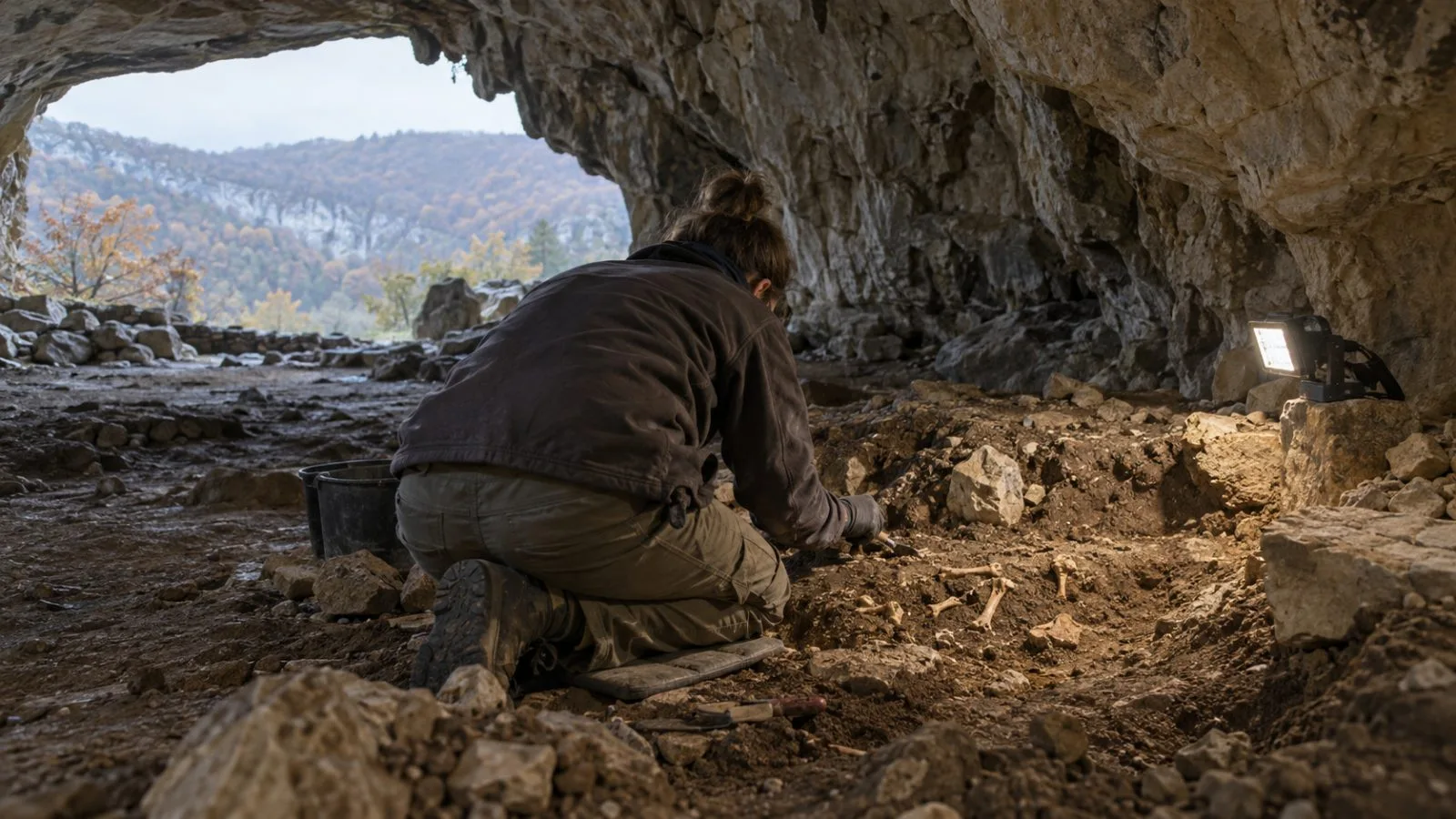
Abauntz cave is in Arraitz-Orkin, in Navarra's Ultzama valley. Stone tools and animal remains were found with the human fossils. Some animal bones bear marks associated with processing and consumption, CENIEH said. Excavation and genetic analysis are continuing at the cave.