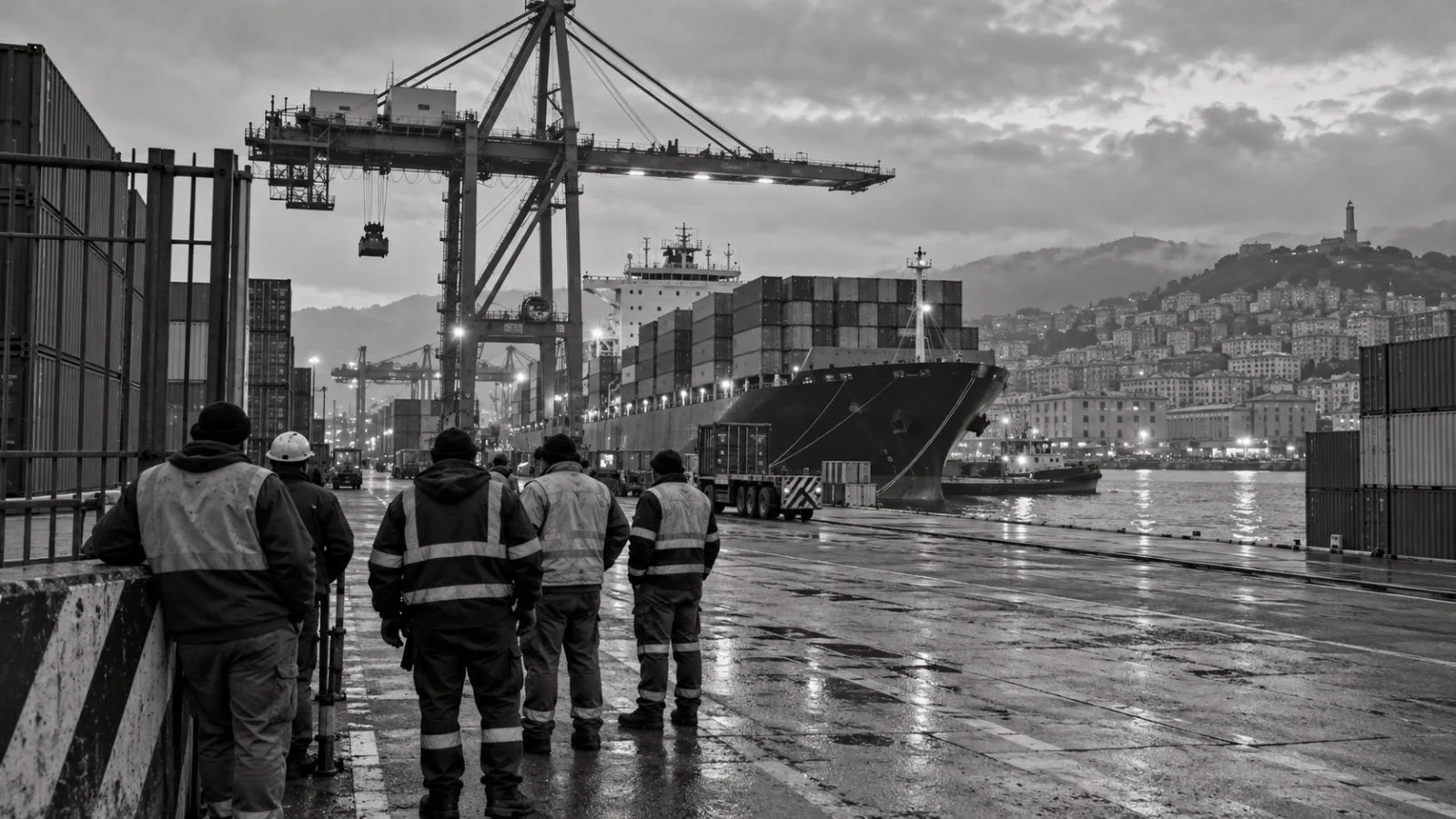
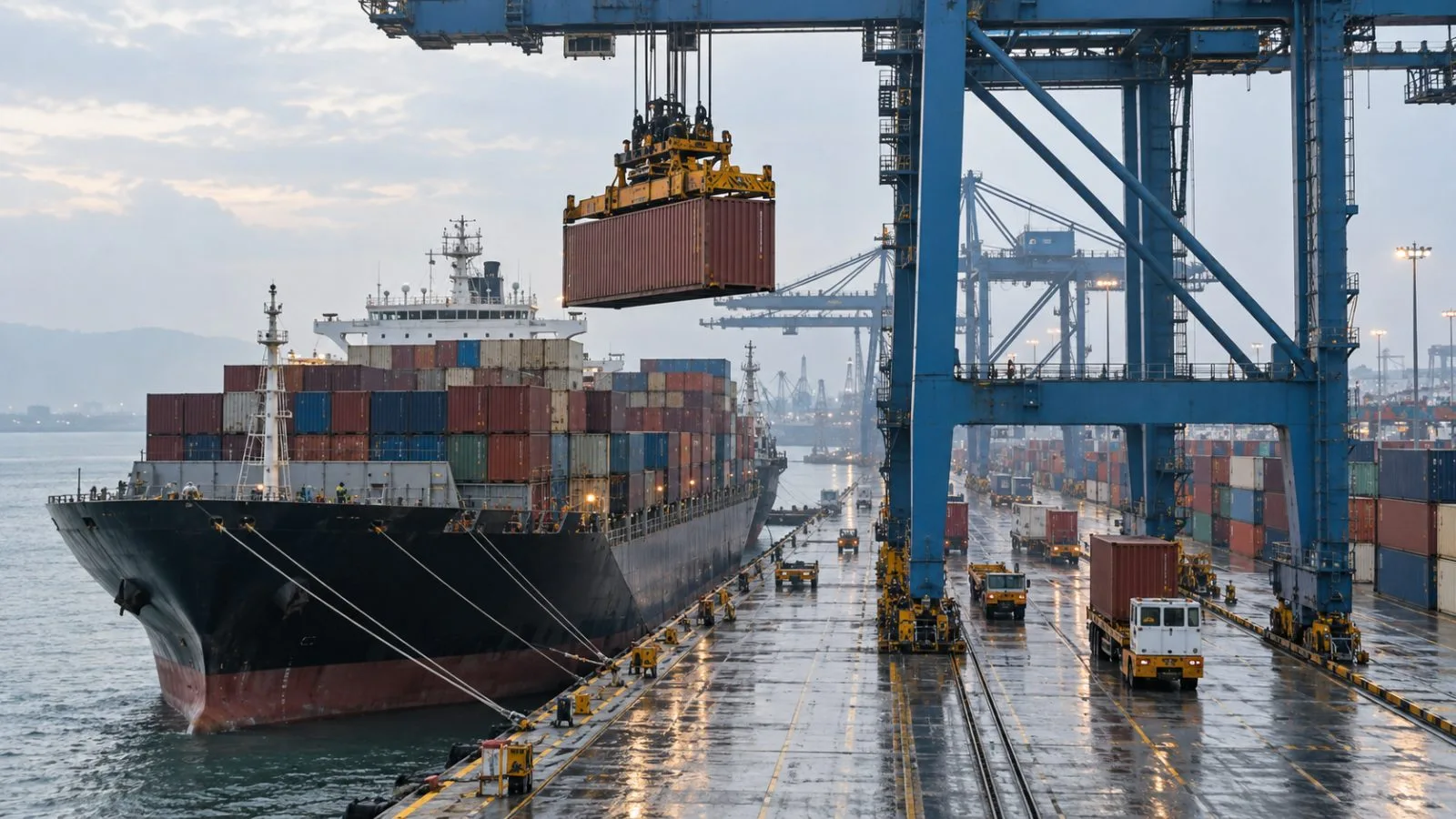
Dockworker unions mobilized at ports in several countries Friday to oppose military cargo moving through civilian terminals, while analysts expected the campaign to have limited effects on global supply chains.
Unione Sindacale di Base (USB), an Italian union, said more than 25 unions representing 113 ports in 22 countries and regions joined the mobilization. The International Transport Workers’ Federation (ITF) separately said coordinated strikes and demonstrations were planned at more than 100 ports in 17 countries. The figures describe separate measures: USB cited ports represented by participating unions, while the ITF gave the number of countries where actions were planned. The mobilization was scheduled for Friday, Oct. 30.
Dockworkers’ unions called a strike at Piraeus, Greece’s largest port. In France, CGT Ports and Docks called one-day strikes at major ports including Le Havre, Marseille, Dunkirk and Rouen. USB said demonstrations were planned in Italy at Genoa, Trieste and Gioia Tauro. Greek seafarers’ unions separately held a strike over pay, working conditions and safety that disrupted ferry services.
The ITF said the campaign opposed military cargo passing through civilian ports. It also included demands for better wages and working conditions and opposition to increased automation. EconoTimes previously covered the mobilization plan spanning 113 ports.
The Associated Press reported that logistics experts expected limited effects on global supply chains. Marcus Baker, Marsh’s global head of marine, cargo and logistics, said a 24-hour action was unlikely to significantly disrupt global trade, but time-sensitive and perishable shipments could be affected. Baker also cited Middle East tensions, El Niño, restrictions affecting the Rhine and Panama Canal, and shifting tariffs as existing pressures on shipping.
Judah Levine, head of research at Freightos, said Genoa could see added congestion, with vessels already waiting one to two days to berth.