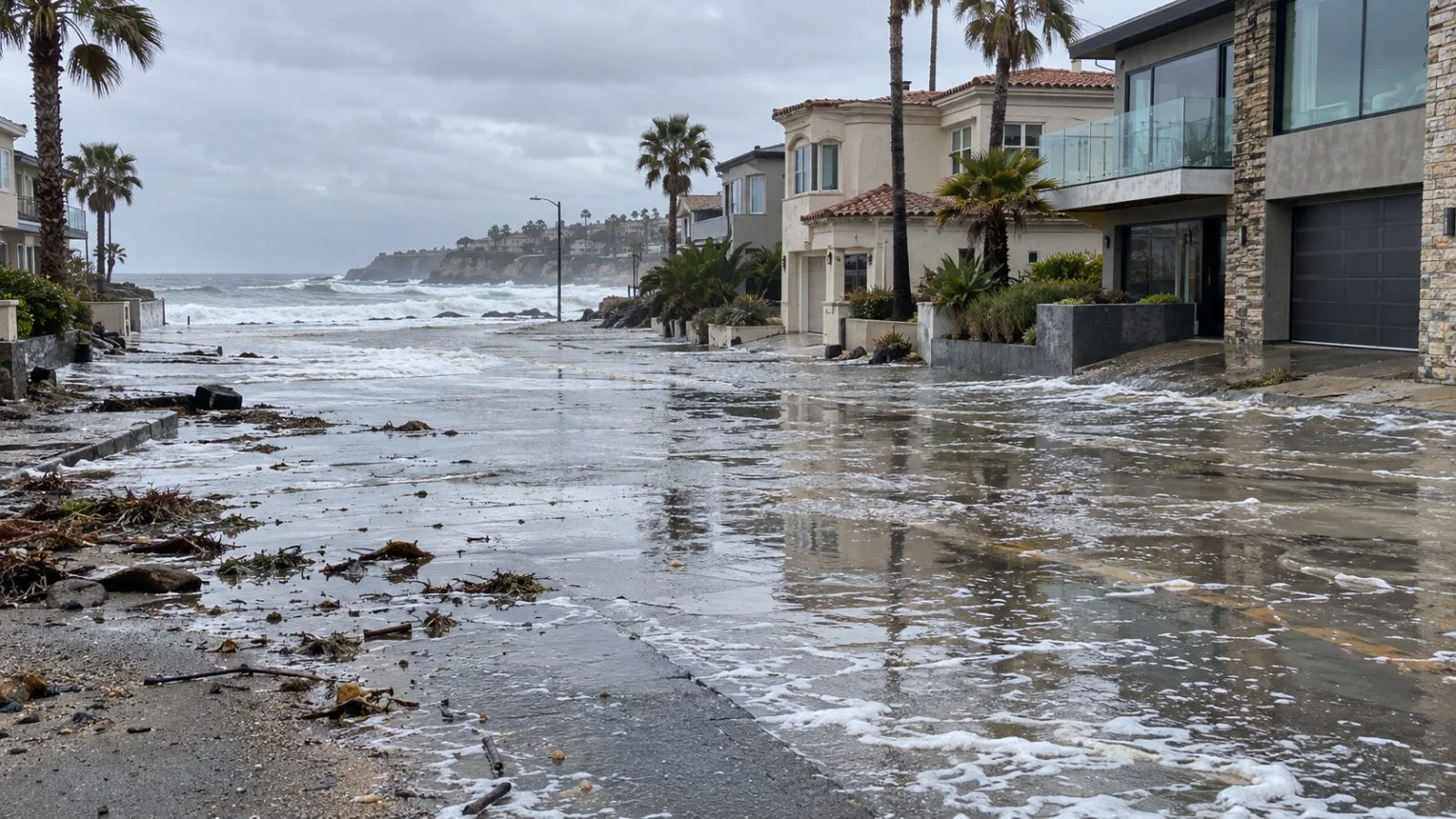
A deep-ocean wave tied to El Niño raised sea levels along Southern California before Tropical Storm Rachel, increasing the risk of flooding as more waves approach the coast.
Dillon Amaya, an atmospheric sciences assistant professor at North Carolina State University, told NPR that sea levels were about six to eight inches above normal before the storm. Tropical Storm Rachel’s surge flooded neighborhoods in early October and left some oceanfront homes partly underwater, NPR reported.
Amaya said the elevated water level almost certainly worsened the surge’s effects. A Kelvin wave does not flood the coast by itself, but it raises the level from which a storm surge or exceptionally high tide begins.
Kelvin waves are broad movements beneath the Pacific’s surface rather than the breakers seen at shore. During El Niño, they carry warm water east along the equator toward South America. The movement then follows coastlines toward the West Coast and Chile, NPR reported.
That warmth can push down colder, nutrient-rich water that supports marine ecosystems. Amaya said researchers had seen evidence of seabird deaths associated with warmer coastal water. He also described tropical fish appearing outside their usual locations, including a whale shark spotted off San Diego.
NASA visualizations released Oct. 15 showed earlier warm pulses reaching the eastern Pacific in April, as described in EconoTimes’ coverage of El Niño’s potential strength. NASA said warmer ocean water can change air pressure patterns that weaken or reverse trade winds.
Amaya said a strong El Niño year generally brings five or six Kelvin waves, with several more expected through fall and early winter. Kelvin-wave activity typically eases before El Niño reaches its peak. Researchers at the National Oceanic and Atmospheric Administration (NOAA) forecast that El Niño will remain strong into early 2027.
The next wave is expected sooner: Amaya expects San Diego to see it in late October or early November.