


 Moonshot AI Executives Seek Settlement Ahead of Hong Kong IPO
  Nvidia’s China AI Chip Market Share Falls to 34% as Huawei Gains Ground
  Oracle Uses Trucked Natural Gas to Power AI Data Centers Amid Pipeline Delays
  Apple Names Steve Smith M&A Chief in Leadership Shakeup
  Apple Supplier Luxshare Sees Limited Impact From US Patent Probe
  Elon Musk Accuses Indian Telecom Giants of Blocking Starlink Launch
  Samsung, SK Hynix Shares Plunge as China Chip Competition Grows
  Amazon in Talks to Acquire AI Startup Decart for $7 Billion
  Samsung, SK Hynix Shares Fall as China's CXMT Advances DRAM Technology
  Robinhood Chain Eyes Priority Gas Auctions for Faster Trades
  Meta Launches Muse Wonder AI Models, Shares Rise 3.7%
  Elon Musk Eyes Semiconductor Manufacturing Expansion With $15 Billion Terrafab Project
  Apple Supplier Luxshare Faces US Patent Probe, Sees Limited Impact
  US Suspends Microsoft, Adobe From Green Card Program
  TSMC Profit Set to Surge 65% as AI Chip Demand Drives Record Earnings
  Arthur Hayes Announces FLOP Testnet Launch Within Weeks
  Yandex Data Center Hit by Drone Strike as Russia-Ukraine Cyber Infrastructure Attacks Escalate


 Add as a preferred source on Google
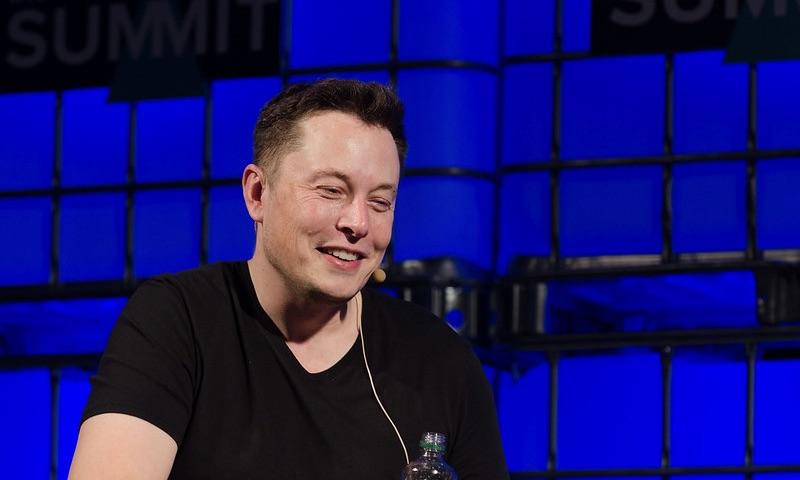
Elon Musk, CEO of Tesla and SpaceX, has threatened to ban Apple devices from his companies, citing security concerns over Apple's recent partnership with OpenAI.
Elon Musk Warns of Banning Apple Devices from His Companies Over Security Concerns with OpenAI Partnership
In a recent report by CNBC, on June 10, Elon Musk, the CEO of Tesla and SpaceX, threatened to prohibit Apple devices from his companies following the announcement of a partnership between the iPhone manufacturer and OpenAI.
In a series of posts on his social media platform X, Musk expressed apprehension regarding the security of users' information in the hands of Apple and OpenAI.
He referred to the software integration between the two companies as "an unacceptable security violation" and asserted that Apple has "no clue what's going on."
On June 10, Apple disclosed its anticipated foray into artificial intelligence, encompassing an update to its Siri voice assistant. Siri can now access OpenAI's lucrative ChatGPT chatbot as part of the update. Apple announced that users must ask permission to share their inquiries with ChatGPT, and their requests and information will not be recorded.
"It's patently absurd that Apple isn't smart enough to make their own AI, yet is somehow capable of ensuring that OpenAI will protect your security & privacy!" Musk wrote after the event.
He stated that Apple devices would be prohibited if the company "integrates OpenAI at the OS level," which refers to Apple's operating system.
Apple stated in an interview with CNBC that it employs its own AI, and its integration with OpenAI is optional.
Musk responded to a post from Apple CEO Tim Cook, asserting that he would prohibit Apple devices from his company's premises unless Cook agreed to "stop this creepy spyware." He added that his company's visitors would be asked to check their Apple devices at the door.
Musk Criticizes OpenAI, Raises $6 Billion for Rival xAI Amid Workforce Reductions at Tesla
As of December 31, Tesla, Musk's most significant organization, employed 140,473 individuals globally. This year, the organization has implemented reductions that have exceeded 10% of its workforce.
Musk co-founded OpenAI in 2015 and resigned from its board in 2018. He has recently been a vocal critic of the corporation and its CEO, Sam Altman. Musk filed a lawsuit against OpenAI and Altman in March, among others, alleging that they violated the company's original mission to develop AI "for the benefit of humanity broadly."
In a recent funding round, Musk raised $6 billion for xAI, his potential competitor to OpenAI. xAI's initial product, Grok, is intended to be a politically offensive response to ChatGPT. Musk founded Neuralink, a brain interface startup, and Boring Company, a tunneling venture, in addition to Tesla, SpaceX, and xAI.
Musk and OpenAI did not immediately respond to CNBC's inquiries for comment.
Photo: Heisenberg Media/Flickr







