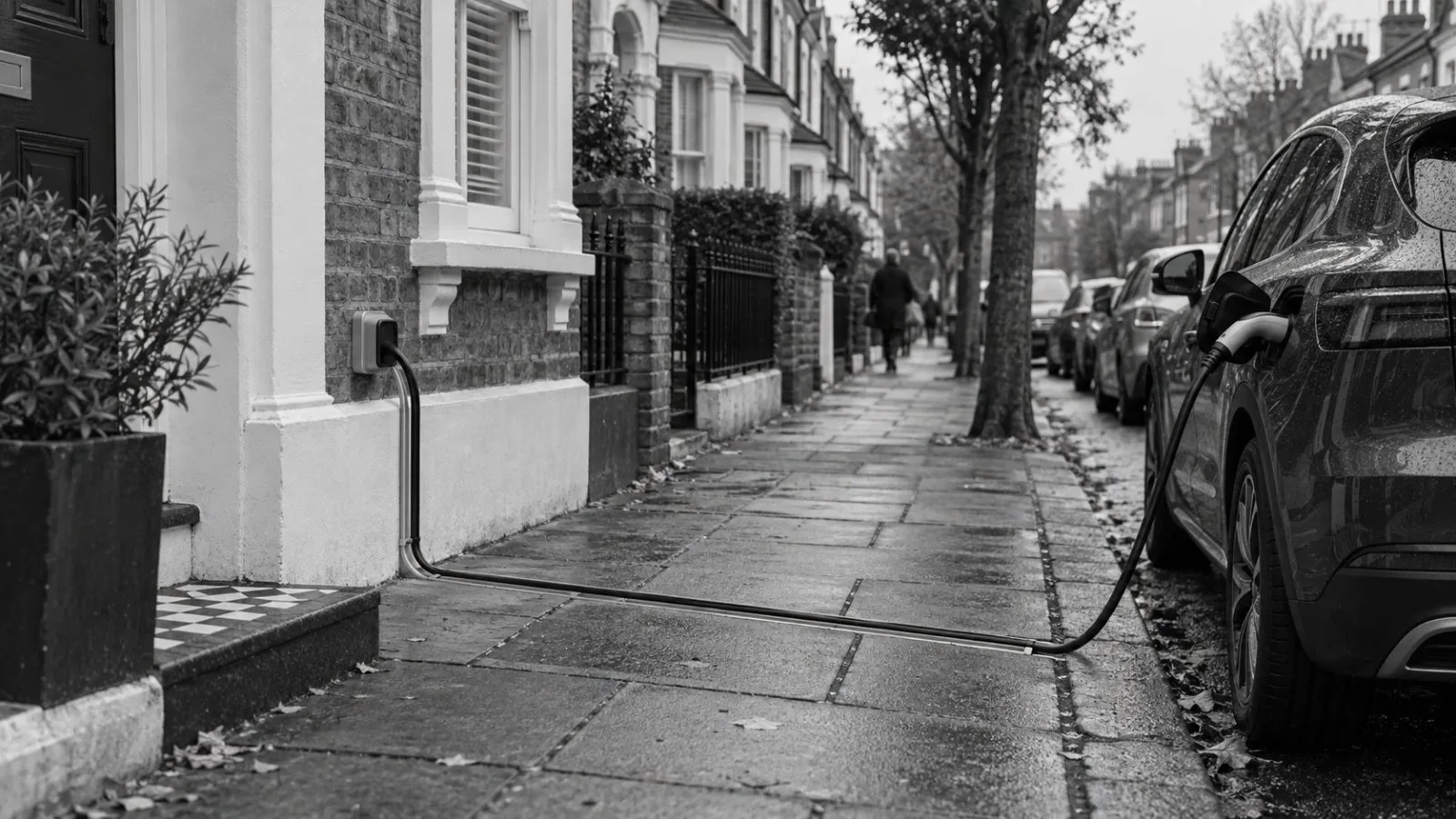
A new planning rule in England lets households install qualifying pavement channels for charging street-parked electric cars without applying for planning permission, potentially reducing costs for drivers without driveways.
The order took effect Oct. 21. The Department for Transport estimates that avoiding a planning application could save up to £300 per installation. That estimate concerns the planning step, not the full cost of a home charger and pavement work.
The channels let a cable run between a home and a vehicle parked on the street. Associated home charge points also qualify under the order. A highway authority must authorize work on the pavement, so the planning change alone does not permit a resident to install a channel.
The exemption does not cover conservation areas, scheduled monument sites or a channel within the curtilage of a listed building.
For residents without off-street parking, the change opens a route to charging a car using household electricity. They may still face installation, licensing and maintenance costs. Government guidance says a channel gives its user no claim to the parking space alongside it.
Vicky Edmonds, CEO of EVA England, said local authorities and landlords will influence how easily residents can use the option.
The government proposed the planning change in 2025, when it estimated that removing application fees could save households up to £250. Its current estimate is up to £300.
The rule follows 99,201 new battery-electric car registrations in the UK in September 2026, compared with 72,779 a year earlier, according to the Society of Motor Manufacturers and Traders. That was a 36.3% increase. The registration figures cover the whole UK, while the planning change applies only in England.
The government is separately consulting on charging access for tenants and leaseholders with off-street parking and on charger requirements for covered car parks. Those measures remain proposals. Responses to the tenant and leaseholder consultation are due Dec. 16.