The Bangkok Post reported that the Energy Policy and Planning Office (Eppo) outlined a government EV plan linking procurement and workplace charging changes to Thailand’s clean-energy and net-zero goals.
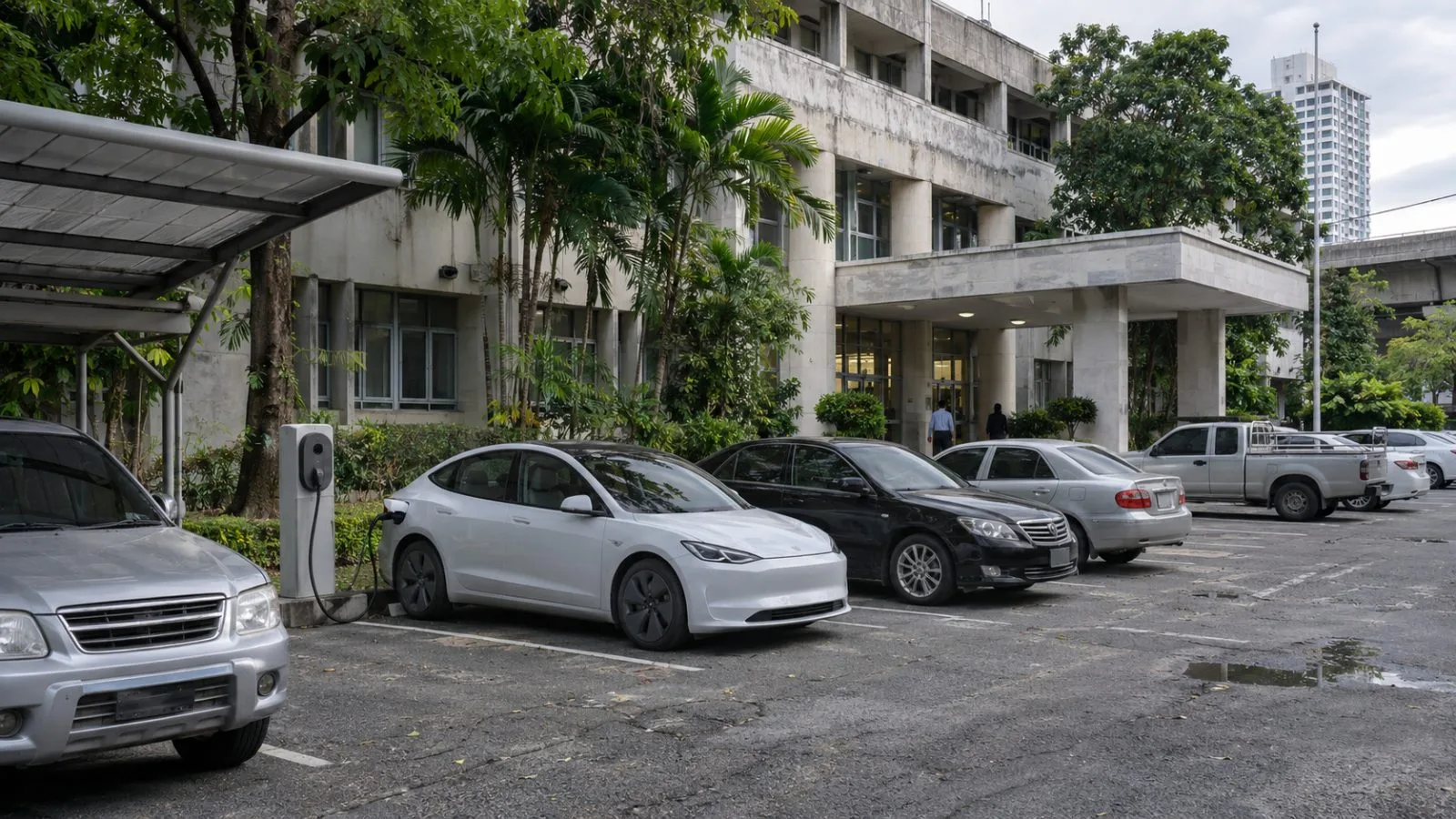
The Bangkok Post reported that Eppo is promoting guidelines on EV use, safety standards and charging stations at public-sector workplaces. The proposal calls on agencies to revise vehicle procurement and leasing rules, and asks the government to designate a body to oversee, monitor and evaluate progress across the civil service. Eppo presents the guidelines as a way to fit cleaner transport into public-sector operations.
The Bangkok Post reported that battery-electric vehicles (BEVs) account for about 1% of agency-owned and leased vehicles, a fleet of more than 180,000 acquired between 2006 and 2026.
An unnamed energy official told the Bangkok Post that switching to EVs could reduce agencies’ energy and long-term operating costs and lessen air pollution and noise. The official said the shift could improve agency energy efficiency, strengthen operational and safety standards, and make the government an example of clean-energy use.
The Federation of Thai Industries (FTI), citing Department of Land Transport (DLT) figures, said 22,587 EVs and electric motorcycles were registered in September 2026, 89.7% more than a year earlier. Passenger EVs accounted for 19,425 registrations, a 98.6% annual increase. For the first nine months of 2026, registrations reached 191,273, up 83% from the same period in 2025; electric passenger cars made up 167,789 of the total.
FTI expects registrations for all of 2026 to reach 200,000 to 220,000, compared with about 120,000 in 2025.
The Bangkok Post also reported that Eppo is working on an EV Roaming Hub to connect the country’s separate charging networks through a shared payment standard.
Eppo said the roadmap draws on a consultancy study. Its findings are being prepared for implementation, and the proposal is not yet final policy.