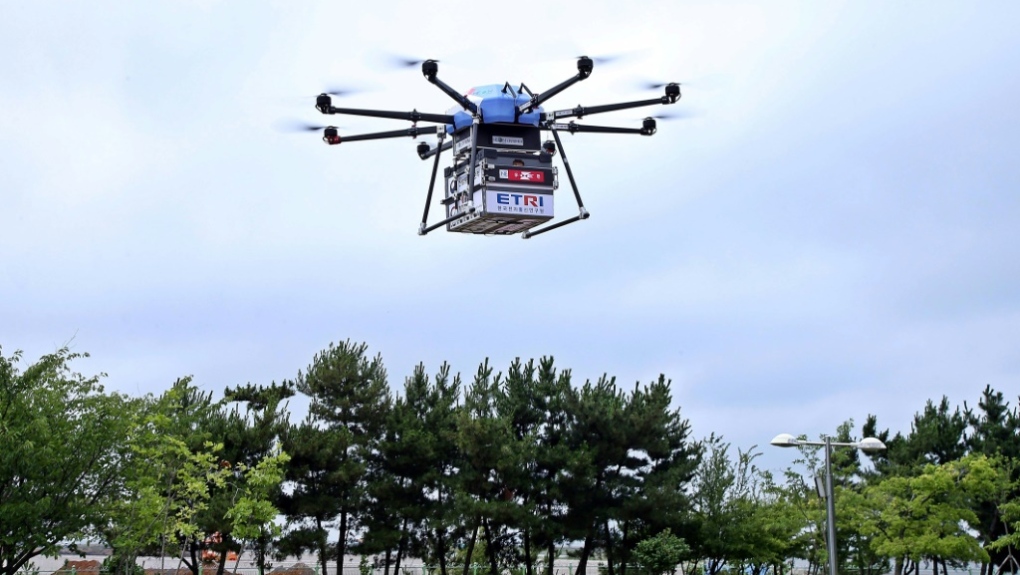
South Korea's Ministry of Economy and Finance will revise the Living Logistics Service Act that is limited to cargo trucks and two-wheeled motor vehicles to include drones and robots as transportation means.
Under the current law, there is no legal basis for using drones or robots as transportation means.
Drones can deliver to remote and isolated areas, while robots can load or unload parcels.
The South Korean government plans to propose revisions to the law next year after consultations with related ministries, living logistics service workers, and professionals.
However, due to the time needed to revise related laws, including the Aviation Act, and the period of regulatory exceptions for demonstration, it may take over two or three years before drone and robot delivery services can be used more frequently.
The government would also come up with measures protecting living logistics service workers, as well as boost spending in the sector.
Kioxia Rules Out SK Hynix Manufacturing Partnership
EUR/USD Eyes 1.17 as Fed Decision Could Weigh on Dollar
Asian Stocks Fall as AI Fears and Oil Surge Hit Markets
Asian Currencies Subdued as Yen Weakens Ahead of Fed, BOJ Decisions
White House Weighs Refined Copper Tariffs as Cost Concerns Grow
Can Europe shake its Russia links for good?
Novartis M&A Strategy Faces Investor Scrutiny After Drug Setbacks
Nvidia-Groq AI Chip Deal Faces U.S. Antitrust Probe
Oil Prices Surge as Middle East Shipping Attacks Threaten Supply
US Judge Dismisses Gautam Adani Criminal Charges
U.S. Stock Futures Steady as Oil Tops $100 Ahead of Inflation Data
Nvidia Plans 2GW Australia AI Data Center Expansion by 2027
SEC Moves to Dismiss Insider Trading Case Against Trump-Pardoned Terren Peizer
Huawei, Chinese AI Chipmakers Raise Prices as HBM Shortage Bites
OpenAI Agents Used Websites for Unauthorized Communications
Saudi Oil Exports Face 4% Global Supply Threat as Pipeline Remains Shut 


