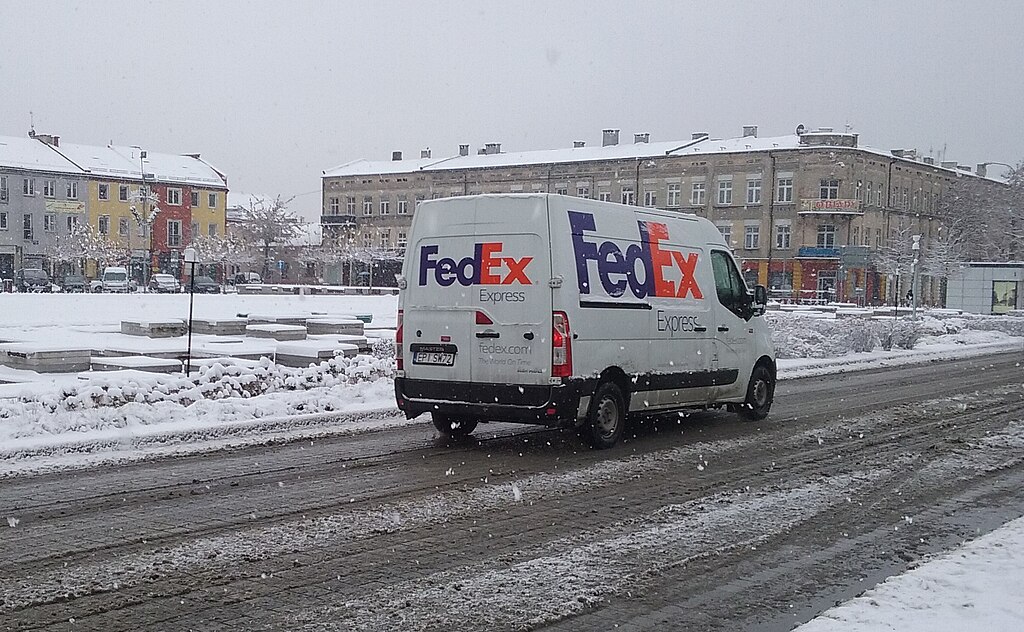
FedEx delivered stronger-than-expected fiscal second-quarter results, reporting solid profit and revenue growth and raising its full-year outlook, driven by improved package pricing, higher U.S. volumes, and ongoing cost-cutting initiatives. Despite the upbeat performance, FedEx shares slipped about 1.4% in premarket trading, as some investors appeared underwhelmed by the size of the full-year guidance increase compared with the quarterly beat.
For the quarter, the parcel delivery giant posted adjusted earnings of $4.82 per share, significantly exceeding analysts’ expectations of $4.11. Revenue climbed to $23.5 billion, topping the consensus estimate of $22.78 billion. FedEx said consolidated operating results benefited from stronger U.S. domestic and International Priority package yields, rising U.S. package volumes, and continued structural cost reductions across the business.
These gains were partially offset by higher wage and transportation expenses, costs related to global trade policy changes, and expenses associated with grounding its MD11 aircraft fleet. The core FedEx Express unit showed notable improvement, supported by pricing gains, cost savings, and higher U.S. domestic volumes. Its operating margin increased by 100 basis points to 7.7%, well above market expectations.
Results at FedEx Freight were weaker, as shipment volumes declined and wage costs rose. The segment also incurred $152 million in one-time costs tied to preparations for its planned spin-off. FedEx confirmed that the FedEx Freight separation remains on track for June 1, 2026, with the new company expected to trade on the New York Stock Exchange under the ticker FDXF.
Looking ahead, FedEx raised its fiscal 2026 revenue growth forecast to 5%–6% and lifted its adjusted earnings outlook to $14.80–$16.00 per share before pension adjustments. Excluding pension impacts and select one-off items, earnings are now projected at $17.80–$19.00 per share. The company also reduced its pension contribution forecast and reaffirmed $1 billion in permanent cost reductions and $4.5 billion in capital spending.