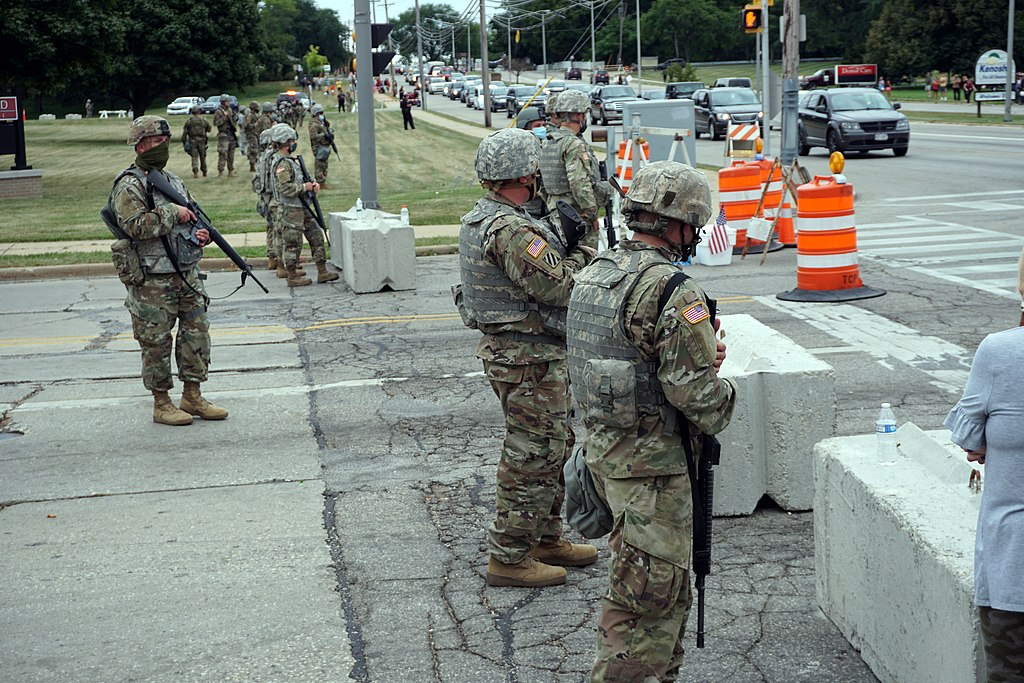
A federal appeals court on Wednesday cleared President Donald Trump’s deployment of National Guard troops in Washington, D.C., allowing the controversial operation to continue while legal challenges move forward. In a unanimous decision, three judges from the U.S. Court of Appeals for the District of Columbia Circuit ruled that the Trump administration is likely to prevail in its argument that the president has broad authority to deploy troops in the nation’s capital.
The ruling temporarily pauses a lower court decision that would have halted the National Guard deployment, which began earlier this summer and intensified after a November shooting near the White House that injured two National Guard members. The appeals court emphasized that Washington, D.C., is not a state, giving the president unique constitutional powers to mobilize troops and enforce federal law there.
The decision marks a significant legal victory for Trump as he continues to assert expansive authority to use military forces in U.S. cities, even over objections from local leaders. Critics argue that such deployments break with long-standing norms designed to limit the use of the military for domestic law enforcement. The case is widely expected to reach the U.S. Supreme Court, which will ultimately decide whether the president exceeded his authority.
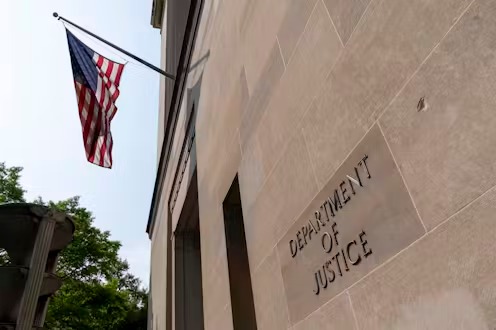
The lawsuit challenging the deployment was filed by the office of Washington, D.C. Attorney General Brian Schwalb. In a statement, the office said it plans to continue pursuing the case, stressing that the appeals court order is preliminary and does not address the underlying legal merits.
The White House welcomed the ruling, with spokesperson Abigail Jackson stating that the decision affirms Trump’s lawful authority and claiming the deployment has made Washington safer and more orderly.
Beyond Washington, Trump has also sought to deploy troops to Democratic-led cities such as Los Angeles, Chicago, Portland, and Memphis, arguing they are plagued by crime and hostile to federal immigration enforcement. Local and state leaders strongly dispute those claims and have filed lawsuits, contending that protests do not meet the legal threshold of rebellions required to justify military intervention.