France’s nuclear deterrence initiative now includes 10 European partners, with a recent British-French exercise illustrating cooperation while Paris retains sole authority over any decision to use nuclear weapons.
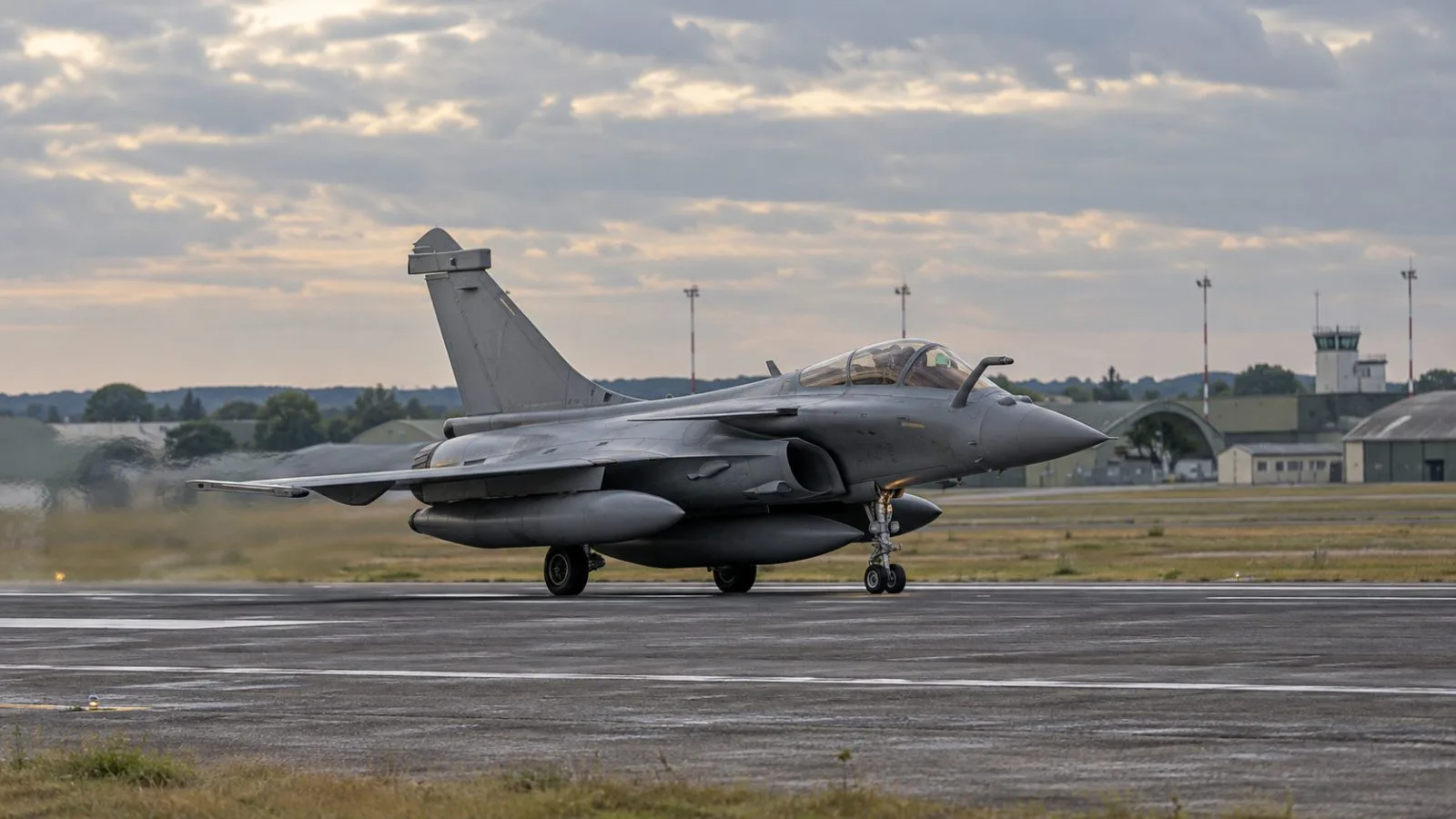
During Exercise Rummy on Oct. 20-21, French Rafale jets flew a simulated nuclear mission from Saint-Dizier Air Base with British Royal Air Force Typhoons as escorts. The U.K. Ministry of Defence said no nuclear weapons were used.
President Emmanuel Macron named eight partners at the initiative’s March launch: the U.K., Germany, Poland, the Netherlands, Belgium, Greece, Sweden and Denmark. Norway joined in May and Finland on Sept. 14, bringing the total to 10 countries besides France.
Macron’s proposal allows for partner participation in deterrence exercises, support from allied conventional forces and possible temporary deployments of French strategic aircraft to partner countries. His announcement did not specify deployment locations or dates. France also says partners could contribute to early warning, air defense and long-range conventional strike capabilities, which Macron said would bolster French security. He has ruled out sharing authority over nuclear use or giving partners a formal guarantee.
Macron linked the initiative to Russia’s war against Ukraine and changing U.S. security and defense strategies, arguing that European countries should take greater responsibility for their security. France and Germany said their cooperation would reinforce NATO’s nuclear deterrence and sharing arrangements without replacing them. Their declaration referred to U.S. extended deterrence. Norwegian Prime Minister Jonas Gahr Støre said in May that NATO would continue providing Norway’s deterrence and that the U.S. nuclear guarantee to Europe remained unchanged.
Finland’s government said participation creates no collective-defense obligation like NATO’s and that France is not asking partners to share the cost of its nuclear deterrent. Norway said it would maintain its policy against hosting nuclear weapons in peacetime. Macron also announced that France would increase its nuclear warhead stockpile and stop publishing its size, without giving a new total.
France and Germany set out plans for a high-level nuclear steering group in March, and French and Dutch officials held their first steering-group meeting on Oct. 14. Finland’s government says the two countries plan to establish their own group in the coming months.