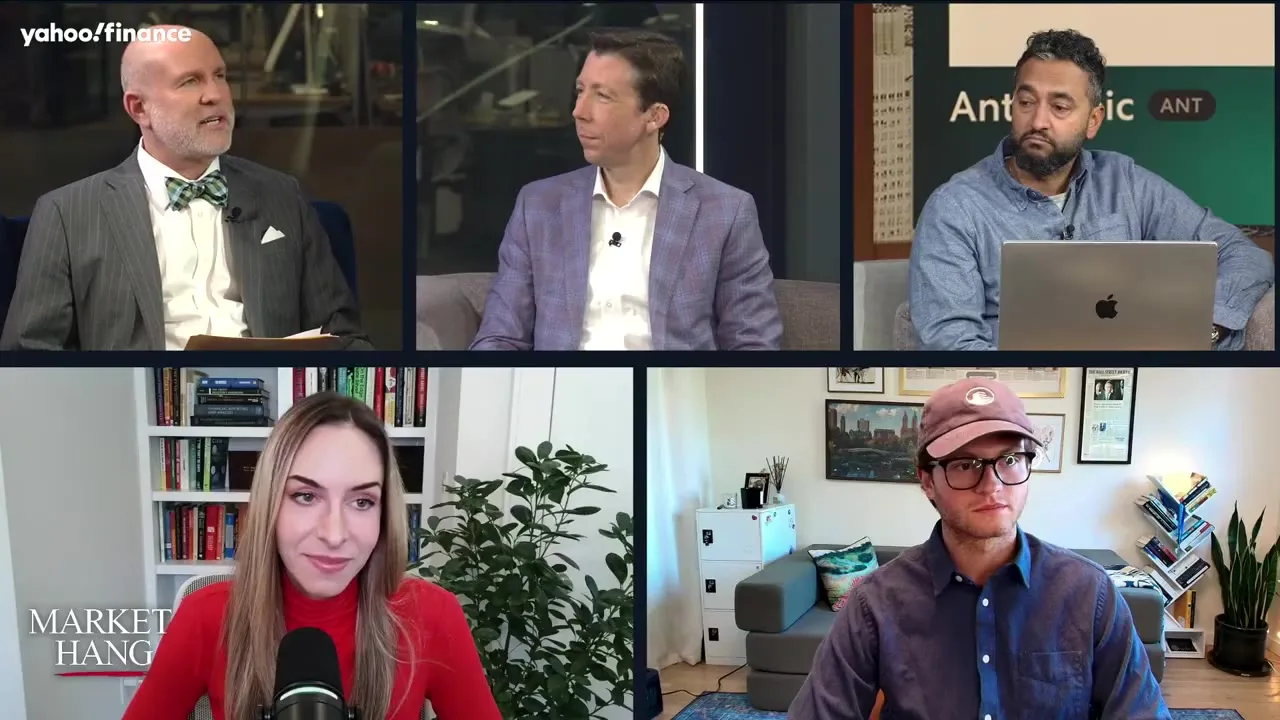
Anthropic shares fell about 12% to $85, moving close to their initial public offering price as stocks entered correction territory. The report appeared on Yahoo Finance’s Market Hang programme on Nov. 20.
The decline came a day after strong demand pushed Anthropic’s IPO above its initial price range and enlarged the offering. Employees were allowed to sell as much as 10% of their holdings immediately, creating an unusual source of selling pressure for a newly listed company.
The programme said the drop was part of a wider market decline rather than an isolated problem at Anthropic. Investors were seeing heavy selling across stocks, while companies with strong earnings and revenue prospects were also under pressure.
Panelists said the listing could still help investors understand the economics behind frontier artificial-intelligence models, which are expected to influence spending on computing capacity and future revenue across the industry. They said the market had not yet regained confidence to buy aggressively while screens showed losses for several sessions.
The discussion also questioned whether Anthropic’s debut and the broader selloff resembled the market in 2000. Panelists rejected that comparison, saying companies today had stronger revenue growth and that many private firms were delaying listings because they could still obtain financing.
The panel pointed to Nvidia’s forecast for 75% revenue growth as evidence that corporate fundamentals differed from the earlier technology bubble. It said the present decline reflected a buildup of crowded positions accumulated over the past two years and a wait for institutional buyers to return.
Another view compared the conditions with 2022, citing an energy shock, tighter central-bank policy, reduced liquidity, higher commodity prices and a stronger dollar. That view said earnings expectations were too optimistic and that wider credit spreads could cause further declines in market valuations.
The Federal Reserve was described as unlikely to rescue stocks soon. The discussion cited persistent inflation and suggested the central bank could raise rates several more times, with cuts unlikely without a major external shock.
Panelists said any signal that rate increases had ended could support markets, but they argued the current environment differed from 2018 because interest rates were higher and economic growth and credit creation were weaker.
The discussion also raised concern that higher borrowing costs now affect companies across the AI industry that previously relied less on fixed-income financing. If one company failed, panelists said, the effect could spread through the sector because of its growing dependence on debt.