


 Bitcoin Surges Past $85,000 Amidst Rising Risk Appetite
  FxWirePro- Major Crypto levels and bias summary
  Crypto Alpha Command: BTC & ETH derivatives Intelligence
  FxWirePro- Major Crypto levels and bias summary


 Add as a preferred source on Google
In a new report, French central bank has discussed the impact of digital innovations on banking service, potential risks and new challenges to financial stability and the possible responses by central banks and financial system regulators and supervisors.
The report, “Financial Stability In The Digital Era”, also talks about virtual currencies and blockchain technology among other things.
“Virtual currencies, particularly bitcoin, bring a shadow mechanism of money creation into play, even though their growth is still far exceeded by the commentaries and analyses devoted to them. By seeking to rival legal currencies, virtual currencies appear to introduce a major disruption by their ambition to challenge central banks’ monopoly on issuance”, it said.
However, the report noted that with regard to virtual currencies, the Banque de France issued a warning in December 2013 stressing that it could not guarantee their security, convertibility or value, and that their anonymous nature could promote the circumvention of rules relating to anti‑money laundering and counter‑terrorist financing.
It said that although there is a rise in the use of virtual currencies, they still occupy a “marginal” position, adding that “their development is constrained by their capacity to process transactions and the speed with which they do this”.
Turning focus on the potential of virtual currencies to displacing conventional currencies, the report said “decentralised digital currencies like bitcoin may yet provide alternatives in economies with unsettled monetary systems, and people may turn to them as they turned to foreign currencies during past hyperinflations. But they have not yet disrupted existing payments systems in advanced economies and are unlikely to do so any time soon”.
Blockchain And Distributed Ledger Technologies
Speaking of Blockchain technology, the report said that it could change the conditions in which central banks perform their duties. The report pointed out that discussions are underway at the Banque de France, and more broadly at the High Council for Financial Stability, as to how to monitor the development of initiatives concerning blockchain technology, both in terms of the possibilities it offers and the issues it raises notably in terms of security.
It said that blockchains have decentralized infrastructure and can be used to certify execution of transactions. However, it noted the drawbacks of the technology including time and volume restrictions, and lack of transparency as transactions are not traceable. It said that the technology is currently in its emergent phase and set to evolve and the existing limitations may be removed over time.
“Whether it is virtual currencies, blockchains, or the Internet of value, change is bound to happen. The challenge for regulators and policymakers is to respond to it”, it said.
The report recommended that regulators need to find ways to fit the innovations into the existing framework, or else adapt the framework to fit the innovations.
“At a basic level, regulators will need to scrutinise the safety of ledger technologies if they are to be used extensively by banks, as with any IT innovation”, the report said. “Digital currencies and DLs don’t replace trust, they place it elsewhere: in the protocols. This is another area which guardians of financial stability will have to monitor closely.”

- News

- Economy

- Central Banks
- Investing
- Research
- Roundups
- Digital Currency
- Insights
- Technical Analysis
- Technology
- Business
- Law
- Health
- Nature
- Fintech
- Science
- Topic
- Opinions
- ©Econometrics LLC . All Rights Reserved.
French Central Bank: Digital Currencies Unlikely To Disrupt Existing Payments Systems Anytime Soon
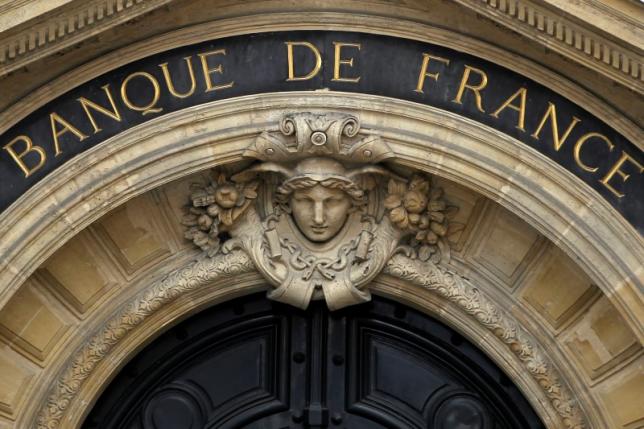
Detail of the facade of the Bank of France headquarters in Paris (REUTERS/CHARLES PLATIAU)
Wednesday, April 20, 2016 4:32 AM UTC
Editor's Picks



- Market Data
Most Popular




