


 MSTR Stock Rises 3% as Strategy Challenges MSCI Bitcoin Stance
  Evernorth Set for Nasdaq Debut With 473 Million XRP Treasury
  Cardano Price Struggles as NIGHT Token Surges 20%
  NEAR Intents Hack Drains $3.8 Million, NEAR Price Falls 7.5%
  Zcash Awards $8 Million in Grants After Orchard Bug Crisis
  Chainalysis AI Traces $387M Bitget Hack in Under 10 Minutes
  XRP Ledger Hits 10 Million AI Payments as Bitcoin Retreats
  Standard Chartered Sees Ethena ENA Hitting $2 by 2028
  AI Agents Could Disrupt Financial Services, Bernstein Says
  Bitcoin Holds Above $83,700 as High Treasury Yields Limit Rally
  Crypto Rallies as CLARITY Act Failure Opens Door to Faster SEC Rules
  Hyperliquid Sets $856 Million HYPE Token Unlock for October
  Midnight NIGHT Token Surges 86% as Smart Contract Launch Nears
  Ripple and Cardano Expand Blockchain Adoption in Brazil
  Bank of America Sees EUR/USD at 1.15 by Year-End
  TRUMP Memecoin Launches New Dinner Contest


 Add as a preferred source on Google
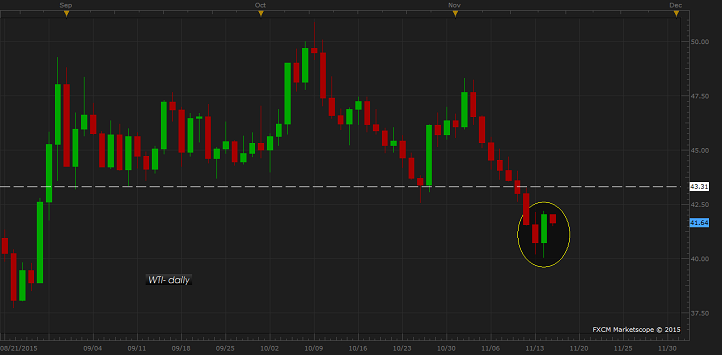
North American benchmark, WTI has been declining for eight consecutive days, before posting a major engulfing candle yesterday as tensions and fighting in Middle East edged up after France joined bombing raid in response to Friday's attack by ISIS, in Capital Paris, which left more than 120 dead and 350 injured.
The oil wells in the region involved (parts of Syria and Iraq) are already controlled by ISIS and unlikely to cause any major disruption to an already oversupplied market. So scope of supply shock is limited, which means bears are likely to keep rampaging oil, unless serious disruptions take place in the Middle East.
Nevertheless, there is a sentimental factored involved over increased fighting in an area, which is a source of world's 30% crude oil.
Moreover, sentiments were extremely one sided as crude declined for eight consecutive days leading to almost 15% decline in price.
Even though, supply glut remains quite large and price might decline further, it is important to recognize that correction might be lager over profit booking, if crude moves higher above yesterday's high around $42.2/barrel and bullish engulfing indicating decline in downside momentum.
WTI is currently trading at $41.6/barrel.







