


 US Futures Rise as Investors Eye Earnings, Inflation Data, and Wildfire Impacts
  European Stocks Rally on Chinese Growth and Mining Merger Speculation
  U.S. Stocks vs. Bonds: Are Diverging Valuations Signaling a Shift?
  UBS Predicts Potential Fed Rate Cut Amid Strong US Economic Data
  UBS Projects Mixed Market Outlook for 2025 Amid Trump Policy Uncertainty
  Wall Street Analysts Weigh in on Latest NFP Data
  Global Markets React to Strong U.S. Jobs Data and Rising Yields
  Gold Prices Fall Amid Rate Jitters; Copper Steady as China Stimulus Eyed
  Moldova Criticizes Russia Amid Transdniestria Energy Crisis
  Moody's Upgrades Argentina's Credit Rating Amid Economic Reforms
  China's Refining Industry Faces Major Shakeup Amid Challenges
  Oil Prices Dip Slightly Amid Focus on Russian Sanctions and U.S. Inflation Data
  US Gas Market Poised for Supercycle: Bernstein Analysts
  China’s Growth Faces Structural Challenges Amid Doubts Over Data
  Energy Sector Outlook 2025: AI's Role and Market Dynamics
  Geopolitical Shocks That Could Reshape Financial Markets in 2025
  Mexico's Undervalued Equity Market Offers Long-Term Investment Potential


 Add as a preferred source on Google
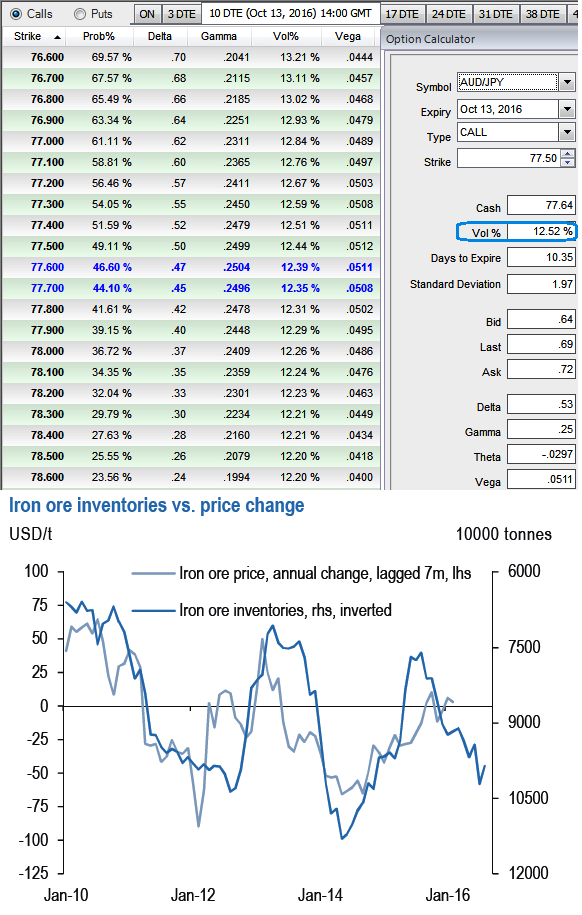
AUD rose back above 0.7650 against US counterpart and 77.500 levels against Japanese Yen during the early Asian trading session on Monday as the risk currencies were buoyed by positive news coming from Europe.
Monthly inflation and PMI will be watched in Australia, but moves in AUD are likely to be driven by global risk sentiment.
How long can rising commodity prices continue to support AUD?
The stance on Aussie dollar from the current levels appears to be a unfold view on commodity prices, given little chance of a shift in bias from the Fed or RBA near term.
If commodities are appearing lathered up, then this should limit the upside for Aussie crosses (especially currency crosses such as AUDUSD AUDJPY etc), all else equal. In a recent review of the supply and demand fundamentals for iron ore, please be noted that there was little impetus to change price forecasts, and they continue to expect iron ore to average USD53/t in 2H16 and USD48/t in 2017.
This outlook suggests that the current rise in iron ore prices is unlikely to sustain, and underscores our lack of enthusiasm to embrace a more positive outlook for AUD. Developments in China’s iron ore inventories are also supportive of lower commodity prices at some point (see above chart).
Option Strategy:
ATM IVs of AUDJPY is rising a shy above 12.5% as shown in the diagram the standard deviation these call option is flashing up at 1.97.
Contemplating the prevailing bullish sentiments in this pair and keeping the major trend in mind, we advocate diagonal call spreads are preferred to vanilla structures given elevated skew and favourable cost reduction.
So, buy AUDJPY 1w/3d call spread with strikes of 77.1733 – 78.231 for a net debit, use shorter expiry on the short leg.
The net delta of the position should be around 45 (ITM strike = 70 delta) and selling the upper leg call (OTM strikes) likely to reduce the cost of the ITM call by almost close to 20-25%.
Favour optionality to directional trades. We are inclined to position for a partial retracement of the down move through call spreads, as calling the bottom is difficult and adding directional spot exposure is risky at the moment.







