


 NEAR Price Surges 11% as Trading Volume Doubles
  Urban studies: Doing research when every city is different
  Gold Prices Slide as Rate Cut Prospects Diminish; Copper Gains on China Stimulus Hopes
  China’s Growth Faces Structural Challenges Amid Doubts Over Data
  AI Crypto Payments Surge to 138 Million Transactions on Base
  Oil Prices Dip Slightly Amid Focus on Russian Sanctions and U.S. Inflation Data
  European Stocks Rally on Chinese Growth and Mining Merger Speculation
  Trump’s "Shock and Awe" Agenda: Executive Orders from Day One
  US Futures Rise as Investors Eye Earnings, Inflation Data, and Wildfire Impacts
  UBS Predicts Potential Fed Rate Cut Amid Strong US Economic Data
  Ethereum Whale Moves $15.95M ETH to Kraken After Nine Years
  Lithium Market Poised for Recovery Amid Supply Cuts and Rising Demand
  Pi Network Price Eyes $0.10 Ahead of Protocol 28 Upgrade
  Ripple Partners With DriveWealth to Expand RLUSD Settlements
  Moldova Criticizes Russia Amid Transdniestria Energy Crisis
  US Gas Market Poised for Supercycle: Bernstein Analysts


 Add as a preferred source on Google
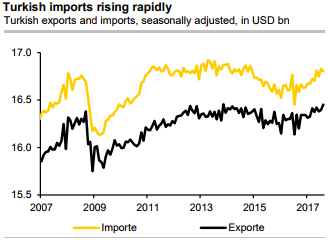
We’ve seen the trade and tourism data for August on Friday: the trade data highlight continuing widening of the trade deficit despite healthy export growth -- both exports and imports have accelerated visibly during the past couple of quarters, but imports have accelerated more (refer above chart), driven by rising demand as well as rising price of crude oil.
The deficit as a percentage of GDP has widened out quite sharply, going from c.7% of GDP just a quarter ago to 8.5% now. The data support our forecast of a wider current-account deficit this year than last year - this is the usual pattern when the Turkish economy grows faster, but usual or not, a wider deficit seems unsupportive for lira.
On the tourism side, foreign arrivals in August were closer in line with the seasonal average from past years - this picture is similar to what we saw in July; tourists from the CIS made up 34% of the total, tourists from EU made up 41%. From the lira's point of view, we interpret the trade data to be negative, the tourism data to be neutral.
On the flip side, the Turkish lira has been trading vigorously in the recent months and it has continued its robustness through August but September has been little edgy, although its performance has been far more impressive against the ultra-weak USD than against the basket (made of half USD, half EUR).
Against a favorable backdrop for continued yield-seeking behaviour, TRY looks attractive for its cheap valuations (16% under-valued versus 10-yr REER average), CBRT’s commendable shift toward tight monetary policy and prioritization of financial stability, and the country’s diminished risk of political upheaval. November 2019 general elections provide motivation for officials to bolster economic momentum while keeping the currency stable.
The driving forces: Perpetuation of suppressed reflationary risks in developed markets support TRY as a high-yielding EM currency. A clear decline in locals’ appetite for accumulating FX deposits (some timid initial signs have appeared) could spark the next leg of the TRY rally.
Hence, we advocate below options strategy on hedging grounds amid the mixed bag of fundamental drivers.
Options Strategies (USDTRY):
The conservative hedgers can prefer the below strategy:
Debit Put Spread = Go long 1M ATM -0.49 delta Put + Short (1%) OTM Put with lower Strike Price of similar tenor with net delta should be at -0.14.
For a net debit bear put spread reduces the cost of trade by the premium collected (on the shorts of OTM put) and keeps option trader to participate in downward moves and any upswings in abrupt.
Moreover, the risk is capped to the extent of initial premium paid, as opposed to unlimited risk when short selling the underlying outright.
However, put options have a limited lifespan. If the underlying FX price does not move below the strike price before the option expiration date, the put option will expire worthless.
Alternatively, aggressive bears can bid USDTRY 1% OTM strikes of naked put with mid-month tenors.







