


 Monero Price Holds $515 Support as XMR Eyes $545 Breakout
  Morgan Stanley Predicts $10 Trillion RWA Market by 2030
  Indonesia Surprises Markets with Interest Rate Cut Amid Currency Pressure
  UBS Projects Mixed Market Outlook for 2025 Amid Trump Policy Uncertainty
  Global Markets React to Strong U.S. Jobs Data and Rising Yields
  Ethereum Whale Moves $15.95M ETH to Kraken After Nine Years
  Trump’s "Shock and Awe" Agenda: Executive Orders from Day One
  Bitcoin Price Drops as US Dollar Hits 18-Month High
  Crypto Derivatives Dashboard: Bulls Retain Control Amid $488M Liquidation Flush
  Goldman Predicts 50% Odds of 10% U.S. Tariff on Copper by Q1 Close
  U.S. Treasury Yields Expected to Decline Amid Cooling Economic Pressures
  Binance to Shut Down Crypto Mining Pool Services on November 10
  Ripple Mints 19.6 Million RLUSD Amid Banking Expansion
  Moldova Criticizes Russia Amid Transdniestria Energy Crisis
  Urban studies: Doing research when every city is different


 Add as a preferred source on Google
No doubt from last two weeks, USDCNY has been spiking higher to the current levels of 6.5954 from the recent lows of 6.4345 levels.
However, it is foreseen that the strength of CNY can be traced to three factors:
The rebound in real GDP, higher commodity prices (which has aided the reflation theme and reduced pressure on the banking system) and higher interest rate differentials.
At the same time in recent months, our proxy of FX positioning data indicates that Chinese corporate USD selling interest has risen noticeably.
To the extent that this positioning adjustment is not yet complete suggests we could still further downside pressure in USDCNY in the near term.
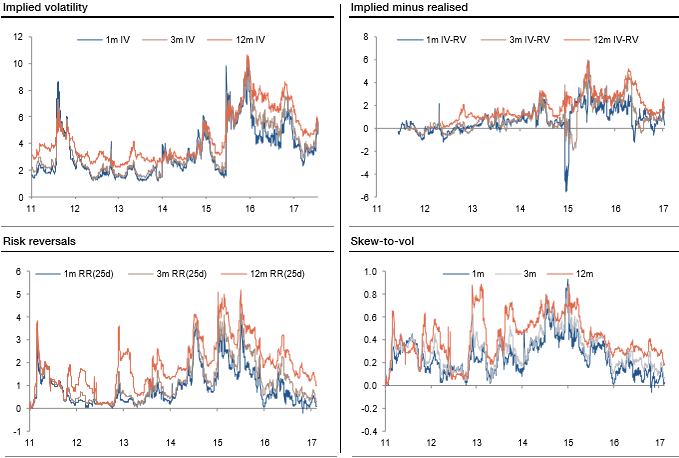
The implied volatility has bounced off the recent lows, the richness of implied versus realized vols has eroded; risk reversals and skew-to-vol are falling, term premiums have compressed while the vol smile has moved higher.
The base case scenario envisions CNH outperforming the forwards to year end.
However, a near term correction might ensue if EUR/EM FX falls or the Party Congress disappoints on the growth front. The PBoC has shown unease about USDCNH being much below 6.50. Topside exposure coupled with selling a downside strike (i.e. bullish seagulls) could be an appropriate structure.







