


 S&P 500 Relies on Tech for Growth in Q4 2024, Says Barclays
  Cardano Hits Five-Year Transaction Record as ADA Price Falls
  Hyperliquid (HYPE) Price Analysis: Can Bulls Push Above $88?
  Arthur Hayes Announces FLOP Testnet Launch Within Weeks
  NEAR Price Surges 11% as Trading Volume Doubles
  Nasdaq Faces Pullback to 26,225 Despite Bullish Outlook, UBS Says
  Moldova Criticizes Russia Amid Transdniestria Energy Crisis
  Ripple-Backed Evernorth Set for Nasdaq Debut With 473 Million XRP
  Binance to Shut Down Crypto Mining Pool Services on November 10
  Crypto Derivatives Dashboard: Bulls Retain Control Amid $488M Liquidation Flush
  Oil Prices Dip Slightly Amid Focus on Russian Sanctions and U.S. Inflation Data
  Gold Prices Fall Amid Rate Jitters; Copper Steady as China Stimulus Eyed
  Most Americans Oppose Election Betting on Prediction Markets, Poll Finds
  Navigating the Crypto Pulse: Weekly Market Resilience and Institutional Inflows
  XRP Ledger Foundation Confirms 100B Supply Safe After Security Fix
  Morgan Stanley Predicts $10 Trillion RWA Market by 2030


 Add as a preferred source on Google
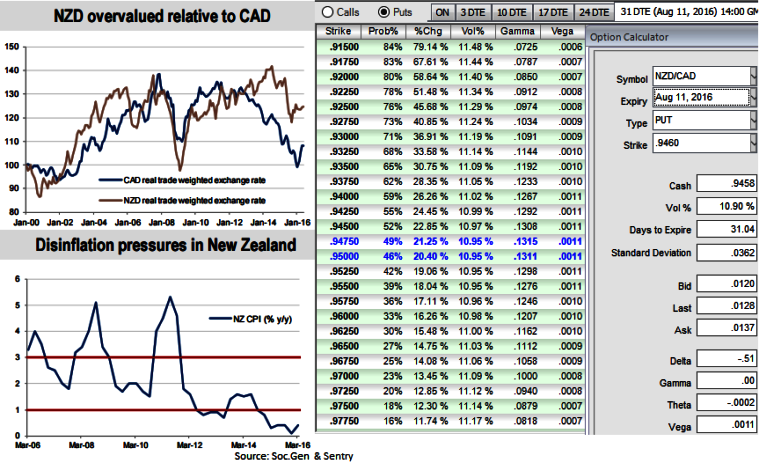
NZD remains overvalued, while milk powder prices have stayed depressed and inflation in New Zealand has surprised to the downside.
New Zealand is suffering from disinflationary pressures, with reported CPI inflation well below the RBNZ’s 1-3% target range (see above graph). It is also more exposed to China growth risks than Canada.
On the data front, NZ’s data calendar next week again holds little importance for markets.
We have REINZ housing update for June, electronic spending (Mon), food prices (Wed), manufacturing PMI, and ANZ consumer confidence (all Thu).
More closely read will be the speech from RBNZ Asst. Gov. McDermott on Wed, on how they decide the OCR, although the bulletin has partly stolen the thunder.
On the flip side, an expected, a plateauing of the oil price trend going forward also eliminates what has been one of the key factors behind CAD strength in the first half of the year. But CAD offers good long-term value, and investors should look to fade any sustained weakness in the coming months.
The Canadian dollar offers better value, and should continue to benefit from more stable crude oil prices and the US economic recovery.
1M ATM IVs are stable just shy below 11% and the sensitivity tool suggests OTM put strikes are on upper hand.
Thus, maintaining shorts in NZD/CAD is a relative value trade with low correlation to global market trends.







