Japan's GDP contracted 0.4% QoQ basis, or an annualized 1.4%, in the fourth quarter, hit by sluggish consumer spending amid a slow wage recovery and uncertain growth prospects.
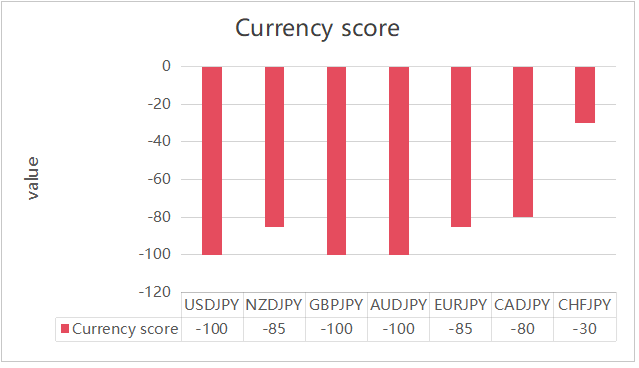
The recent bout of global risk aversion stemming from a weakening global macro outlook has raised cross-asset volatility, leaving investors looking for havens. In this environment, we expect the JPY to outperform and have revised down our USDJPY forecasts, even in the face of possible BoJ easing and FX interventions.
The recent bout of global risk aversion stemming from a weakening global macro outlook has raised cross-asset volatility, leaving investors searching for havens. Uncertainty regarding the prospects of global growth, not just the trajectory of China and other EMs, has led to increased cross-asset volatility as conviction is low and investors seek to cut risk exposures and flee to traditional safe havens.
China reported trade data for January with exports slumping 11.2%, compared to an expected 1.9% year-on-year drop, and imports crashing 18.8%, compared to a 0.8% decline seen, for a trade balance surplus of $63.03 billion, wider than the $58.85 billion expected.
More worsening in macro risk sentiments drove USDJPY sharply lower last week to temporarily below 111 despite the BoJ adoption of negative interest rates policy (NIRP) and some official jawboning. Given fear of broader global risk outweighing worries about further BoJ policy.
From the recent rate change by BoJ makes commercial banks that park surplus reserves at the central bank to negative 0.1% in a slightly awful stimulated pointing at serving its economy to cushion the potential threats of deflation.
The current spot FX is trading at 114.063, we expect dips extending up to 110.084 in near terms and even go below 110 in by end of Q1. So, it is understood that bearish momentum is bolstering as we saw that from delta risk reversal table and technical indications in the previous post. Hence, aggressive bears can initiate strategy using ATM puts.
Unlike a simple naked put, put back spreads have an extra-long that has not only leveraging effects, a short option at a lower strike that caps your reward but also reduces the net cost of the trade. So, the recommendation for now is to add an extra-long on put with 1W expiry to the existing debit put spreads. Instead of 2:1, bears can eye on 3:2 ratio in the spread for leveraging effects.
With these narrow strike differences, the profit potential is greater, so that the ratio needed is also lower to profit on underlying movement. Caution: If you think the pair is going to crash, you should be loading up on put buys in existing strategy. The total cost of the trade is going to be the difference between the prices of the two options.