Europe’s Galileo navigation program has cleared a test milestone for a module designed to let future satellites change their signals after launch as users’ needs evolve.
The European Space Agency (ESA) said the first signal-generation module passed examinations in Toulouse, France, and returned to Airbus Defence and Space’s facility in Friedrichshafen, Germany. It is intended for Galileo’s second-generation fleet, which will add 12 satellites to the existing system.
The module uses timing information from atomic clocks aboard a satellite to generate navigation signals for receivers on Earth. ESA said it can be reprogrammed in orbit to produce new signals, a capability the first-generation module did not have. The agency said that flexibility could make future signals more resistant to interference, quicker for receivers to acquire and more accurate for positioning.
Galileo began its Open Service in 2016 and now serves billions of users, according to ESA. Its applications include rail and maritime transport, agriculture, financial timing and rescue operations. The new module is designed to help the system adapt as those users’ needs change.
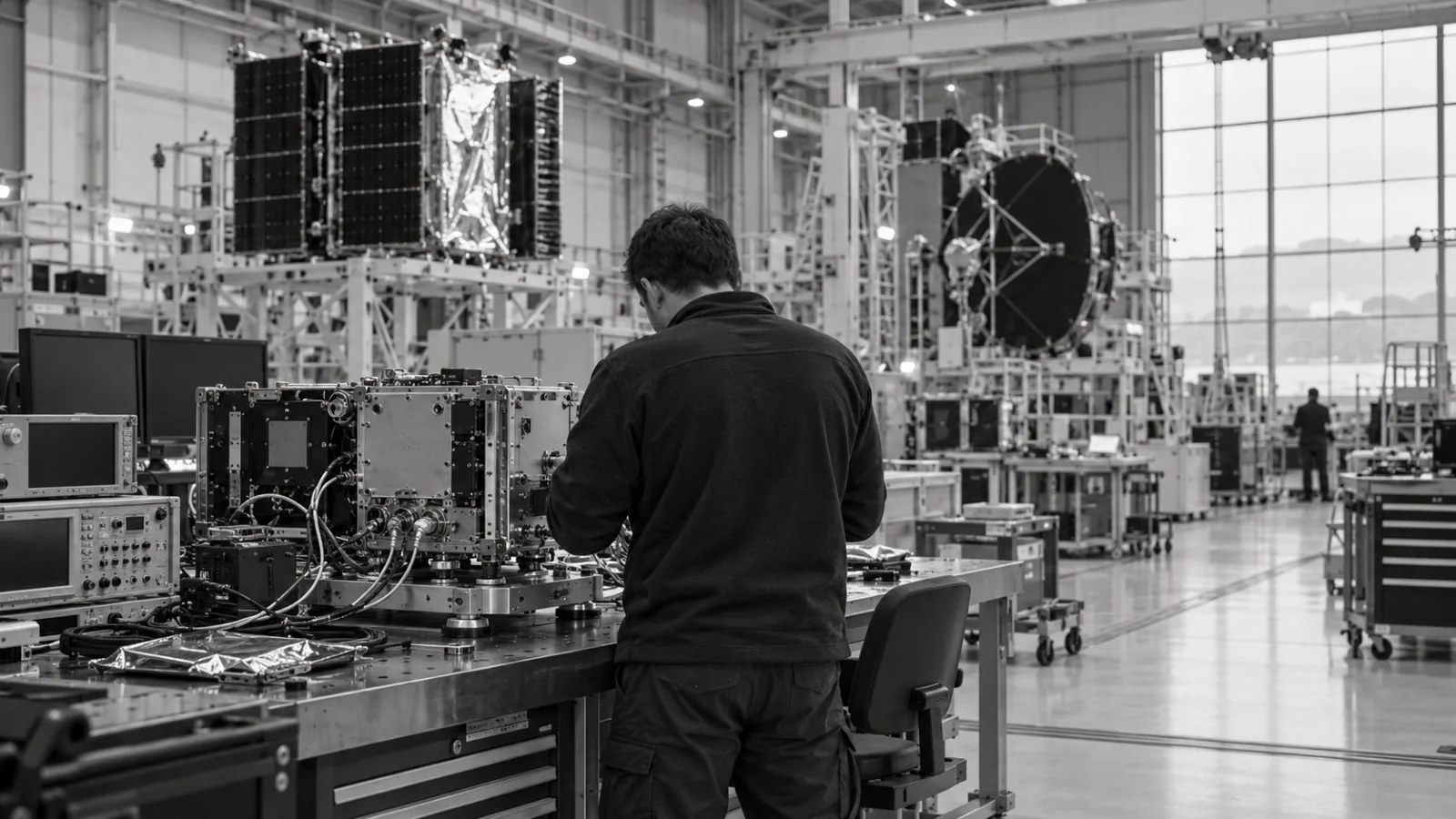
Airbus Defence and Space and Thales Alenia Space are building the 12 new spacecraft. Six are at different stages of integration at Airbus’s Friedrichshafen facility, ESA said. The satellites are also being designed with electric propulsion, links between spacecraft, an advanced atomic-clock configuration and an enhanced navigation antenna.
The European Commission manages and funds Galileo under the EU Space programme. ESA designs, develops and qualifies Galileo’s space and ground systems; the EU Agency for the Space Programme (EUSPA) puts satellites into service and supervises operations.
Airbus is due to pair the signal generator with a radio frequency (RF) output module to form the satellite payload. ESA expects payload testing in 2027, when full integration of the first flying satellite model is also planned.